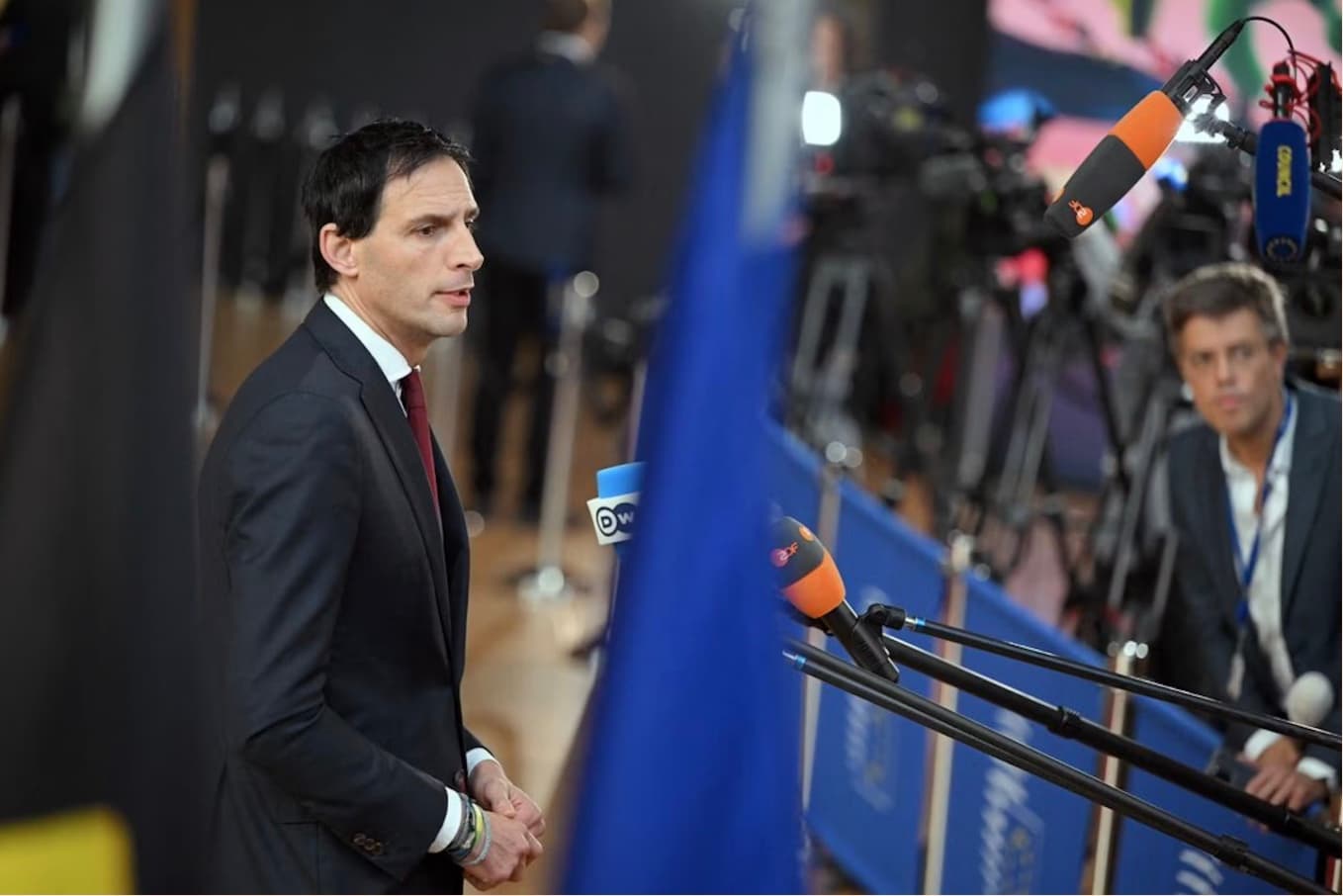
BRUSSELS – It was a night full of heated debates, geopolitical tug-of-war and diplomatic massaging, but after hours of negotiations the EU member states reached agreement on Wednesday morning: by 2040, greenhouse gas emissions must be cut by 90% compared with 1990.
The deal only came about after countless escape clauses, “test phases” and clever exceptions that were needed to win over countries such as Poland. The negotiations began on Tuesday afternoon and did not end until the early hours.
European Commissioner Wopke Hoekstra, who led the negotiations, still managed to squeeze out a joke:
“I enjoyed it. But let’s not do this too often.”
Climate tempest in Brussels: carbon credits, deferrals and rows over exceptions
It was not the target itself but above all the ways to deviate from it that sparked fierce battles between the member states. The use of carbon credits in particular – offsetting through climate projects outside the EU – proved to be a divisive issue.
The main points of contention:
- Hoekstra wanted a maximum of 3% of the target to be met through foreign projects.
- France and Poland wanted at least 5%, with Poland pushing for as much as 10%.
- Some countries demanded that carbon credits could be used as early as 2031, rather than from 2036 as Hoekstra had proposed.
The compromise:
A maximum of 5% via carbon credits
The start date remains 2036
But there will be a test period from 2031 to 2035
In extreme circumstances, another 5% extra can be used
In addition, the controversial CO₂ levy on petrol, diesel and heating costs will be postponed by a year: not 2027, but 2028.
Competitiveness versus climate: “We don’t want to wreck our entire business sector”
Europe’s climate debates have become explosive, driven above all by concerns over industry, jobs and international competition.
Polish minister Krzysztof Bolesta put it bluntly:
“We don’t want to destroy the economy and we don’t want to destroy the climate. We have to save both.”
Outgoing minister Sophie Hermans also stressed the importance of stability:
“We have to show ambition, but we must also remain flexible.”
Why this 2040 target matters so much
Europe wants to be climate neutral by 2050. Intermediate targets are needed to stay on track:
- 2030: 55% lower emissions
- 2040: now -90%
- 2035: to be decided at the climate summit in Brazil
Where it became politically sensitive:
➡️ The 2040 target could be adopted by a broad majority
➡️ But the 2035 target, which Europe will take to the UN climate summit, must be approved unanimously
Countries that did not get their way on 2040 could therefore hold the 2035 target hostage. That is why there was something in the compromise for everyone.
The agreement for 2035 does not contain a single figure, but a range:
66.25% to 72.5% CO₂ reduction.
UN report: the planet is still heading towards dangerous warming
Meanwhile, the UN environment programme UNEP published an alarming report:
- The planet is likely to warm this century by 2.3 to 2.5 degrees
- That is less than last year’s 2.6–2.8 degrees
- But still well above the Paris agreement: “well below 2 degrees”
Yet some countries feel that Europe is already doing more than enough. Hungary’s state secretary Anikó Raisz responded sharply:
“We are doing more than anyone else. We have nothing to be ashamed of.”
Between melting glaciers and industrial policy, Europe searches for balance
Danish minister Lars Aagaard summed up the dilemma Europe finds itself in:
“We all feel the consequences of climate change. But Europe must also remain a place where people want to live and companies want to invest.”
Conclusion: an agreement that looks more like a puzzle than a plan
The EU now has a climate target for 2040, but it comes with so many exceptions, test phases, emergency buttons and escape routes that it resembles a political compromise more than a firm course towards net zero.
Even so, Europe has sent an important signal ahead of the climate summit in Brazil: despite the rows, pressure and economic concerns, the EU remains one of the most ambitious climate blocs in the world.