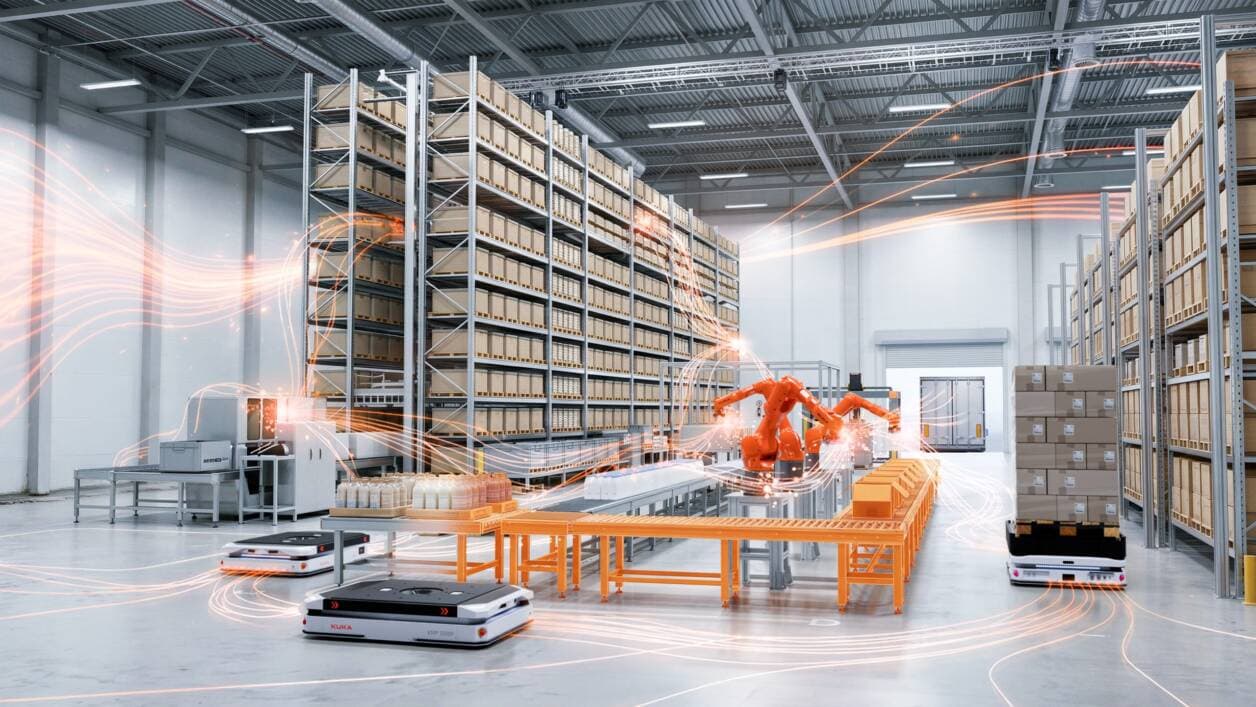
Artificial intelligence is used in a fundamentally different way in manufacturing than in the office environment. While language models mainly produce text and summaries, the shop floor depends on reliability, measurable results and integration into existing processes. That is why managers point not only to their preferred applications but also to clear limits.
Applications with immediate value
The most frequently mentioned uses sit close to the production process itself. They include:
Predictive maintenance, in which sensor data signals machine failures before they occur;
Quality control using image recognition, which detects deviations faster and more consistently than manual inspection;
Process optimisation, where algorithms adjust settings to reduce scrap and energy consumption;
Planning and logistics, with better forecasts for demand, inventory and capacity.
What these applications share is that they contribute measurably to efficiency and that their results can be verified.
Where the limits lie
At the same time, managers remain cautious when it comes to critical decisions. In a production setting, a wrong outcome can cause downtime, safety risks or high costs. Systems that cannot explain their reasoning therefore meet resistance. Human oversight stays essential in many cases, especially for decisions that affect safety or product quality.
Data quality is another recurring bottleneck. Without reliable, well-structured data, AI delivers no usable results. Companies therefore invest first in putting their data infrastructure in order before scaling up.
The common thread is a sober outlook: in industry, AI is seen as a tool for solving specific problems, not as a universal answer. It is precisely this pragmatic stance that determines whether investments pay off.