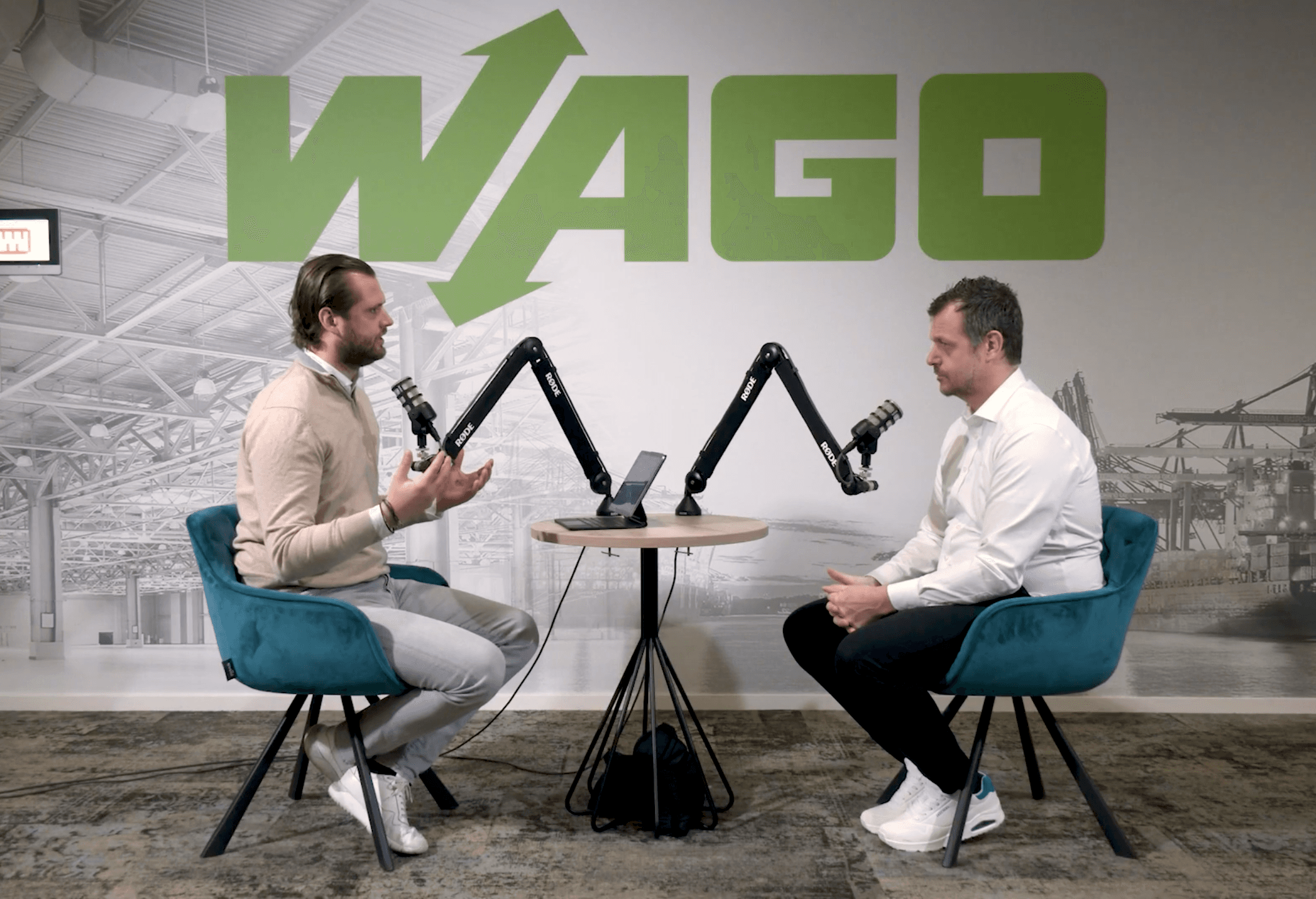
Digitalization in industry: why starting now is essential
Digitalization is no longer a distant prospect for industry. Companies are under pressure from rising energy costs, staff shortages, increasing competition and the need to produce more efficiently. Yet many organizations still struggle with the same question: where do you begin?
According to WAGO, digitalization doesn't have to be complicated at all. The key doesn't lie in large IT projects or expensive cloud platforms, but in making smart use of existing data, setting clear goals and starting small with measurable results.
What does WAGO do in industry?
WAGO is known worldwide as a specialist in electrical connection technology, automation and interfacing. In addition, the company develops software solutions that enable customers to make their installations smarter, more efficient and future-proof.
As a result, WAGO has long since moved beyond the hardware domain alone. The company plays an increasingly important role in IoT, data analysis, visualization and smart maintenance strategies for industrial environments.
What does digitalization mean according to WAGO?
Where many companies still associate digitalization with complex technology, WAGO takes a pragmatic view. For them, digitalization comes down to one thing:
Creating added value from the data that is already available in installations and machines.
That doesn't simply mean collecting data, but extracting insights from processes, discovering relationships between measured values and using that information to make better decisions.
Why many companies have data but do little with it
In many factories, sensors, PLCs and systems have been generating enormous amounts of data for years. Yet the real value of that data often goes untapped.
According to WAGO, things usually go wrong on three points:
- No clear goal has been formulated
- Data from different sources is not linked
- No concrete actions are tied to the insights
Without direction, data remains merely information. Only when companies know what they want to improve does it become clear which data is truly relevant.
Why digitalization is urgent right now
For manufacturing companies, digitalization is no longer a luxury but a competitive factor. Those who produce smarter gain an immediate advantage in the market.
The main drivers are:
- rising energy prices
- higher labor costs
- pressure on margins
- the need for higher uptime
- shortage of technical staff
- demand for predictable delivery times
Companies that fail to optimize their processes risk being overtaken by more efficient competitors.
From reactive maintenance to predictive maintenance
A concrete example where digitalization delivers immediate value is maintenance.
Many companies still work reactively: a machine breaks down and only then is the problem solved. Others schedule periodic maintenance, even when it isn't yet necessary.
Both models cost money.
Data-driven maintenance offers a smarter alternative:
Predictive Maintenance
Machine learning predicts when maintenance is needed.
Prescriptive Maintenance
The system even indicates which component needs attention and what action is required.
This allows companies to:
- reduce downtime
- lower maintenance costs
- deploy technicians more efficiently
- limit production losses
- extend the lifespan of assets
Cloud or no cloud? WAGO opts for flexibility
A common concern in industry is data ownership and cybersecurity. Not every company wants to send data to the cloud.
That's why WAGO also offers on-premise solutions. This means the data stays running locally in the factory on the company's own servers or systems.
The advantages of this include:
- full control over data
- less external dependency
- an extra cybersecurity layer
- suitable for sensitive production environments
- fast processing on site
For many industrial organizations, this is an important precondition for starting with digitalization at all.
WAGO's 5-step plan toward a smart factory
To make digitalization practical, WAGO works with a clear step-by-step model.
1. Collect data
Read out measured values from machines and installations.
2. Store data securely
Bring the data into a reliable database.
3. Create insight
Make trends, patterns and correlations visible.
4. Predict
Use analytics and machine learning to predict future situations.
5. Act
Let installations respond automatically to insights.
This approach prevents companies from immediately becoming caught up in complex projects.
Start small: proof of concept as the smartest beginning
A common mistake is that companies want to tackle digitalization on a grand scale right away. WAGO instead advises starting small.
For example, with:
- one machine
- one production line
- one failure issue
- one energy challenge
- one maintenance question
By first making a limited business case measurable, ROI becomes visible more quickly and support is built for further scaling up.
SMEs benefit from digitalization too
Digitalization is not reserved for large multinationals alone. SME manufacturing companies in particular can take major steps with relatively small investments.
Think of:
- less unplanned downtime
- lower energy costs
- better use of existing machines
- more efficient planning
- greater control over production
According to WAGO, it ultimately comes down to the same thing for every company: securing its future by producing smarter than the competition.
The future of industry: making smarter use of existing assets
Notably, WAGO does not automatically advise replacing everything. Existing installations – brownfield environments – often offer plenty of opportunities.
By adding extra sensors, smart software and better data analysis, existing machines can once again deliver great value without a complete rebuild.
This lowers investment costs and speeds up implementation.
Conclusion: digitalization starts small, but the impact is great
WAGO's key message is clear: digitalization doesn't have to be complicated. Companies don't have to wait for a multimillion-euro project or a perfect factory.
Those who start today with one measurable use case take the first step toward:
- lower costs
- higher uptime
- a better competitive position
- more efficient maintenance
- lower energy spending
- future-proof production
In a market where margins are under pressure and speed matters, that is no longer a luxury — but a necessity.