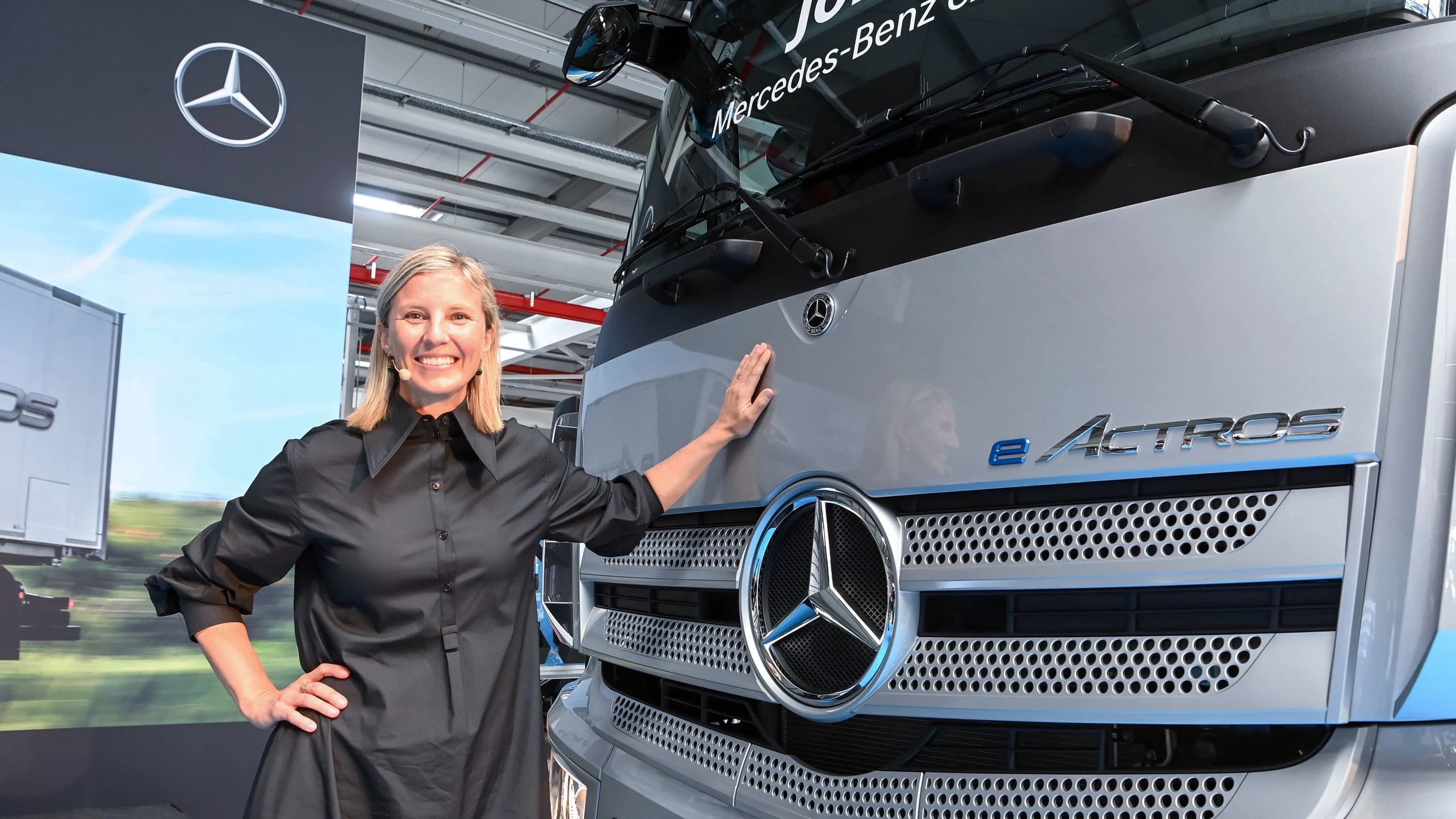
The CO2 rules for trucks that the European Union is tightening towards 2030 are shaping up to be the biggest uncertainty hanging over a sector that is actually performing well commercially. Manufacturer Daimler Truck posts solid figures, yet dark clouds are gathering above that bright side: stricter emissions targets that could damage a successful, export-strong European truck industry if the enabling conditions — charging infrastructure, green power and affordable zero-emission vehicles — are not in place in time.
Why the CO2 standards for trucks weigh so heavily
European legislation requires truck builders to lower their fleet-average emissions step by step. For heavy commercial vehicles the targets for the end of this decade are steep, with further stages beyond that. Unlike passenger cars, the transport sector is more complex: a truck is a capital good that must pay off over hundreds of thousands of kilometres. Hauliers only buy electric or hydrogen trucks when the total cost of ownership adds up and there are enough charging and refuelling points along the route.
That is exactly where the tension lies. Manufacturers can deliver the technology, but demand depends on factors beyond their control:
- Charging infrastructure along Europe's corridors, with enough power for heavy vehicles;
- Affordable green electricity and hydrogen, so that operating them makes economic sense;
- Residual value and financing of expensive zero-emission vehicles;
- A level playing field against non-European competitors.
The bright side and the storm clouds at Daimler Truck
The fact that the company is operationally strong underlines that European manufacturing in this segment still ranks among the world's best. Even so, the sector warns that overly strict, too rapidly rising targets without supporting policy will backfire: they can push investment out of Europe, erode profitability and ultimately weaken the very industrial base that must carry the transition. The message is not that sustainability is undesirable, but that pace and feasibility must move in step.
What this means for European manufacturing
For the broader manufacturing industry, the impact reaches far beyond the truck makers themselves. The shift to electric and hydrogen-powered heavy vehicles reshuffles entire supply chains. Combustion engines, gearboxes and exhaust systems give way to battery packs, electric motors, power electronics and thermal management. That directly affects countless German and Dutch suppliers.
- Suppliers in drive technology must shift their portfolio from conventional to electric drivetrains;
- Demand for electronics and printed circuit boards and power components is growing sharply;
- New vehicle architectures call for lighter, smarter metal structures and frames;
- More robotisation and automation is needed to make battery and assembly lines efficient and scalable.
Suppliers that move early can position themselves as partners in electrification. Those who cling too long to components for the combustion engine risk seeing demand collapse. At the same time, uncertainty about the policy pace creates a difficult investment climate: companies must build capacity now for volumes that will only become profitable once demand genuinely takes off.
Policy, pace and Europe's industrial resilience
The heart of the debate is the balance between ambition and industrial resilience. Europe wants to be a climate leader while also preserving its manufacturing industry. Those two goals clash when standards rise faster than the market and infrastructure can follow. For policymakers, the task is not only to set targets but also to fund the enabling conditions: charging networks, grid reinforcement, green energy and temporary purchase support for zero-emission trucks.
For the manufacturing industry the lesson is clear. The electrification of heavy transport is inevitable and offers considerable opportunities for suppliers that invest in new capabilities in good time. But the road there is strewn with risks around timing, cost and competition. Companies would do well to diversify their supply chains, collaborate on new components and stay flexible — so they are ready when the sun breaks through, however long the storm clouds linger over Brussels.