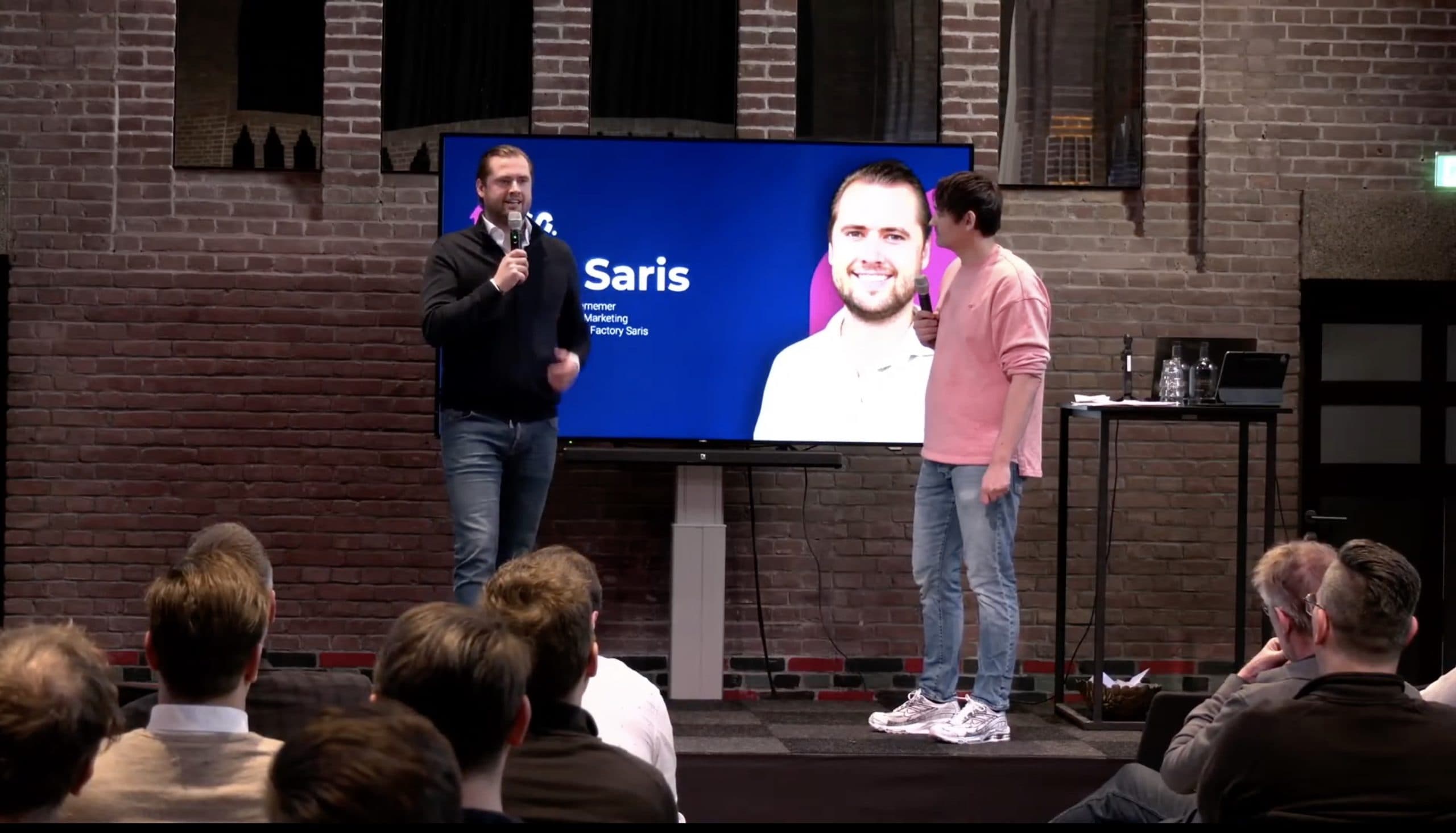
Introduction: why this event was needed
The Dutch and Flemish manufacturing industry is under pressure. Not because of a lack of technology, not because of a lack of ideas, but because of something far more fundamental: the inability to truly change. This became painfully clear during the event The Future of Manufacturing on 22 January 2026.
For three hours, entrepreneurs, engineers, consultants and technology companies discussed automation, AI, PLM, configurators and digitalization. But beneath all those terms ran one common thread that kept coming back: people.
Not as a strength, but as a brake.
This article is not a summary. It is a reconstruction, analysis and translation of what was really said — and above all of what became clear between the lines.
The biggest misconception: technology will save us
Why manufacturing keeps falling into the same trap
What came up strikingly often during the event was how recognizable the patterns are. Many companies in manufacturing are stuck in a cyclical problem: as soon as pressure increases – due to staff shortages, margin pressure or international competition – technology is put forward as the solution. An ERP upgrade. A new PLM system. AI tooling. A digitalization project.
But almost never is the fundamental question asked first: what are we actually trying to improve?
Technology thus becomes an escape forward. A tangible investment that shows something is happening. But without clear choices about processes and responsibilities, technology becomes a magnifying glass on existing problems rather than a solution to them.
This was pointed out several times during the event: companies automate messy processes instead of first creating order. And automating a mess mainly produces… a faster mess.
PLM in depth: why this almost always hurts
Several speakers described PLM not as software, but as a mirror. A mirror that forces organizations to make explicit what has remained implicit for years.
Who decides when a design is 'finished'? When can something go into production? Which data is authoritative when conflicting versions exist? And who bears responsibility when things go wrong?
As long as those questions are not clearly answered, a PLM system works disruptively. Not because it is bad, but because it makes clear that agreements are missing.
What emerged strongly during the event is that successful PLM projects almost always start small. Not with the entire product portfolio, but with one clear problem: data findability, version control or collaboration between teams or locations.
Companies that let PLM grow alongside their organization – rather than the other way around – achieve results. Companies that want to nail everything down before they start get stuck in complexity and resistance.
PDM, PLM and ERP: why terminology confusion is paralyzing
An interesting point from the discussion was how often companies get stuck on terminology. PDM, PLM, ERP, MBD – it quickly becomes a jungle of abbreviations. As a result, the discussion shifts from what do we want to solve? to which system goes with that?
That order is fatal.
It was emphasized during the event that many companies benefit from an intermediate step. First get a grip on data (PDM), then move on to process integration (PLM). Not because PLM isn't valuable, but because maturity differs from one organization to another.
Those who think too big too quickly underestimate the impact on people and processes.
AI beyond the hype: where it already really works today
AI was no abstract vision of the future at this event. On the contrary: the examples were concrete, tangible and directly applicable.
Especially in administrative and supporting processes, AI already proves mature enough today to take over work. Order processing, invoicing, planning, inventory management and customer communication.
What stood out here is that AI becomes powerful precisely when it does not do everything itself. The most successful applications work with thresholds and confidence levels. Standard cases are handled automatically, exceptions go to people.
This not only reduces workload, but also improves quality. Fewer errors, faster turnaround times and better use of human expertise.
The back office unraveled: where scalability breaks down today
An almost painfully recognizable picture was painted during the event: hypermodern production floors set against outdated office processes.
Machines communicate with each other, but people still copy data from email to Excel and from Excel to ERP. People act as the integration layer.
That model works as long as volumes are limited. But as soon as growth occurs, delays, errors and frustration arise.
Here lies one of the biggest opportunities for manufacturing. Not in even smarter machines, but in automating the information flows around those machines.
Knowledge as the organization's Achilles' heel
One of the most urgent themes was knowledge retention. Many companies run on a small number of experienced employees. People who 'feel' the process and solve problems before they become visible.
But that knowledge is rarely documented.
When such people fall ill or leave, vulnerability arises immediately. AI and digitalization offer no substitute for craftsmanship here, but they do help safeguard it. By making decision rules, exceptions and routines explicit, knowledge becomes transferable.
That, however, requires something painful: accepting that not everything can remain in people's heads anymore.
Engineer-to-Order, Design-to-Order and the illusion of uniqueness
During the event, a critical look was taken at how often companies see themselves as 'unique'. Every project is different. Every customer request special.
But on closer questioning, a large part of the work turns out to be variation on existing solutions. Yet processes are gone through again and again, as if it were the first time.
Configure-to-Order was presented as a strategy to enable repetition without losing flexibility. By defining modules, rules and choices in advance, speed is achieved without loss of quality.
This requires a different way of thinking: from project-based to systematic.
Change is not an IT issue, but a leadership test
Perhaps the most important lesson of the day: successful digitalization does not start with technology, but with leadership.
Change rarely fails because systems don't work. It fails because no one truly takes ownership. Because decisions are pushed forward. Because everyone agrees, as long as it remains abstract.
Real progress requires management to stop hiding behind projects and take a position themselves. What will we no longer accept? What will we stop doing? What will we do differently from now on, even if it causes discomfort?
Without that clarity, every digital investment remains half-hearted.
Many manufacturing companies have invested heavily in new systems in recent years. ERP upgrades, PLM implementations, AI tools, robotization on the shop floor. On paper it all adds up.
But in practice, the impact often remains limited.
Why? Because technology is deployed as a solution, while the problem lies deeper. This was pointed out several times during the event:
Technology rarely fails. Organizations fail.
Companies expect software to solve their chaos, while that chaos has never been made explicit. Processes are implicit, knowledge sits in people's heads, exceptions are the norm. And that is precisely what becomes visible as soon as you want to automate something.
PLM: not an IT project, but an organizational change
One of the sharpest contributions of the day was about Product Lifecycle Management (PLM). Not as software, but as a way of thinking.
PLM was often approached in the wrong way:
- as an IT project
- as a standard solution
- as something that can 'just' be implemented
The reality is different. PLM exposes what has not been arranged. Who decides? When? Based on what? Which version is authoritative? Who is the owner?
As soon as those questions become explicit, tensions arise. Not because of the software, but because of the absence of clear agreements.
Successful PLM projects share a few characteristics:
- a clear business case
- a defined scope
- a mandate from management
- acceptance of imperfection
Companies that want to capture everything at once almost always get stuck.
Data chaos: no one knows what's right where anymore
A recurring problem in manufacturing is data management. CAD files, revisions, Excel overviews, network drives, personal folders. Everything exists, but nothing is unambiguous.
Engineers structurally spend time searching, doubting and checking. Not because they can't do their job, but because the truth is scattered across systems.
PLM can create order here, but only if companies first accept that their current way of working is not scalable.
AI in manufacturing: hype, but also reality
AI was discussed remarkably concretely during the event. Not as a futuristic promise, but as a practical solution to existing problems.
Especially in the back office.
Order processing, invoicing, planning and inventory management still turn out to be heavily dependent on manual work at many companies. People who read emails, retype data, connect systems.
AI can take over these processes here — not blindly, but in collaboration with people. As a digital colleague, not a replacement.
The strength lies not in full autonomy, but in hybrid models:
- AI handles standard cases
- people check exceptions
- knowledge is captured instead of lost
The back office: the forgotten bottleneck
On the production floor, much is already tightly organized. Lean, automation, robotization. But walk into the office and it often feels like you're going back to 1995.
Old ERP systems, Excel lists, email as a workflow. People act as glue between systems.
That doesn't scale.
This is precisely where enormous gains lie:
- lower chance of errors
- faster turnaround time
- better margin
- less dependence on individual employees
People: scarcity, knowledge loss and resistance
Staff shortages were a constant topic of conversation. Not only quantitatively, but also qualitatively.
Many companies run on a few key figures. People with 20 years of knowledge in their heads. If they fall ill or leave, the process comes to a standstill.
Automation here is not a threat, but a necessity.
Yet resistance arises. Not against technology, but against what it symbolizes: change, loss of control, uncertainty.
How companies frame this makes the difference:
- "We're automating to replace people" → resistance
- "We're automating so you can do better work" → support
From Engineer-to-Order to repeatability
An important strategic theme was the shift from Engineer-to-Order and Design-to-Order to Configure-to-Order.
Not reinventing everything every time, but creating repetition.
Repeatability is not a limitation of creativity, but an accelerator of value. It makes predictability possible, automation feasible and scalability realistic.
Many companies underestimate how much of their work is actually variations on existing solutions.
Why change so often fails
Almost all failures have the same causes:
- no ownership
- no mandate
- no clear choices
- wanting to start too big
Successful change starts small, but deliberately.
Not with software, but with questions:
- why are we doing this?
- what problem are we solving?
- what will we (still) not accept?
Conclusion: the future is not determined by technology
After three hours, one thing became unmistakably clear:
The future of manufacturing is not determined by AI, PLM or automation.
It is determined by leadership.
By the willingness to make processes explicit. To make choices. To bring people along. To allow imperfection.
The technology is available. The question is not whether it can be done.
The question is whether companies dare to change.
The real problem summarized: we know what needs to be done, but we don't do it
Perhaps this was the most confronting conclusion of the event: everything needed to make manufacturing future-proof is already known. The technology exists. The use cases are clear. The business cases can be calculated. And yet large-scale progress fails to materialize.
Not because companies don't understand it, but because change has consequences.
Real digitalization forces organizations to make choices that have been postponed for years. About who decides. About how processes actually run instead of how they should run on paper. About which exceptions are still acceptable and which are not. About which knowledge must be structurally documented, even if that means certain people lose their unique position.
That makes technological projects uncomfortable. They touch on power, culture and identity. And that is precisely why they are often watered down to IT projects, small pilots or 'let's just have a look' initiatives. Safe, manageable, but also toothless.
The future of manufacturing doesn't require new tools, but courage. The courage of management not to delegate change. The courage not to want everything at once. The courage to accept that the first result is never perfect.
Those who dare to take that step have an enormous advantage. Not because they have better technology, but because they learn faster, improve faster and scale faster.
And with that, the conclusion is perhaps harder than expected:
Manufacturing is not losing its future to foreign competitors, but to its own reluctance to truly change.