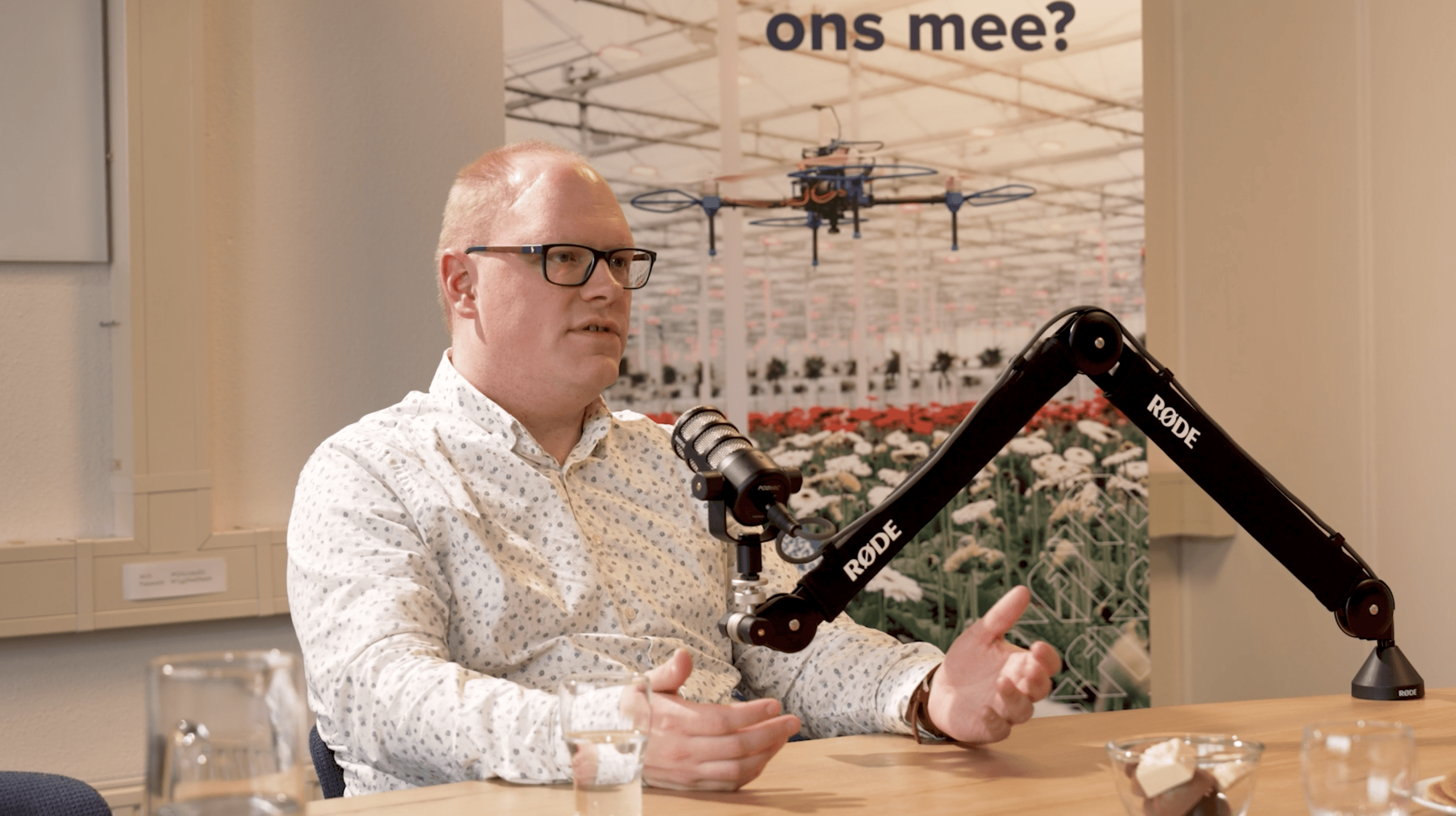
Horticulture is changing fast. Businesses are facing rising labour costs, higher demands from buyers, stricter regulations and an ever-growing need to work more efficiently. At the same time, the reality on the ground remains unpredictable. Yields fluctuate, labour is harder to find and processes are not always foreseeable. It is precisely this that increases the pressure to work smarter with innovation, data and technology.
For many growers, the question is therefore no longer whether innovation is needed, but how long you can afford to wait. Anyone who takes production, quality and delivery reliability seriously will need to focus more on precision, forecasting and process improvement. In a sector where margins are under pressure and deviations have immediate commercial consequences, technology increasingly makes the difference between reacting and looking ahead.
Why innovation in horticulture is becoming ever more urgent
The main drivers behind innovation are clear: labour, efficiency and future readiness. Production work is seen as less attractive, the influx of new workers is lagging, and costs are rising at the same time. This increases the need to automate repetitive work and make processes more consistent.
Scaling up also plays an important role. Some companies deliberately choose growth, consolidation or expansion, while other entrepreneurs decide to stop or hand over their business. For companies that want to keep growing, innovation becomes a logical strategic choice. Not only to keep costs manageable, but also to make performance more even and more predictable.
Why investing remains a nerve-wracking decision
Even so, investing in innovation remains a nerve-wracking prospect for many companies. Every investment requires confidence, especially in a market where regulations change and not every innovation project is immediately successful. Growers rightly wonder whether they are getting in at the right moment, whether the technology will genuinely pay for itself and whether they are on the right track.
That feeling is reinforced by shifting political choices and changing legislation. What seems a logical investment today may be viewed under different conditions tomorrow. But that is precisely why investments in efficiency and labour savings are gaining strength. These are choices that are less dependent on a single government or temporary scheme and contribute far more directly to structural improvement.
Efficiency is not a trend, but a necessity
Within the sector, there is a growing awareness that efficiency is not a buzzword, but a basic condition for staying competitive. Wasting less, planning better, growing more intelligently and forecasting more accurately all have a direct impact on profitability. What is more, sustainability, cost control and efficiency are increasingly aligned.
This makes innovation broader than automation alone. It is not only about machines or drones, but about steering better on data, looking further ahead and being able to act more quickly. Companies that organise this well are building calm, predictability and commercial advantage.
The real problem: unpredictability costs money
One of the most powerful examples from practice is harvest forecasting. With large volumes, small deviations can have enormous consequences. When a grower or cooperative expects a certain quantity of flowers to become available, but reality differs significantly, immediate pressure arises on sales, planning and customer relationships.
This problem is bigger than it might seem at first glance. Too much product means extra pressure to sell quickly. Too little product means difficult conversations with customers, missed deliveries and frustration throughout the chain. That is exactly why more accurate forecasting is becoming increasingly important. Not as a luxury, but as a commercial tool.
Why better forecasts have direct value
Better forecasts provide more control. When an organisation knows earlier what is coming, sales, planning and logistics can respond more effectively. This prevents surprises and makes it possible to inform customers sooner about any deviations.
For companies that deal with large volumes every day, this has direct value. Reliability towards customers is strengthened, waste can be reduced and commercial choices become less reactive. In this way, technology becomes not only a tool for the grower, but also a boost for the entire chain.
Technology only works when it fits the process
An important lesson from innovation projects is that technology is never separate from the process. A drone, camera system or automation solution is not the solution in itself, but part of a larger whole. The real value only emerges when technology fits the grower's daily practice.
This requires integration, guidance and a tailored approach to application. Not every crop, every cultivation or every greenhouse environment demands exactly the same thing. The technological basis may be similar, but the output, training and deployment differ from one situation to another. Successful innovation therefore starts with the right question: which problem needs to be solved, and how does technology fit into that?
Collaboration determines whether innovation succeeds
Innovation rarely succeeds in isolation. Collaboration between the grower, the developer and chain partners is crucial in order to build something workable. It starts with open communication and clear expectations. What exactly is the need? What already works well technically? Where do uncertainties still lie? And what result ultimately needs to be achieved?
It is precisely this management of expectations that makes the difference. Innovation almost never follows a straight upward line. There are always learning moments, adjustments and periods in which results are not yet optimal. Organisations that accept this and keep improving together have a greater chance of success than companies that give up after the first setback.
Why innovation requires staying power
Many companies hope that innovation will deliver results quickly. Sometimes it does, but real progress often requires patience. New technology has to be tested, adapted and refined. Practice proves more stubborn than theory, and that is precisely where the value of perseverance lies.
This requires conviction. Entrepreneurs and partners must believe that the chosen direction will ultimately lead to a better result. Without that confidence, innovation is quickly abandoned before it can truly mature. And that is often where things go wrong: not because the technology has no potential, but because the organisation stops too soon.
Those who keep waiting fall behind without realising it
Perhaps one of the sharpest lessons for the sector is this: waiting feels safe, but often costs a great deal of time without you noticing. Companies that want to watch others first before making a move themselves can easily find themselves three to five years further down the line. By then, the gap is no longer small.
Of course, there will always be pioneers and followers. Not every company has to be the first to test something new. But shutting yourself off completely from innovation is not a sustainable strategy. In a market that is constantly changing, standing still usually means falling behind.
The horticulture of tomorrow calls for thinking ahead
Thinking ahead is therefore becoming increasingly important. Not just reacting to regulations, market pressure or labour problems, but deciding for yourself where you want to develop. Entrepreneurs who want to stay in control themselves need to make choices before the pressure becomes unbearable.
It helps to look three to five years ahead. Which challenges are coming? Where is the greatest vulnerability? Which processes are still too dependent on human judgement? And which technology can help to get a grip on that sooner? Companies that ask these questions now are building a stronger position for the future.
Conclusion
Technology in horticulture is not an end in itself. Ultimately, it is about forecasting better, working more intelligently, wasting less and gaining more control over processes that are still too dependent on chance or manual estimation. That is precisely why innovation, data and automation are becoming increasingly important.
The sector does not have to change everything at once. But the message is clear: start now. Because those who wait too long only realise late how much ground has already been lost. In a world that is becoming faster, more precise and more data-driven, the real question is not whether you can do without technology. The real question is: for how much longer.
FAQ
Why is innovation in horticulture becoming increasingly important?
Because growers are facing rising labour costs, less available staff, stricter demands from the market and a greater need for predictability and efficiency.
Why do investments in technology remain a nerve-wracking decision?
Because innovation costs money, not every project is immediately successful, and laws and regulations can change. As a result, entrepreneurs often have doubts about timing and returns.
What does better forecasting deliver in horticulture?
Better forecasts help companies organise sales, planning and deliveries more accurately. This prevents surprises, reduces waste and strengthens customer relationships.
Is technology itself the solution?
No. Technology is usually part of the solution. The real value emerges when a technological application fits well with the process, the cultivation and the needs of the user.
Why is collaboration so important in innovation?
Because innovation only works when needs, technical possibilities and expectations are well aligned. Without open communication and collaboration, the chance of failure is greater.
Why should growers start now?
Because holding back often leads to falling behind. Companies that wait too long to innovate lose time, knowledge and competitive strength without realising it.