From "we've always done it this way" to data-driven, smart production
All across the Netherlands, manufacturing companies are running into the same problems:
staff shortages, rising quality demands, increased performance pressure and outdated machines that break down just a little too often.
Many directors and operations managers feel it acutely:
"We know we have to do something with automation, but we don't know what."
That is exactly where Hellebrekers Industriële Automatisering comes in.
As a system integrator, Hellebrekers helps manufacturing companies produce smarter, safer and in a more future-proof way – with an approach that starts with the real question behind the question.
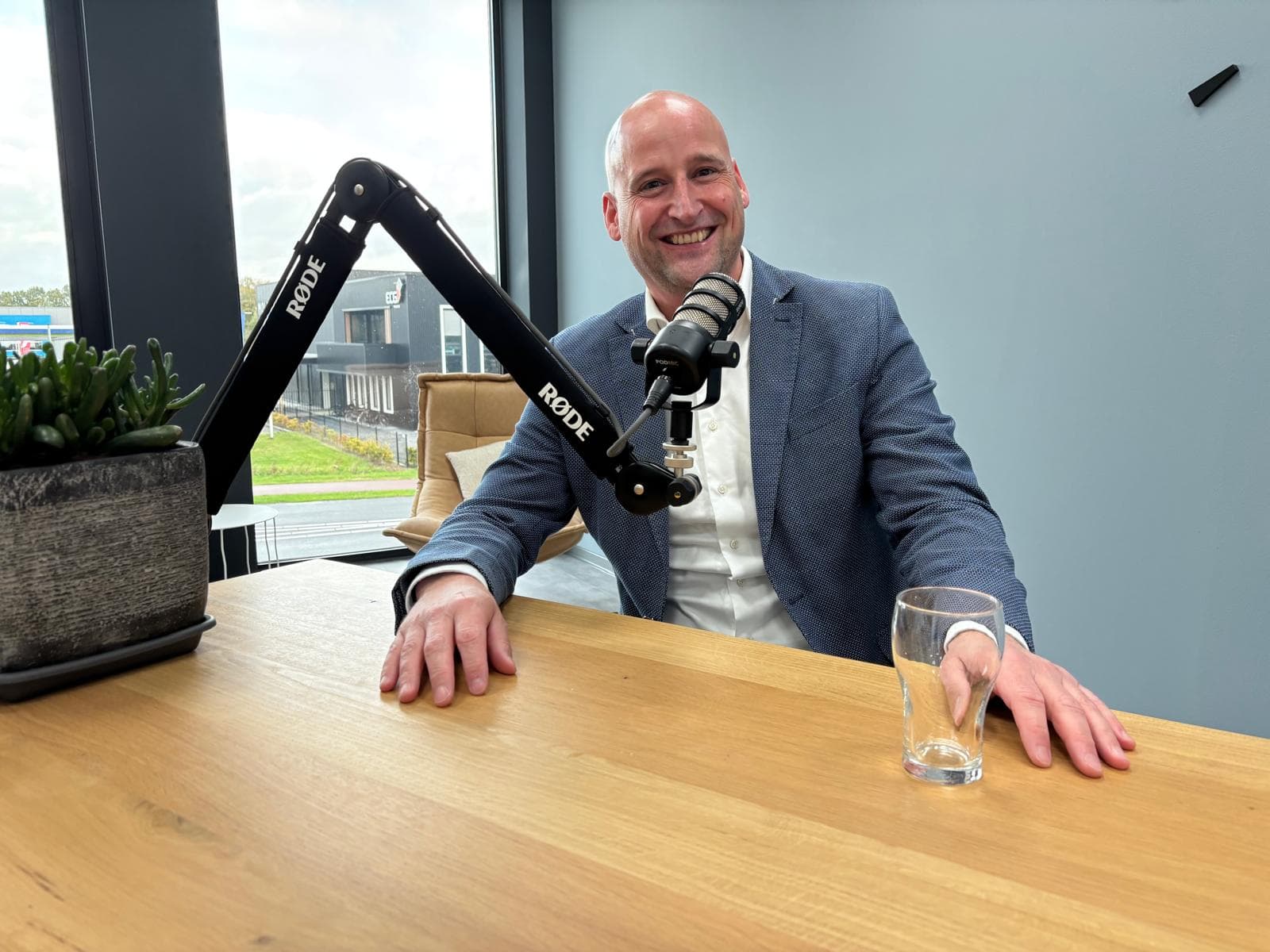
This blog is based on an episode of the De Industrie Online video podcast, in which Freek van Beersum (Hellebrekers) speaks candidly about their vision on industrial automation, AI, the energy transition and the role of people on the factory floor.
Who is Hellebrekers?
Hellebrekers is a technical service provider with two clear pillars:
- Water & Leisure Techniek (WLT) – Hellebrekers has grown into the largest swimming pool installer in the Benelux.
- Hellebrekers Industriële Automatisering – the branch focused on manufacturing companies across a wide range of sectors: food, caps, metal, injection moulding companies, and so on.
What once began in swimming pool technology – controlling pumps, visualizing processes, monitoring water quality – grew into a fully-fledged system integrator in industrial automation. The knowledge and technology from swimming pools proved to be highly scalable to factories.
"We saw that the industry was dealing with exactly the same challenges as our swimming pool customers. That's when we took the step towards the industrial end user – and it certainly paid off."
What is industrial automation, really?
It's hard to explain at home, Freek says with a laugh. But at its core it's simple:
"Improving production processes with innovative technologies."
Hellebrekers industrial automation focuses on three pillars:
- Automation – PLCs, control systems, SCADA, motion, robotics
- Digitalization – unlocking data, MES, dashboards, OEE, planning
- Robotization – cobots, robots, AI vision, picking & placing
An example Freek often uses:
You have a factory where bicycles, caps or meat products are made.
You want to produce faster, smarter, safer and with higher quality.
You know that technology can help you, but not exactly how.
That's where Hellebrekers comes in – not with a standard "automation package", but with a solution that starts at the core of the problem.
Why industrial automation is now an absolute necessity
Where automation used to be a luxury, it is now, according to Freek:
"An absolute necessity for a manufacturing company to survive."
The reasons:
- Staff shortages – cheap labour in Germany, Poland or Romania is no longer a structural solution.
- Knowledge is disappearing – older operators are retiring, and know-how lives in people's heads, not in systems.
- Quality and output must increase – customers expect more, faster and flawlessly.
- Continuity – downtime and breakdowns are a direct threat to your right to exist.
Without smart industrial automation, it becomes almost impossible to keep your production up to standard, let alone improve your competitive position.
What makes Hellebrekers Industriële Automatisering unique?
Freek is clear about it: Hellebrekers doesn't obsessively compare itself with other players, but starts from its own strength.
Three things stand out:
1. The complete automation pyramid
Hellebrekers covers the entire automation pyramid:
- from sensors and field level,
- via PLC/SCADA and robotics,
- to MES, data integration and connections with ERP.
So not just a little robot here or an HMI there, but thinking along on an integral level:
what do you need to make your factory as a whole smarter?
2. Solution before product
Many players sell "products": robots, AI, MES, IoT.
Hellebrekers turns it around:
"A robot, MES or AI is just an umbrella term – what matters is the value it adds."
So when a customer says:
"I want a robot."
the response is not: "Great, here's a quote."
but:
"Why do you want that robot? What do you want to achieve?"
Sometimes the answer is: first get your digital infrastructure in order,
so that later you can control a robot based on data instead of gut feeling.
3. Independent advice
Hellebrekers is brand-independent and thinks from the case perspective:
- Which technology really suits your challenge?
- Does something new need to be added, or can you retrofit existing machines?
- Is robotization needed now, or first digitalization and a data structure?
That independence makes Hellebrekers industrial automation credible as a long-term partner.
How does a project at Hellebrekers start?
Many projects start the same way:
"Freek, I know we have to do something, but I don't know what."
Here's how Hellebrekers approaches it:
- The why question
– Why do you want to automate? Why a robot? Why now?
Freek calls it "asking someone why five times until the real core comes to the surface." - Analysis of the pain point
– What keeps you awake at night?
– Where does it go wrong?
– Where do you want to be in 5 years? - Concept phase
– Together with management, operations, logistics, quality and operators, a concept solution is developed. - Business case & ROI
– The investment must be defensible. Costs, revenues and savings are calculated. - Project phase
– A multidisciplinary team (software, hardware, mechanics, service, project management) works out the solution and implements it.
Old factories, new technologies: retrofit as the key
Not every factory is "state-of-the-art".
The Netherlands has beautiful new plants, but also factories that are 50–100 years old.
Hellebrekers sees this not as an obstacle, but as a challenge:
- First look at: what is already there?
- Can we extract data from existing machines?
- Can the control system be modernized (retrofitting)?
Sometimes the machine is still mechanically perfect, but the control system is outdated.
In that case Hellebrekers installs a new control system, using the current state of the art, so that data can be read in and out.
This is how old lines become part of a modern, data-driven factory.
Cybersecurity & continuity: no longer a luxury
Freek is clear:
"Everyone will have to deal with cybersecurity sooner or later."
Factories are becoming increasingly connected (remote support, data exchange),
but that also makes them more vulnerable.
Hellebrekers tackles this structurally:
- Continuity agreements – proactive monitoring, service, prevention.
- Connectivity with policy – online support where possible, on-site where necessary.
- Working according to current standards – for example NIS2 (Freek refers to NIST 2).
The foundation of continuity is secure connectivity.
Without well-secured connections, you cannot efficiently monitor, update or intervene in the event of breakdowns.
AI & Vision: not a buzzword, but a tool
AI may well be the buzzword of the moment – in industry too.
But Freek is level-headed:
"AI is not a magic word. It only adds something if you use it to solve real problems."
Examples of how Hellebrekers industrial automation applies AI:
- Quality control in the food industry
– detecting foreign material in meat (plastic, wood, metal). - Giving robots "brains"
– vision + AI so that robots can flexibly grip, stack and pack. - Supporting engineering
– AI that helps carry out engineering tasks faster and with fewer hands.
AI is therefore not an end in itself, but a means to increase quality, safety and efficiency.
The energy transition: dealing with energy more smartly
The energy transition is no longer a distant concern:
according to Freek it is simply "genuinely here".
Problems he sees:
- New factories that cannot be built due to grid congestion
- Projects delayed by a lack of capacity
But industrial automation helps here too:
- Smarter planning based on energy consumption per machine
- Reusing energy instead of feeding it back
- Making better use of waste streams within the factory
- Using data to control processes in a more energy-efficient way
A simple example:
an injection moulder with multiple machines, one of which is far more energy-efficient than the other.
If you plan based on availability, colour and energy consumption,
you can make a difference in both costs and sustainability.
People on the shop floor: it won't work without them
Technology is one thing, but human acceptance is at least as important.
Freek puts it sharply:
"If an operator thinks it's a worthless system, it remains a worthless system – no matter how good it is technically."
That's why:
- Hellebrekers involves operators, quality staff, finance and management as early as the preliminary phase.
- They organize workshops to turn resistance ("we've always done it this way") into engagement.
- Always training after delivery:
– how do you operate the machine?
– how do you clear it from a fault?
– how do you work with the new software/MES/robot?
Automation only works when the people who have to work with it
understand why and how.
Hellebrekers' vision: strengthening the competitive position of Dutch industry
Freek sums up the ambition of Hellebrekers industrial automation in one line:
"We want to help the industrial landscape in the Netherlands improve its competitive position, so that companies can continue to run their operations in the future."
How?
By focusing on:
- Automation
- Digitalization
- Robotization
With solutions that add value,
and with an approach that puts collaboration, knowledge sharing and strategy at the centre.
How do you get in touch with Hellebrekers?
Anyone who, after hearing or reading this story, thinks:
"I have a challenge like that too, and I'd like to bounce some ideas around."
can get in touch directly via:
👉 www.hellebrekers.nl
There you'll find the contact details of Freek and his colleagues.
No obligations, but plenty of experience at the table.
Would you like to take part in the deindustrie.online video podcast yourself? Then leave a message via this form