Innovation in horticulture rarely begins with technology alone. More often, change arises the moment a company notices that the old way of working no longer suffices. Processes become more complex, labour scarcer, and the pressure on quality and planning greater. In the Westland, that shift became visible years ago at Anthura, where automation didn't begin as a luxury but as a necessity.
What followed was not a rapid digital revolution, but a long journey of small steps, building trust and dealing ever more cleverly with data. That is precisely what makes the story interesting for other companies in Dutch horticulture: successful automation doesn't start with a machine, but with a concrete problem on the shop floor.
From traditional cultivation to modern enterprise
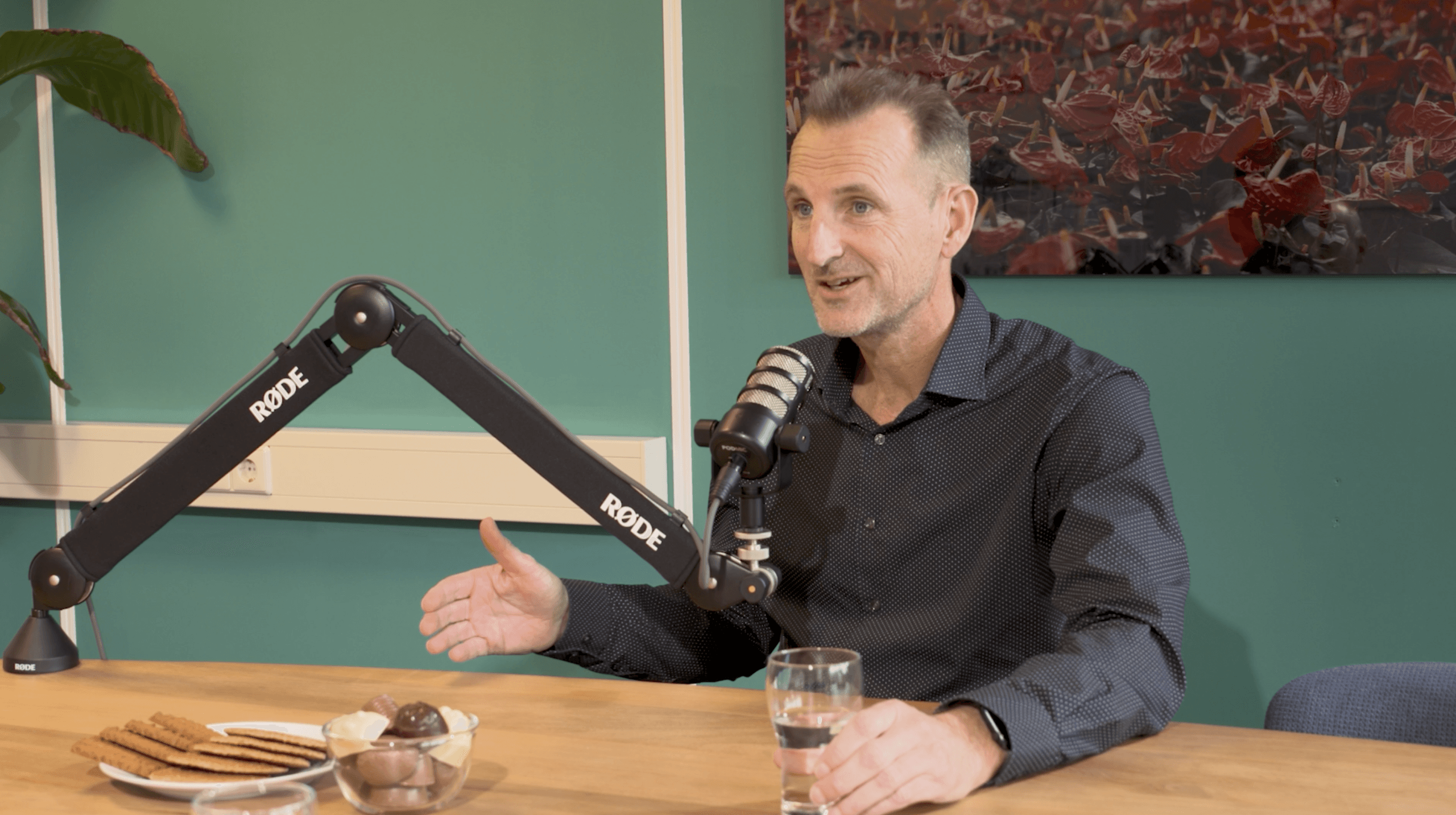
Hans Barendsen, site manager at Anthura, witnessed that shift up close. He comes from a grower's family in the Westland and knew the sector back when automation and digitalisation played hardly any role. Companies worked with experience, intuition, lists and a great deal of manual calculation.
When scaling up and more complex cultivation processes arrived, that way of working ran into its limits. What was still manageable on a small scale became increasingly difficult to control on a larger one. Excel sheets and standalone systems were no longer enough to keep a grip on production, planning and quality.
At Anthura, a specialist in the breeding and production of anthuriums, orchids and bromeliads, the need for a more modern way of working therefore grew. Not to automate for the sake of automating, but to steer processes better and make them future-proof. Anthura positions itself as a specialist in breeding and sustainable product development, while Florinco is known as a technology partner for high-tech solutions in horticulture.
The real trigger: too much complexity for manual work
The core of the problem lay not in one individual task, but in the sum of everything that had to happen at once. In Anthura's greenhouse, thousands of containers of plants move through the process. At one site, this amounts to roughly 8,000 containers across 10 hectares of growing area. Within that, hundreds of variables come into play simultaneously: variety, customer request, delivery moment, watering, logistics and planning.
It was precisely there that it became clear traditional working methods fell short. A grower can achieve a lot on experience, but as soon as the scale grows and processes become interdependent, blind spots appear. Where is which plant? Which table needs what? Which orders are coming? How much labour is required for that?
These questions became too big to answer with standalone overviews. The sector thus faced a broader development that also became visible elsewhere: from manual control to data-driven cultivation.
The first breakthrough: watering per table instead of per section
One of the first major steps concerned watering. In many greenhouses this is traditionally done per section or per group of tables at once. For a company with a broad assortment and many different customer requests, however, that is too coarse.
At Anthura, therefore, the wish arose to no longer water whole groups of tables at once, but to steer much more precisely. The goal was clear: watering at table level, tailored to variety, cultivation phase and delivery moment.
That step proved crucial. For where a traditional set-up quickly leads to plants that are just a little too wet or too dry, fine-grained control made it possible to work more precisely. What once began as an ambitious idea grew into a solution that, according to those involved, is still exceptional in the Netherlands even years later.
The step towards automation therefore did not start with robotic arms or AI, but with a very concrete cultivation question: how do you give each plant the treatment that suits it best?
Not everything at once, but step by step
That is perhaps the most important lesson from the journey: successful digitalisation rarely comes about through one big leap. According to Theo Willemsen of Florinco, it was precisely the phased approach that worked.
First the basics had to be in order. Systems had to know where plants were located, what status they had and which process steps were coming. Only once that insight was in place did room emerge to automate further.
That approach seems simple, but in practice it is often the difference between a project that grinds to a halt and one that keeps growing. By starting small, making successes visible and bringing employees along, trust grows. Only then can companies take the next step.
That principle also recurs in the way Florinco describes its collaboration with Anthura: as a long-running journey of visualisation, dashboards, apps and software solutions that make the work clearer and smarter.
Automation changed not only the process, but also the work
A persistent misconception in the discussion about robotisation is that automation automatically means people disappear. In practice, it turns out to be more nuanced.
At Anthura, the work mainly changed in character. Routine and repetitive tasks could be organised more cleverly, while employees actually gained more grip on planning, standards and process insight. The work became less dependent on individual assumptions and more based on up-to-date information.
That does not mean people are no longer needed. On the contrary. In a modern greenhouse, people remain indispensable, but their role shifts. Employees are still needed for production and execution, but alongside that, the need also grows for people who understand systems, check parameters and monitor processes across the board.
Automation therefore does not simply take away labour; it changes what knowledge and what steering are required.
Labour shortages and regulation push the sector forward
The pressure to automate does not come only from within. From the outside, too, the playing field is changing fast. Labour is scarce, flexible deployment becomes more complicated, and regulation around safety and crop protection is becoming stricter.
This forces horticultural companies to work more precisely and efficiently. That is precisely why data is becoming ever more important. Anyone who wants to plan production, labour and logistics on time needs real-time insight. Only then can you better predict what is coming and how much capacity is needed.
In the field of crop protection, too, the role of technology is growing. The sector wants to become less dependent on chemistry and to be able to intervene faster with biological solutions. Early detection is crucial for this. According to Florinco, work is therefore also being done with autonomous drones and AI applications that map crops and translate cultivation data into usable insights. Florinco now also explicitly presents such applications as part of its proposition in greenhouse horticulture.
From insight to live control in the greenhouse
The real added value of digitalisation emerges the moment data is not merely stored, but can be used directly to steer. That, according to those involved, is precisely where the great leap of recent years has been made.
Where a traditional ERP system mainly provides an overview after the fact, a live system makes it possible to see in real time where plants are, how processes are running and where adjustments are needed. Once that live layer is in place, many more possibilities emerge: robotisation, sorting, planning, predictive action and ultimately steps towards autonomous cultivation.
That is no longer a theoretical vision of the future. In the collaboration between Anthura and Florinco, sorting machines, transport flows and robotic applications have now also been linked to the broader data infrastructure. The development shows how automation in horticulture often does not consist of a single solution, but of a growing ecosystem of systems that work together ever better.
Trust matters more than technology
Yet the greatest challenge lies not in software, robots or sensors. It lies in people.
Every change in the greenhouse also affects habits, responsibilities and trust. Especially in companies where employees have worked in a certain way for years, digitalisation can provoke resistance. Not necessarily because people are against improvement, but because they fear losing their grip.
That is precisely why the step-by-step approach worked so well. Not digitalising sixty workplaces at once, but starting with six. Not overhauling everything immediately, but showing what a new way of working delivers. As soon as employees notice that the work becomes clearer, more pleasant or fairer, the attitude often shifts of its own accord.
From this follows an important conclusion for other companies in Dutch horticulture: technology only truly succeeds when people recognise themselves in it and gain confidence in it.
A partnership rather than a standalone software project
What also stands out in this story is that the collaboration between grower and technology partner is not framed as a classic supplier model. The common thread is precisely long-term collaboration.
According to those involved, real progress only emerges when both sides understand each other's process. Programmers have to know what is happening in the greenhouse. People on the shop floor have to experience that technology is not rolled out over their heads, but developed with them.
That also explains why the collaboration between Anthura and Florinco has continued for years. Not because automation is ever "finished", but because each success again lays a foundation for the next step. That long-term relationship also aligns with how Florinco itself positions its cases and customer relationships: not as a one-off implementation, but as ongoing development.
What other horticultural companies can learn from this
The story of Anthura shows that automation in Dutch horticulture does not begin with the question of which technology is available, but with the question of where things pinch today.
Is labour difficult to plan?
Is real-time insight lacking?
Are processes too dependent on individual knowledge?
Is quality hard to keep consistent?
Then the first step does not necessarily lie in a large investment, but in making the process visible.
From there, room emerges for digitalisation. Only then do smarter steering, robotisation and applications with AI or drones follow.
The most important lesson is perhaps this one: start small, build trust and make sure the basics are in place. Anyone who does that well discovers that automation need not be a threat to craftsmanship in the greenhouse, but can instead be a way to make that craftsmanship stronger, more consistent and more future-proof.
Conclusion
The development of automation in Dutch horticulture cannot be summed up as a technical success story alone. It is above all a story of necessity, perseverance and collaboration.
At Anthura it began with the limits of Excel, manual planning and traditional watering. Years later, there is a far smarter and more data-driven production process, in which logistics, labour, cultivation and technology are increasingly closely aligned.
That makes this story relevant for the entire sector. For now that labour remains scarce, regulation is increasing and the pressure on quality continues to rise, automation is becoming less and less a choice and more and more a condition for staying competitive.