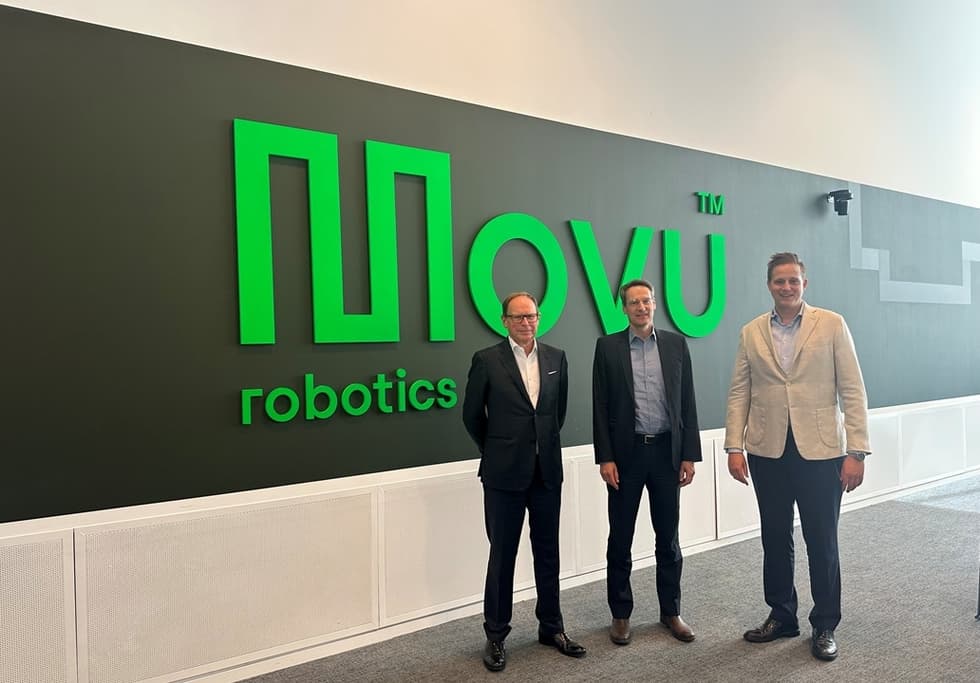
With the strategic partnership between Jungheinrich and Movu Robotics, shuttle technology and integration expertise merge into a single, seamless warehouse concept. Movu's four-way shuttles are combined with Jungheinrich's consulting, software and service capabilities, giving manufacturers a compact, high-density pallet warehouse and an uninterrupted material flow from one source. For the manufacturing sector, where floor space, lead time and reliability grow ever more critical, this is a notable move within the broader trend of intralogistics automation.
What four-way shuttles add to pallet storage
Four-way shuttles can travel both lengthways and crossways through a racking structure. This reduces the need for separate conveying infrastructure and allows storage density to increase substantially. Where traditional reach trucks require wide aisles, shuttle systems make far better use of both the floor area and the available building height. For manufacturers with limited hall space and growing inventory positions, this delivers concrete gains:
- Higher storage density through narrower aisles and better use of vertical space;
- Scalability: shuttles can be added incrementally as volumes grow;
- Less handling and therefore a lower risk of damage to pallets and products;
- Predictable throughput times thanks to automated inbound and outbound flows.
The essence of the partnership is that Movu's hardware is not delivered as a standalone product but embedded in a complete system, including controls, integration with existing processes and long-term service.
Integration and software as the decisive factor
The biggest risks in warehouse automation rarely lie in the mechanics themselves, but in integration. A shuttle system only pays off when it communicates flawlessly with the warehouse management system, the ERP and the shop-floor controls. This is precisely where bundled expertise adds value: upfront consulting, a well-considered design, the software layer and maintenance all come from the same party. That reduces the classic situation where hardware and software suppliers point fingers at each other when throughput stalls.
For manufacturers who want to link logistics to production planning, the role of MES and production software is essential. An automated warehouse that exchanges real-time data with the production line enables just-in-time supply and better inventory control. The partnership thus aligns with the wider shift toward robotics and automation across the entire value chain.
Why this partnership makes sense now
Several trends are driving demand for automated pallet storage. The labour market for logistics and production remains tight, prompting companies to find ways of handling equal or higher volumes with fewer people. At the same time, the cost of industrial real estate is rising, increasing the pressure to store more per square metre. And delivery reliability requirements are growing: customers expect shorter and more predictable lead times.
A partnership that brings together a shuttle specialist and an integrator lowers the barrier to taking this step. Rather than selecting multiple suppliers and managing integration themselves, customers gain a single point of contact. That is particularly attractive for companies without an in-house automation department that still want to make the leap to automated industrial logistics.
What manufacturers should watch for
An integrated system is no guarantee of success. When assessing such solutions, production managers would do well to clarify a number of points in advance:
- Future capacity: can the system be expanded without shutting down the existing installation?
- Availability and service: how quickly is on-site support available during breakdowns, and what uptime is guaranteed?
- Open interfaces: does the software connect to the existing ERP and production controls without custom work that becomes hard to maintain?
- Total cost of ownership: not just the investment, but also energy use, maintenance and lifespan.
Those who weigh these considerations carefully can make system integration pay off rather than being locked into it for years.
For European manufacturers, this partnership underlines that warehouse automation is increasingly less a standalone investment and more a strategic choice connecting production, logistics and data. Companies looking to counter a tight labour market, expensive floor space and rising delivery reliability demands would do well to treat intralogistics as an integral part of their production strategy going forward.