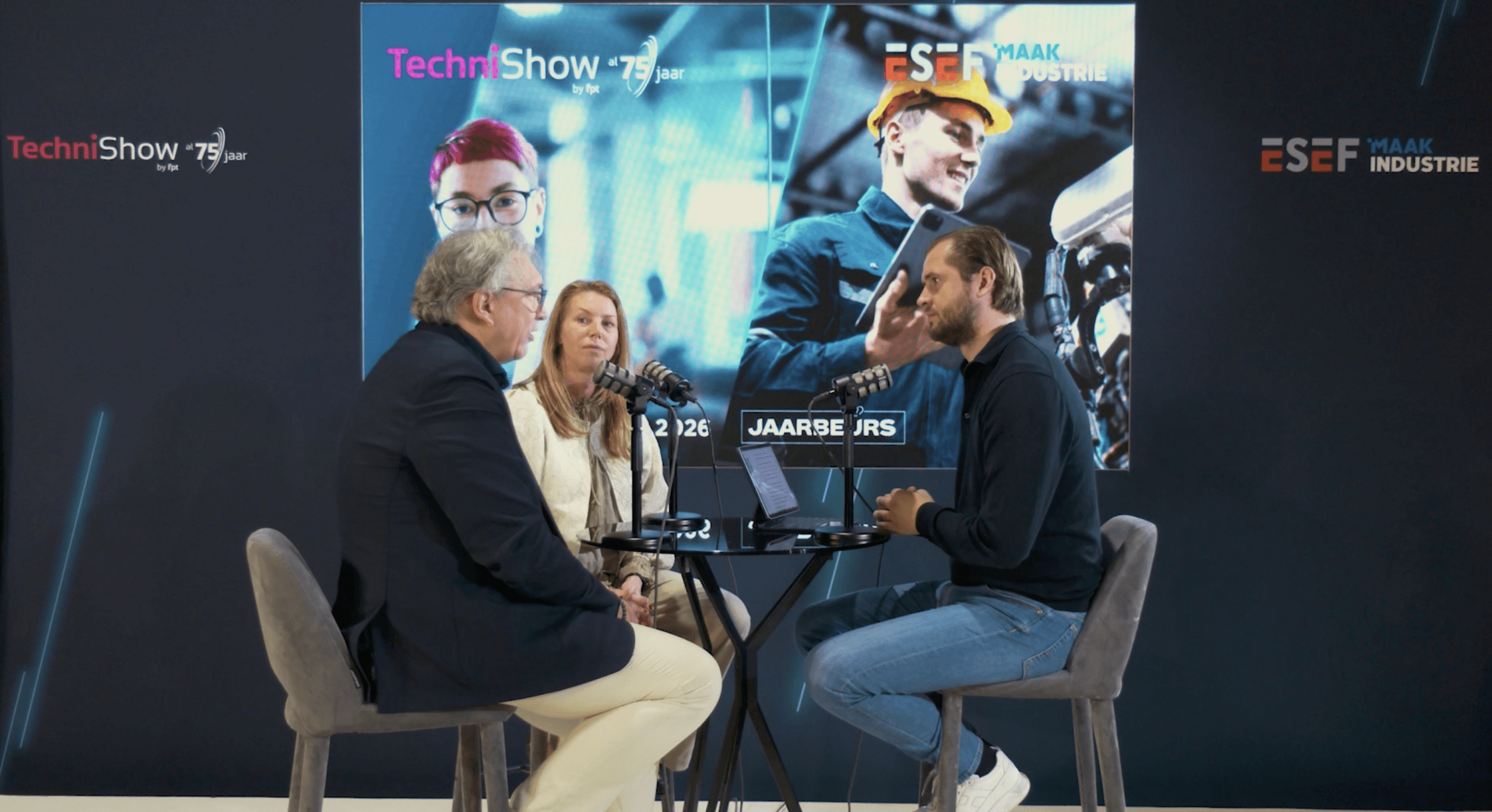
The manufacturing industry is changing faster than ever. Where trade fairs used to revolve around machines, tools and technology in isolation, today the focus is on something far bigger: complete smart production chains. This became crystal clear during TechniShow 2026. The fair demonstrated that the future of production no longer hinges on isolated innovations, but on collaboration, automation, digitalization and the smart connection of systems.
According to organizers and industry representatives, the role of the manufacturing industry is more important than ever. Production capacity, technological independence, innovative strength and economic growth are all directly linked to a strong industry. In this sense, TechniShow 2026 was not just a trade fair, but a powerful signal: the industry is alive, innovating and looking ahead.
From machine fair to innovation platform for the manufacturing industry
TechniShow has a long history as a fair where suppliers demonstrated machines to the Dutch market. But that role has changed. Machines today are no longer the end point, but part of a much larger whole.
Modern production revolves around the combination of:
- machines
- robotics
- software
- data
- automation
- connections between systems
- smart workflows
- AI applications
- real-time process optimization
As a result, TechniShow has grown into a complete innovation platform for the manufacturing industry. It's not just about showing what a machine does, but above all how companies can use it to produce faster, smarter and more profitably.
Why collaboration became the central theme
One of the biggest trends at TechniShow 2026 was collaboration. Visitors saw more and more stands where several companies presented solutions together. That makes sense, because modern production solutions rarely consist of just one product or one supplier anymore.
A smart factory requires collaboration between:
- machine builders
- software companies
- robot suppliers
- automation specialists
- data experts
- integration partners
- trainers and educators
- production companies
Each party delivers a building block. It is precisely the successful combination of these building blocks that determines whether a factory becomes future-proof.
The biggest challenges for the manufacturing industry in 2026
Despite all the innovation, the sector is also under pressure. During the fair, the same challenges kept coming up in conversations with companies and visitors.
1. International price pressure
Competition from low-wage countries remains a major challenge. Dutch and Belgian companies must compete on quality, speed, flexibility and innovation.
2. Shortage of technical staff
Many companies are struggling with a scarcity of well-trained personnel. Operators, engineers and technical specialists alike are hard to find.
3. Rising costs
Material prices, energy prices and labor costs continue to squeeze margins.
4. Space and grid congestion
Companies want to expand, but run into a lack of space and limited power capacity.
5. Increasing complexity
Machines, software and production processes are becoming smarter, but also more complex. This calls for new knowledge and better integration.
Why digitalization is no longer a choice
One of the most powerful messages at TechniShow 2026: digitalization is no longer a distant prospect. It has become a precondition.
Digitalization connects machines, processes and people. Without proper data exchange and smart software, automation remains limited to isolated islands. With digitalization, an integrated production environment emerges in which companies can respond faster, work more efficiently and forecast better.
Think of:
- automatic order processing
- real-time dashboards
- predictive maintenance
- smart planning
- quality monitoring
- AI-driven optimization
- connections between ERP, MES and machine control
For many companies, digitalization is now just as essential as electricity or raw materials.
The factory of the future is now visible
An important part of the fair was the presentation of the factory of the future. There, it became visible what production looks like when processes are fully aligned with one another.
In such a smart factory, the following happens:
- An order comes in digitally
- Software automatically schedules production capacity
- Machines set themselves up
- Robots carry out operations
- Data is monitored in real time
- Quality is automatically safeguarded
- The product leaves the factory efficiently
With fewer manual interventions, higher speed and consistent quality.
That makes such concepts all the more relevant in a market with staff shortages and increasing competition.
Data becomes the new production factor
One of the most discussed topics at TechniShow 2026 was data. Not the machine itself, but what companies do with their data, increasingly determines their competitive edge.
Companies want to know:
- Where does downtime occur?
- How do we increase output?
- Where are we losing margin?
- Which machine performs best?
- How do we predict maintenance?
- How do we improve quality?
- How do we connect systems more intelligently?
The manufacturing industry is thus shifting from reactive working to predictive, data-driven production.
AI is taking on an ever greater role in production
Where AI was mostly theory just a few years ago, TechniShow 2026 made clear that artificial intelligence is rapidly gaining ground in the industry.
Possible applications include:
- automatic process improvement
- fault detection via vision systems
- predictive maintenance
- intelligent planning
- capacity optimization
- energy management
- quality analysis
- smart knowledge assistants for operators
AI is thus increasingly becoming a practical tool rather than a buzzword.
Young talent becomes crucial for the sector
Notable during this edition was the presence of many students and young visitors. This is essential for the future of the sector.
The manufacturing industry has to compete for talent. That's why it's important for young people to see that modern industry is all about:
- high-tech technology
- robots
- software
- smart production
- sustainability
- innovation
- engineering
- international opportunities
The old image of dirty factories and heavy manual labor is increasingly outdated. Modern production sites are often high-tech environments where technology and digitalization come together.
Quality of visitors more important than numbers
Although visitor numbers always attract attention, the success of TechniShow 2026 was above all about quality. Companies indicated that visitors came with a clear purpose, bringing concrete challenges, investment plans and serious projects.
This led to:
- valuable conversations
- new leads
- concrete investments
- partnerships
- knowledge sharing
- inspiration for innovation
For exhibitors, that is ultimately more valuable than large visitor flows alone.
Why the manufacturing industry must push ahead now
The common thread of TechniShow 2026 was clear: standing still is not an option. The industry must keep investing in smarter production, digitalization and collaboration.
Companies that accelerate now build a lead in:
- efficiency
- delivery reliability
- cost control
- innovative strength
- attractiveness to staff
- competitive position
- profitability
Those who wait will fall behind.
Conclusion
TechniShow 2026 showed that the manufacturing industry is very much on the move. It is not isolated machines, but complete ecosystems that will determine the future. Collaboration, digitalization, AI and smart production are becoming the new standard.
For companies in the Netherlands and Belgium, there is an enormous opportunity here. Those who invest in technology and process improvement now are building a strong position for the years ahead.
The message of the fair was therefore clear: the future of the manufacturing industry is not something to wait for, but something to build.
Want to know more? Then also visit the website: https://www.maakindustrie.nl/
FAQ
What is TechniShow?
TechniShow is the largest trade fair for production technology, manufacturing, machines, automation and smart production in the Netherlands.
What was the main theme of TechniShow 2026?
Collaboration, digitalization and complete smart production processes took center stage.
Why is digitalization important for the manufacturing industry?
Digitalization connects machines, software and processes, allowing companies to produce more efficiently, faster and smarter.
What challenges are currently facing the manufacturing industry?
Price pressure, staff shortages, rising costs, grid congestion and increasing complexity are major challenges.
What role does AI play in production?
AI helps with planning, maintenance, quality control, process optimization and more efficient production.
Why are young people important for the sector?
The industry needs new technical talent to enable growth, innovation and continuity.