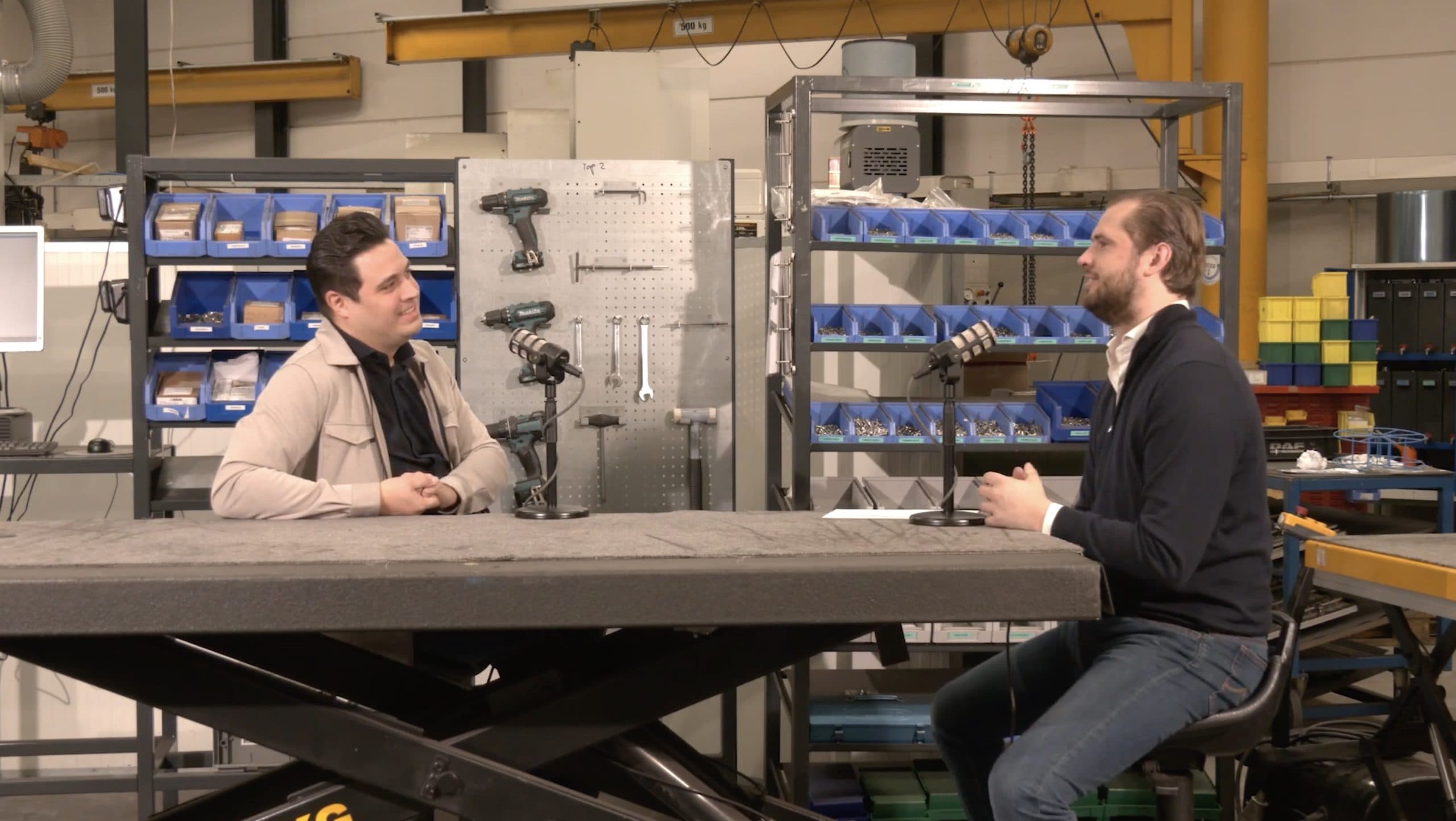
The sheet metal processing industry is under pressure. Customers demand smaller batches, shorter lead times and consistent quality, while skilled professionals are scarce and costs keep rising. Yet a striking number of manufacturers still make the same strategic mistake — with major consequences for their margins and continuity.
Sheet metal processing at a tipping point
The world of sheet metal and metalworking is changing rapidly. Where the business model for years revolved around high volumes and maximum machine utilization, the market is now shifting towards flexibility and speed. Customers want more variety, shorter product life cycles and fast delivery, without compromising on quality.
At the same time, the industry faces a structural shortage of skilled professionals. Well-trained specialists are scarce, while processes are becoming increasingly complex. The result: more and more companies are getting stuck — often without realizing it themselves.
According to Erik Niewerth, responsible for BUMET, many manufacturers underestimate how far-reaching this change is.
"Anyone still working today the way they did ten years ago is slowly but surely pricing themselves out of the market."
From large series to small volumes
Traditionally, sheet metal processing revolved around economies of scale. Long setup times and extensive preparation were acceptable as long as they were offset by thousands of products. That reality is becoming increasingly rare.
More and more customers are deliberately choosing smaller batches. Inventory is expensive, risky and limits flexibility. Instead, customers expect suppliers to be able to switch quickly and deliver reliably, even at low volumes.
This calls for a completely different way of organizing:
- More changeovers
- Shorter lead times
- Higher demands on process control
- Fewer margins for error
Those who fail to make this shift will see their margins evaporate quickly.
The biggest mistake: calculating as if the market hasn't changed
The most common mistake in sheet metal processing is painfully simple: companies keep calculating and producing as if large series are still the norm.
An hour of preparation was easy to justify for thousands of units. But for batches of ten, twenty or fifty products, those same costs become disproportionately heavy.
"That's when costs get completely out of proportion," says Niewerth. "Yet many companies keep clinging to the same processes and the same cost structure."
The consequence is easy to guess: quotes are lost, prices are driven up, or margins disappear entirely.
The real bottleneck sits before the machine
While many entrepreneurs invest in faster or more modern machines, the real problem often isn't on the shop floor, but in the preparatory stages. Work preparation, programming, risk analysis and quality assurance eat up an increasingly large share of the total lead time.
"You can have the fastest machine," says Niewerth, "but if you first need a day to prepare everything, you can never deliver quickly."
Companies that only invest in hardware but leave their processes untouched are structurally lagging behind.
Digitalization is not a luxury, but a necessity
Digitalization plays a key role in future-proofing sheet metal processing companies. Modern production software makes it possible to:
- Identify errors in advance
- Standardize processes
- Reduce setup times
- Provide insight into lead times
Where calculations and checks used to be done manually, systems now predict where risks arise. This increases not only speed, but above all reliability.
Still, Niewerth emphasizes that technology alone is not enough. "Without good processes and expertise, digitalization remains a tool, not a solution."
Craftsmanship remains decisive
Despite far-reaching automation, craftsmanship remains crucial. Robots are taking over more and more repetitive work, but they need people who understand what is happening and can intervene when necessary.
"There are still hands available," says Niewerth, "but specialists who truly master the trade are scarce."
That problem starts with the image of the industry. Technical craftsmanship is insufficiently promoted, while modern factories are in fact high-tech, clean and innovative.
Collaboration is becoming increasingly important
Many manufacturers face exactly the same challenges, but hardly ever discuss them with one another. Competitive pressure and reluctance to share knowledge hold back collaboration.
According to Niewerth, that is precisely where an opportunity lies.
"You don't have to share everything, but by exchanging experiences about structural problems, the entire sector becomes stronger."
Especially in a market where speed and flexibility are decisive, collaboration can make the difference.
How do you know your way of working is no longer future-proof?
The signals are clear:
- Margins are declining
- Quotes are structurally being lost
- Customers are dropping out
- Employees are questioning outdated working methods
"You always feel it first in your revenue," says Niewerth. "And that's the moment to take a critical look at your processes."
His advice: start with data. Gather information, analyze bottlenecks and tackle the real cause.
"Mistakes almost never come from people, but from processes that aren't right."
Conclusion: adapt or disappear
The sheet metal processing industry finds itself at a breaking point. Companies that cling to old calculations, old processes and old assumptions will lose out to competitors who dare to change.
The biggest mistake is not a shortage of machines or people.
The biggest mistake is continuing to work as if the market hasn't fundamentally changed.
Or, as is increasingly said in the sector:
Those who don't move with the times now will inevitably be pushed out of the market.