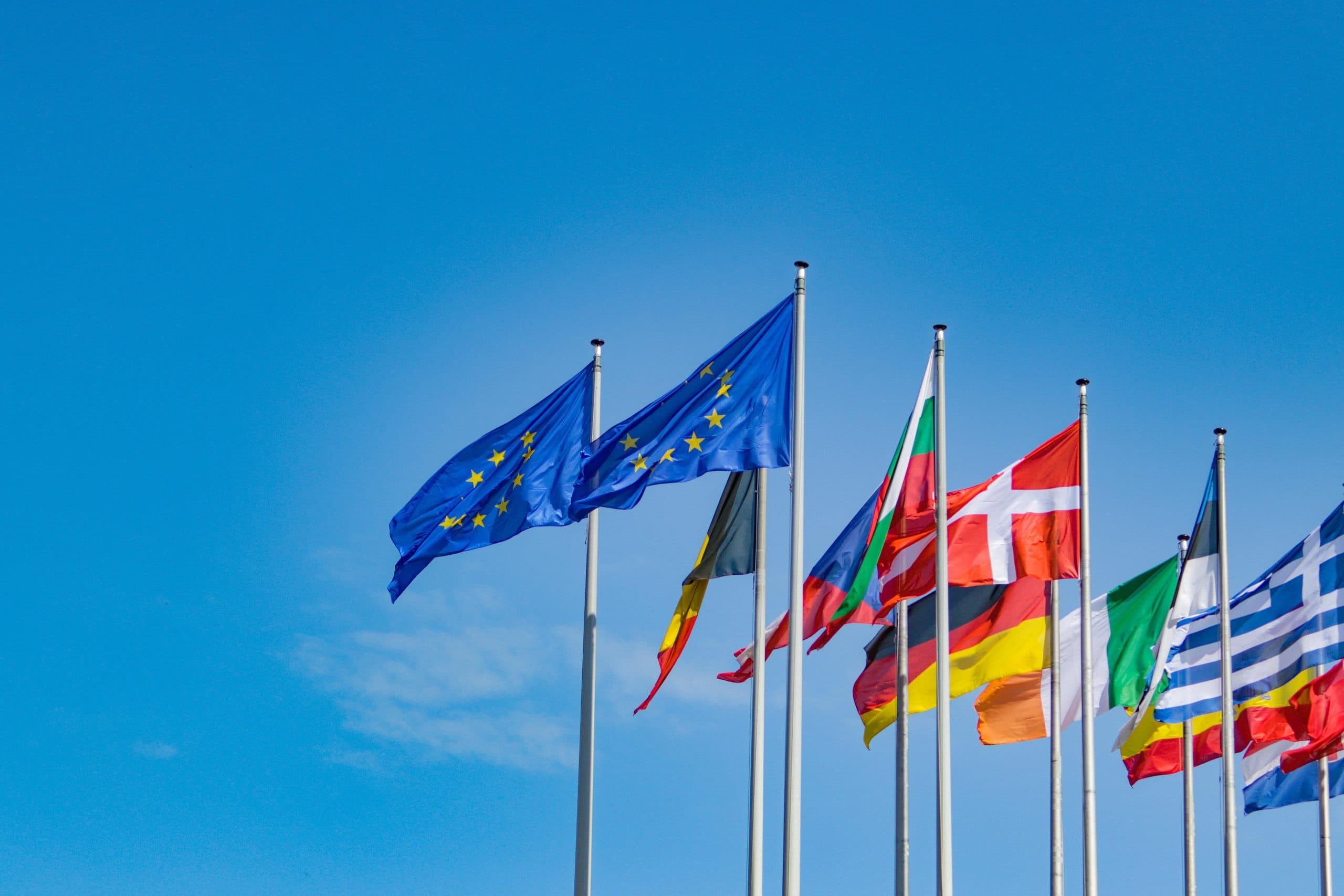
Europe can no longer afford to operate slowly, fragmented and divided along national lines in technology and industry. That message does not come from a think tank or a lobby group on the sidelines, but from the very top of Europe's business community. The CEOs of Airbus, ASML, Ericsson, Mistral AI, Nokia, SAP and Siemens have jointly issued a public appeal to scale up Europe's competitiveness in AI and critical technology far more quickly. According to them, Europe is losing ground “every day.”
The timing is no coincidence. The joint appeal followed a meeting with Commission President Ursula von der Leyen in Brussels and coincides with a broader European debate about technological sovereignty, investment, market fragmentation and the question of how Europe can allow its own champions to emerge in sectors that are becoming increasingly strategic.
Why this appeal goes beyond the tech sector alone
At first glance, this looks like a story about software, AI and digital infrastructure. But in reality it touches the full breadth of European industry. ASML, Airbus and Siemens stand not only for technology, but also for machine building, manufacturing, supply chains, automation, defence, energy and high-tech production. The appeal from these CEOs is therefore also an industrial signal: Europe must stop thinking in separate national markets and start building scale, investment power and strategic execution speed.
DIGITALEUROPE, which is behind the broader “European AI & Tech Declaration,” explicitly speaks in this context about reducing fragmentation, unlocking investment and creating a business climate in which innovation in Europe can grow and scale. According to the organisation, CEOs and industry associations that together represent 56,000 companies stand ready to invest, provided Europe creates the right conditions.
The core of the criticism: Europe is too fragmented
At its heart, the CEO appeal revolves around one recurring problem: Europe has the knowledge, the talent and the companies, but too little scale. That is not only a matter of money, but also of institutions. The European internal market is large on paper, but in practice still too fragmented to truly give technology companies and industrial growth firms the same home market as their competitors in the US or China. ECDPM writes on this subject that Europe's unfinished internal market continues to limit the global growth of European companies.
Precisely for that reason, the slogan “act as one Europe” is now sounding louder. Anyone wanting to scale up AI, cloud, semiconductors, telecom infrastructure or industrial software still too often runs into differing national rules, slow decision-making, fragmented procurement and diverging investment logic. The CEOs effectively argue that Europe is weakening itself in a period when geopolitics and technology increasingly converge.
Europe wants champions, but still struggles with the path to get there
That the message is landing is also evident from European policy in recent weeks. Reuters reported in late April that the EU wants to revise its competition rules, so that companies gain more room to invoke broader benefits in mergers, such as innovation, resilience, investment and sustainability. In Brussels, the idea is increasingly taking hold that Europe needs “champions” capable of competing globally with American and Asian players.
At the same time, Europe remains cautious. In the same context, European Commissioner Teresa Ribera made clear that this will not become a licence for powerful companies to grow bigger without limit. The course is therefore twofold: Europe wants scale, but without completely abandoning its own competition principles.
That makes the CEOs' appeal all the more interesting. They are asking not only for money or protection, but above all for an environment in which European companies can build, invest and break through faster. DIGITALEUROPE sums this up in a series of policy recommendations around tech leadership, removing regulatory barriers, building a digital backbone and being able to realise projects in Europe more quickly.
AI is the immediate trigger, but the real theme is strategic autonomy
The public appeal visibly revolves around AI and critical technology, but underneath lies a broader concern: on too many crucial points, Europe depends on others. ECDPM describes how European policymakers are increasingly converging around two goals: reducing critical dependencies in the digital technology stack and strengthening European competitiveness. According to that analysis, the expected European tech sovereignty package should sharpen precisely this line this summer.
This affects not only cloud or AI models, but also satellite infrastructure, telecom, digital security, undersea connections, procurement and industrial investment. In other words: the tech debate is increasingly becoming an industrial debate. And vice versa.
For industry, that means something fundamental. Anyone using software, data, production machines, automation or chip technology has long since ceased to operate in a purely technical playing field. It is now also about geopolitical reliability, access to infrastructure, financing, regulation and the question of whether European solutions will remain available at large scale.
Why these particular names carry so much weight
The fact that it is precisely Airbus, ASML, Ericsson, Mistral AI, Nokia, SAP and Siemens that are stepping forward jointly is significant in itself. Nokia explicitly notes that these seven CEOs share the same value chain and the same scaling challenges. So this is not about separate companies with separate wishes, but about a chain of hardware, software, networks, semiconductors, industrial automation and AI that reinforce one another.
That combination makes the appeal more powerful than a traditional sector letter. ASML stands for the strategic core of the global chip industry, Airbus for aviation and defence, Siemens for industrial technology, SAP for business-critical software, Ericsson and Nokia for networks, and Mistral AI for Europe's ambition in generative AI. Together they in effect sketch a blueprint of what Europe still does have — and what, according to them, it must build out more quickly. This last point is a reasonable interpretation based on the composition of the signatories and their positions in the European value chain.
The message to Brussels: less talking, more execution
The tone of the appeal is strikingly urgent. In the full opinion piece, Nokia stated that Europe is losing competitiveness “every day” and that this is not only an economic problem, but also touches on social cohesion, future prosperity and technological sovereignty. That kind of language shows that the debate is shifting from desirability to necessity.
DIGITALEUROPE ties in directly with this by stating that Europe must think big, invest smartly and act quickly. The declaration explicitly calls this “Europe's AI and tech moment.”
The frustration therefore lies less in a lack of vision and more in the lack of execution. Europe produces strategies, plans and frameworks, but companies now above all want an environment in which projects really get off the ground faster, investments scale more easily and the internal market functions in a less fragmented way.
What this means for Dutch industry
For the Netherlands, this discussion is extra relevant. Our country is deeply intertwined with Europe's high-tech, chip and industrial chains, with ASML as flagship and a broad network of suppliers, machine builders, software companies and knowledge institutions around it. If Europe genuinely gets to work on AI, digital infrastructure and technological sovereignty, this could directly feed through into investment, production capacity and innovation projects in the Netherlands. This is a reasonable inference based on ASML's prominent role in the appeal and the Netherlands' high-tech profile.
The reverse is equally true: if Europe remains stuck in fragmentation and slow execution, that will also affect Dutch industrial growth firms. Not because the Netherlands has too little knowledge, but because scale and market access in more and more tech and industrial fields are determined at the European level.
The real question: does Europe now dare to truly act as one bloc?
The CEOs' appeal is clear, but the hard part is only just beginning. Because “acting as one Europe” sounds logical, until it becomes concrete. Then it is about national interests, procurement rules, investment funds, strategic purchasing, state aid, cloud sovereignty, competition and the question of which companies or sectors get priority.
ECDPM points out that member states increasingly agree on the importance of European competitiveness and sovereignty, but less on the way in which those goals should be achieved. That is precisely where the real test will lie in the coming months.
Conclusion
That seven of Europe's most influential tech and industrial CEOs are speaking out jointly is no symbolic exercise. It is a signal that patience at the top of Europe's business community is wearing thin. According to them, Europe still has the knowledge, the companies and the industrial base to compete in AI and critical technology, but no longer the luxury of continuing to act in a fragmented way.
For industry, that is a message that reaches far beyond Brussels. It is about whether Europe succeeds in building an environment in which innovation not only emerges, but also stays, grows and gains global significance. And that is precisely why this appeal touches not only the tech sector, but the entire industrial future of Europe.
FAQ
Which CEOs made this appeal?
According to Nokia, they are the CEOs of Airbus, ASML, Ericsson, Mistral AI, Nokia, SAP and Siemens.
What is their appeal about?
They call on Europe to act faster and more jointly in the areas of AI, critical technology, investment and scaling up.
Why do they consider this necessary?
Because, in their view, Europe is losing competitiveness due to fragmentation, slow execution and a market that is too fragmented.
What do they mean by 'acting as one Europe'?
That Europe should operate in a less nationally fragmented way and work more as a single internal market and strategic bloc, especially in AI and critical technology. This is a reasonable summary of the open appeal and the policy context.
Why is this relevant for industry?
Because the appeal concerns value chains in which software, semiconductors, networks, industrial technology and production are directly interconnected.