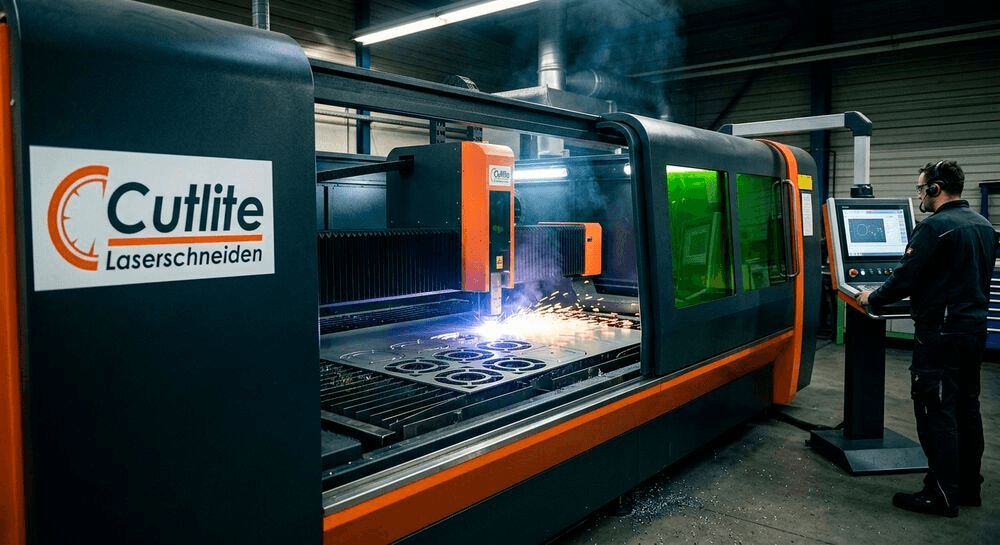
The acquisition of the laser business of Italian manufacturer Cutlite by Trumpf marks another step in the consolidation of the market for laser and plasma cutting. Cutlite builds 2D laser cutting machines and is entering a strategic partnership with the German market leader. For production managers and engineers in metalworking, this is more than a corporate headline: it affects how sheet metal processing capacity across Europe will be offered, priced and supported in the coming years.
Why Trumpf is doubling down on 2D laser cutting
2D laser cutting has been the backbone of many subcontractors processing sheet metal for years. The technology is mature, yet competition on price and productivity remains fierce. By bringing an established Italian player on board, Trumpf broadens its portfolio toward segments where price-performance is decisive. This is strategically significant, because a large share of European demand for laser cutting machines comes from the mid- and entry-level segment, where buyers scrutinise investment cost per production hour.
The backdrop is a broader trend: capital-goods manufacturers are joining forces to achieve economies of scale in purchasing, R&D and service. For a technology that leans heavily on fiber laser sources, control software and automation, scale is a precondition for continued investment in innovation.
What consolidation means for European manufacturers
For companies that outsource or produce sheet metal in-house, this move has concrete consequences. The key considerations:
- Wider machine choice under one roof: buyers may be able to choose between entry-level and premium machines within the same supply chain, with shared service and parts.
- Price pressure and market power: consolidation can broaden choice in the short term but limit negotiating room in the long term if large players grow more dominant.
- Software and connectivity: value shifts from the machine to the digital layer — nesting, automatic quoting and integration with ERP and robotics and automation.
- Service and parts: continuity of support and availability of spare parts are crucial for companies running around the clock.
For suppliers in sheet, strip and coil, a broader machine offering means they can align capacity more precisely with material thickness, lead time and cost per cut.
Automation as the real differentiator
The biggest gains in modern sheet metal work no longer come from cutting speed alone, but from the entire material flow. Think of automatic loading and unloading, sorting of cut parts and direct linking to downstream steps such as bending and folding or welding. Manufacturers that supply an entry-level machine with a credible automation path gain appeal among companies struggling with labour shortages.
This acquisition fits that picture: a broader product portfolio lets a supplier take customers from a single machine to an automated cell without forcing them to switch vendors. For manufacturers producing small to medium batches, that scalability is valuable.
Sustainability and energy consumption
An increasingly weighty factor in investment decisions is energy consumption. Fiber laser technology is considerably more efficient than older CO₂ systems, and at high machine hours every percentage point of efficiency matters in unit cost. Companies investing in new laser cutting capacity therefore look not only at cutting performance but also at consumption per part, heat recovery and the carbon footprint of their production. Consolidation can help here, as larger R&D budgets tend to yield more efficient systems faster.
What this means for the manufacturing industry
For European manufacturing, this acquisition underscores that the market for sheet metal processing machines is professionalising and concentrating further. For buyers and technical directors the lesson is twofold: capitalise on the broader offering and the tighter integration of software and automation, while safeguarding supplier independence and long-term support. Anyone weighing an investment now should focus not just on the purchase price but on total cost of ownership over the machine's lifetime — including service, energy, software and the option to automate later. Comparing several specialist suppliers before committing is a sound approach.