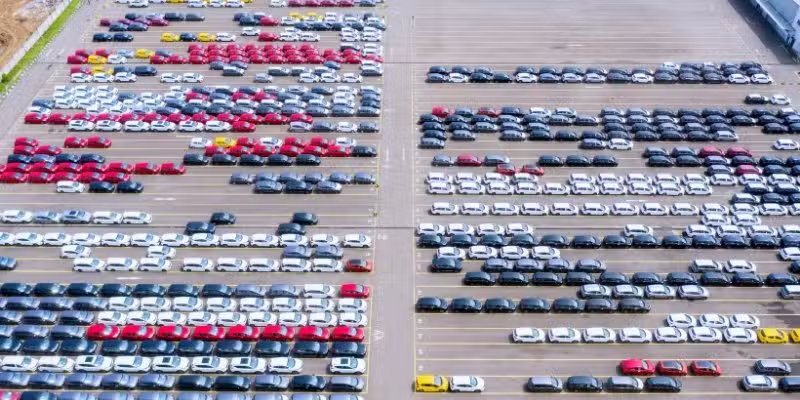
The first tangible effects of the escalating trade tensions between the United States and its trading partners are now visible. The auto industry in particular is being hit hard. Cars are piling up in American ports, production lines are grinding to a halt, and global logistics chains are creaking under the strain.
Ports as storage yards: vehicles with no destination
Since Washington announced new import tariffs on vehicles, American port areas have been transformed almost overnight into vast parking lots. European manufacturers such as Jaguar Land Rover, Audi and Aston Martin have significantly scaled back their exports to the US. For these car brands, which have no production facilities on American soil, the tariffs are devastating. The price of a European car can easily rise by thousands of dollars, which has a direct impact on demand.
Although American consumers are still rushing to take advantage of the old prices – the average selling time fell from 77 to 50 days – bottlenecks are emerging in the chain. Storage capacity is running out, and logistics companies are reporting disruptions in throughput.
Idle assembly lines: thousands of jobs at stake
The consequences are not limited to the import front. Domestic factories in the US, Canada and Mexico are also feeling the pressure. Stellantis – the parent company of brands including Peugeot and Opel – recently announced temporary closures of several production sites and laid off suppliers. In the process, more than 900 jobs were lost.
The import tariffs affect not only finished vehicles, but also parts. And that is problematic: many American car factories actually rely on imported components. Local production therefore offers no protection against rising costs. In a sector where margins are already under pressure, this poses a serious risk to continuity.
Container flows evaporate
International logistics are also taking a hit. According to data from the platform Vizion, the number of container shipping bookings to the US dropped by more than 60 percent in the space of a week. Exports from the US also plummeted. Dutch shippers' organisation Evofenedex confirms the trend: “Many companies are putting their international shipments on hold for now,” says policy advisor Casper Roerade.
Remarkably, container rates from Asia are not rising in tandem – a sign that the market is holding back, or is even afraid of overcapacity should the standstill persist. Prices to Los Angeles and New York are dipping slightly, according to data from market analysts Xeneta and Drewry.
The auto industry as a harbinger
Developments in the automotive sector are seen internationally as a signal. Like the ‘canary in the coal mine’, the industry is issuing an early warning: economic damage is looming. While financial markets speculate about the longer term, the immediate effects are already visible in ports, factories and supply chains.
For the Netherlands, the impact is not merely theoretical. Exports to the US amounted to more than 28 billion euros in the first nine months of 2024. A considerable share of that comes from industrial sectors that supply the auto industry directly or indirectly. If the tariffs persist or expand further, this could also have consequences for the Dutch manufacturing industry, especially in high-tech and metalworking.
What does the future hold?
The question remains how long companies can hold out in this situation. Will they seek alternative markets, or wait for de-escalation? And how will other economic superpowers such as China and the EU respond? One thing is clear: global trade is out of balance. And as long as that balance is not restored, the industrial sector worldwide will continue to swing between standstill and uncertainty.