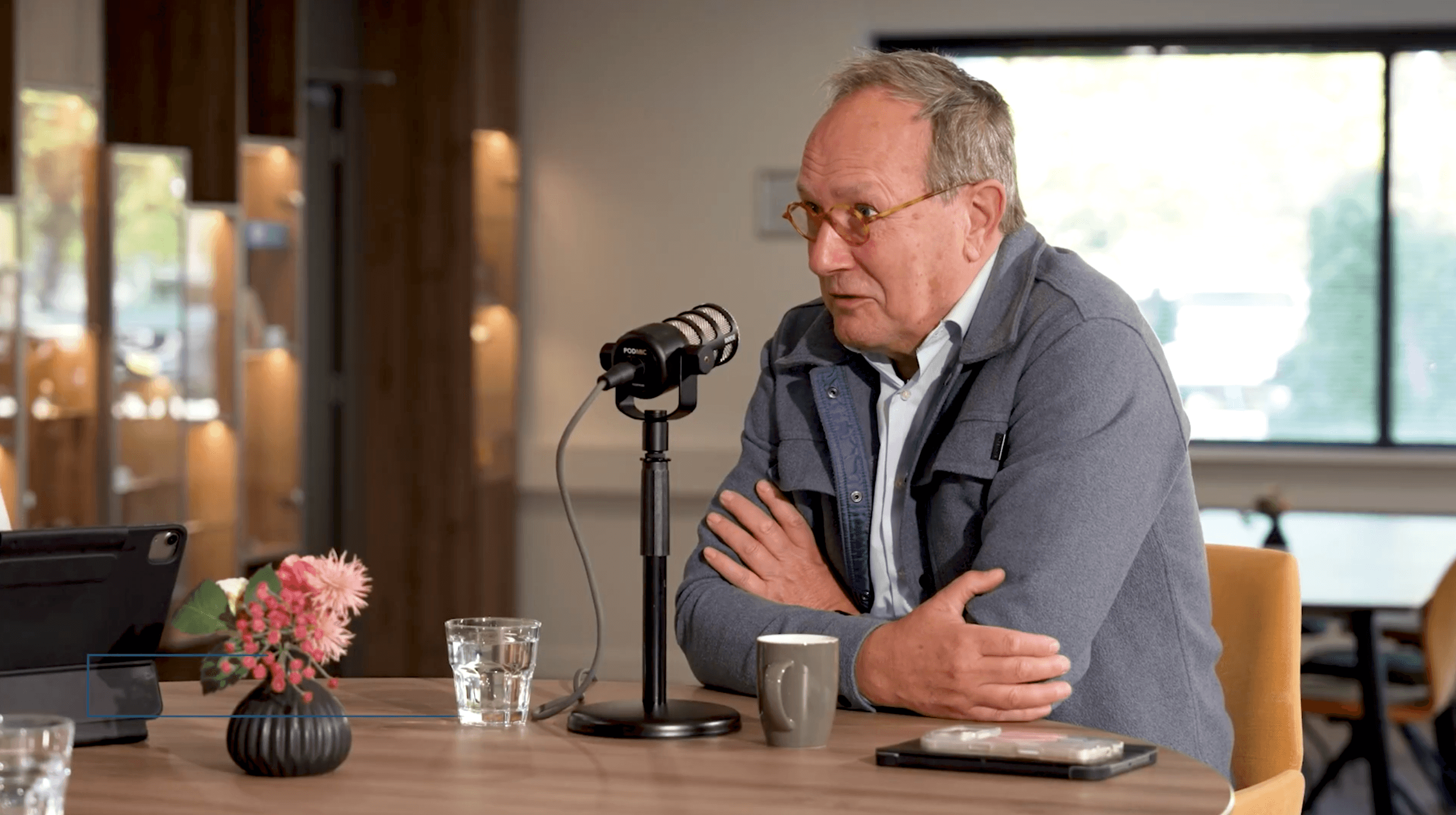
What once began as a toolmaking shop for stamps and moulds has grown at Doeko into a highly automated production environment for high-tech precision components and module construction. According to Gertjan and Bart, that shift is no luxury, but a sheer necessity to remain competitive in the Netherlands.
What makes Doeko interesting is not only that the company automates, but above all how. Where many companies automate individual machines or cells, Doeko reasons from the factory as one coherent system. Machines, transport, clamping tools, software and process logic all have to connect within it. And that, according to the family business, is precisely where the real gains lie.
From toolmaking to high-tech module construction
Doeko began as a classic toolmaking shop. At first the company revolved mainly around stamps, later moulds were added. These were complex one-off solutions needed to make large quantities of products possible. But that origin, according to Doeko, fits less well with the factory it wants to be today.
Nowadays the focus lies on high-tech system and module construction and on the production of precision components in larger volumes. That step also changed the company's logic. Where tools used to be central, it is now much more about repeatability, accuracy, stability and a smartly organised flow through the factory.
The family business thinks long term
During the conversation it becomes clear that Doeko thinks very much like a family business. That lies not only in ownership, but also in the way investments are viewed. Everything that stands here has been built and paid for by the company itself. That may make the choices more cautious, but also more fundamental. Investments have to contribute to continuity, knowledge retention and a healthy long-term position.
Automation in this respect is not a gadget or prestige project, but a strategic instrument.
Automation began as an answer to the battle with low-wage countries
The main reason behind the strong focus on automation is, according to Doeko, crystal clear: the competition with low-wage countries. The company has always resisted that, not out of sentiment, but out of the conviction that you can only maintain a strong economy and a genuine knowledge position if you keep producing locally as well.
Automation helps on three levels here. It reduces costs, increases output and makes processes more stable. But there is a fourth layer beneath it: the retention of knowledge. Because, according to Doeko, you cannot seriously speak of a knowledge economy if you let production disappear from your own environment.
Knowledge disappears when production disappears
That point is made sharply in the conversation. Doeko itself notices how difficult it has become to attract new talent. There is hardly any supply. That is precisely why, according to the company, it is crucial to keep production, craftsmanship and technological development here. Otherwise, over time, you lose not only capacity but also the knowledge base on which innovation rests.
In this logic, automation is therefore not just an efficiency instrument, but also a way to retain high-grade manufacturing knowledge within the company and within the Netherlands.
Doeko does most of its automation itself
One of the most striking features of Doeko is that the company develops much of its automation itself. That is not just a cost matter, but above all a choice that fits the company's culture. Bart describes Doeko as headstrong and innovative. The standard solutions from the market, according to him, by no means always connect well with what they need.
That is why Doeko has built its own mechatronics department. As soon as there are many repetitive tasks, the company starts brainstorming internally: can this be done smarter, more efficiently and better automated? Those solutions are then not only conceived but also engineered and built in-house.
It's in the DNA to organise repetition more smartly
According to Bart, that reflex runs deep in the company. When a task recurs frequently, the idea quickly arises that the operation could be done smarter. That is more than a technical trick; it is part of the company culture. Repetition triggers improvement. Not incidentally, but structurally.
That mentality did not come out of nowhere. Doeko had previously built up experience with injection moulding, product development and robotisation. Those first steps formed the basis for the current automation thinking.
The first big acceleration came when production really had to scale
An important moment in Doeko's story is the production of a successful product that was brought to market via Moooi. When that product gained traction, production suddenly had to be raised to a higher level. That, according to the company, was the real impetus to take automation seriously. The first robots came in-house then and formed the beginning of a learning process that is still ongoing.
That is an interesting lesson: automation often does not begin with an abstract plan, but with a concrete situation in which you simply have to produce differently in order to be able to deliver.
Just get started is still the best advice, according to Doeko
When asked what the biggest lessons from that journey are, Bart is remarkably practical. His answer: just get started. Because automation never happens by itself. You run into problems you didn't foresee beforehand. But precisely by starting, building up knowledge and improving step by step, you learn what works and what doesn't.
On top of that, according to him, comes something else: standardising. Not building a look-alike solution over and over again, but continuing to develop on fixed principles and standards. That is precisely what makes automation scalable.
Doeko doesn't automate individual cells, but the factory as a whole
Here lies perhaps the most important distinction of Doeko. Many companies automate per machine or per machining cell. There is plenty on the market you can buy for that. But Doeko has deliberately made a different choice: not to optimise individual cells, but to think about how the entire factory can function as one automated process.
That has everything to do with the type of work the company does. The parts Doeko produces are highly accurate and multidisciplinary. They often have to go through multiple steps in the factory: milling, cleaning, measuring, wire EDM and more. If you approach each of those steps as separate automated islands, the transport between them remains a problem. And that is precisely where efficiency is lost.
The real challenge lies in the flow between operations
According to Bart, automation should therefore not stop at the machine. The process in between is at least as important. That is why Doeko has invested in a system in which parts and clamping tools can move through the factory as part of one flow. That makes the factory fundamentally different from a collection of cells.
That kind of automation, according to Doeko, cannot be bought off the shelf. And precisely for that reason the company started developing it itself.
AGVs and central clamping tools make the system flexible
A concrete example of this is the way Doeko works with clamping tools. Instead of having a separate clamping system for each individual cell, those tools are centralised in a central warehouse. With the help of AGVs, they are brought to the right machines. This means one pallet or clamp can be used across multiple machines.
This ensures a much higher rotation of clamping tools and makes the system more flexible. When expanding capacity, you therefore don't have to set up complete separate automation cells with their own tooling each time, but can build more smartly on what is already in place.
Automation really started to take shape from 2018
Although Doeko had been working on automation for some time, real momentum in the larger systems thinking came from 2018 onwards. That also had to do with a subsidy from the Slimme en Schone Fabriek van de Toekomst (Smart and Clean Factory of the Future) programme of the province of Gelderland. Doeko won 200,000 euros at the time, which according to the company was an important starting signal to not only conceive the plans but actually start building them.
Since then the system has been continuously expanded. And that means, according to Doeko, that automation is never "finished".
Automating a factory is an ongoing process
When asked whether there is an end point, Doeko actually answers in the negative. The current system works well, but new limitations also keep surfacing. As a result, the company keeps developing further. In time, new production lines will even be added alongside, in which the lessons of the current line are applied again, but differently.
That makes automation here not a project, but a continuous learning and building process.
Growth also requires space, climate control and energy insight
Doeko is now already thinking beyond just the existing hall. The drawings for expansion are ready, the permit is in and the company wants to grow from 4,000 to 7,000 square metres. That expansion will also include cleanrooms on the upper floor for the assembly of modules.
Interestingly, this involves thinking not only about space, but also about climate stability and energy. For Doeko, temperature control is essential for accurate production. At the same time, the company wants to produce energy-efficiently and therefore also look much more sharply at energy consumption and smart use of the energy supply.
The ambition: a serious player in high-tech module construction
Where does Doeko want to be in five to ten years? The course is clear: to grow into a serious player in the Netherlands in the field of high-tech module construction, with high added value in both precision parts and assemblies.
The ideal customers, according to the company, are businesses that have a recurring need for mechatronic systems, preferably with electronics, testing steps and calibration. That is precisely where Doeko can best show its combination of production, automation and process control.
Automating requires more than buying a robot
Perhaps the most important lesson Doeko passes on to other entrepreneurs is that automation is much more than purchasing hardware. You have to genuinely make time for it, put people on it and dare to invest in the whole trajectory of developing, testing, improving and putting into use. Buying a robot is not yet the same as successful automation.
That is why Bart also explicitly mentions the importance of students, mechatronics courses and freeing up indirect staff to work on these kinds of projects. Without that development capacity, little ultimately happens.
Leadership requires belief, nerve and enthusiasm
Leadership also plays a major role in this. According to Doeko, you need enthusiasm, the nerve to invest and above all the belief that it makes sense. You have to enjoy developing it together with a team. Without that belief and without that enthusiasm, automation quickly becomes an obligation rather than an opportunity.
Within Doeko, that enthusiasm seems to be widely shared. The whole company thinks along, even though there is one core team that actually builds the automation. According to Bart, that is also necessary: engineering something is one thing, then deploying it effectively in practice requires the involvement of the entire organisation.
Without digitalisation, automation doesn't work
A final important point from the conversation is the role of digitalisation. Doeko is very clear about it: without digitalisation their automation could not have worked. All cells are connected and above them lies one software platform, an MES system, that controls the entire flow.
With this, Doeko also makes clear that automation is never just a robot question. It is just as much about data, software, insight and control. Anyone who wants to automate must therefore also think seriously about digitalisation.
Conclusion
The story of Doeko shows that automation only becomes truly powerful when you look beyond individual machines and individual cells. By approaching the factory as one system, with central clamping tools, AGVs, MES software and a self-developed flow, the family business is building a model that is much harder to copy than a standard cell from the market.
The message from Gertjan and Bart to other entrepreneurs is remarkably direct: get started, dare to invest and make serious time for it. Because anyone who wants to preserve and expand high-tech production in the Netherlands simply cannot afford, according to Doeko, to postpone automation. Or as the company itself sums it up: if you don't do it, you're doomed.
FAQ
What exactly does Doeko do?
Doeko produces high-tech precision components and builds mechatronic modules and systems with high added value. The company originally comes from toolmaking for stamps and moulds.
Why does Doeko automate so heavily?
To remain competitive with low-wage countries, increase output, make processes more stable, and retain production and knowledge in the Netherlands.
Why does Doeko do much of its automation itself?
Because standard solutions from the market do not connect well enough with the factory as a whole. Doeko wants to automate not just individual cells, but the entire flow through the factory.
What role does digitalisation play at Doeko?
A crucial role. All cells are connected via one software platform, an MES system, that controls the automation. Without that digitalisation the system would not work.
What, according to Doeko, is the most important advice for other companies?
Make serious time for it, put people on it and dare to invest. Automation is more than buying a robot; it requires development, perseverance and vision.