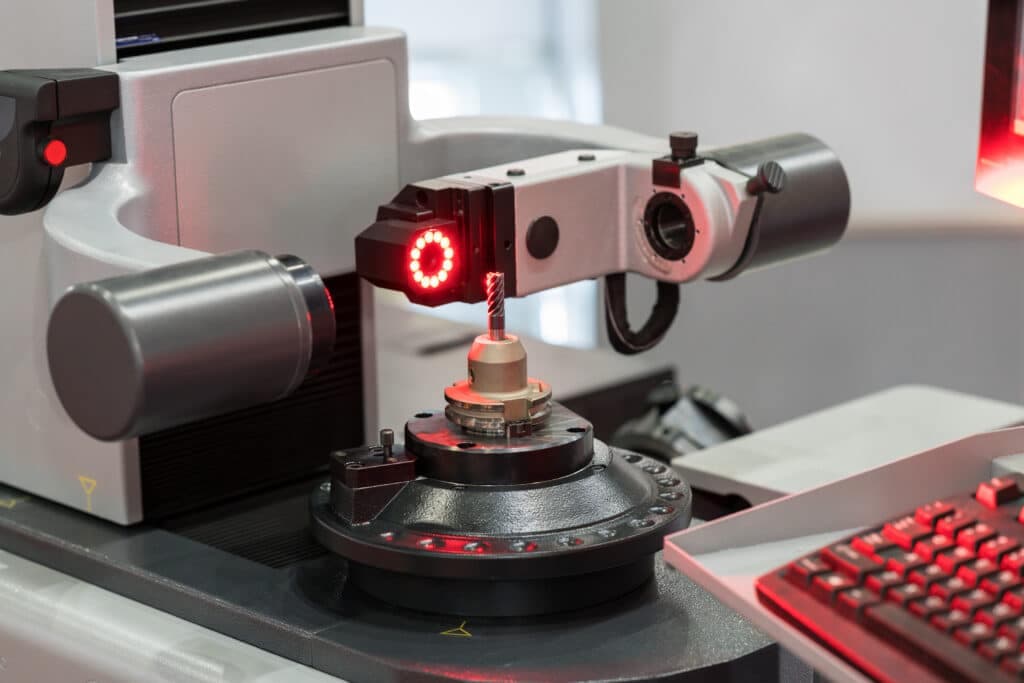
What sounds like science fiction to many entrepreneurs has long been reality according to EKB: 3D machine vision that replaces the human eye in factories. From waste separation to quality control – robots that see in 3D turn out to be faster, more accurate and cheaper than production workers. “This is going to fundamentally change the manufacturing industry,” says Tycho Scholtens, vision specialist at EKB.
From gimmick to game changer
Ten years ago, 3D vision was still seen as an exotic gadget. “When I started, people would say: nice that it can be done in 3D, but why would you want that?” Scholtens recalls. Today the question has completely changed. Entrepreneurs now come with the question: why wouldn't we do it?
The shift is driven mainly by labour shortages and stricter quality standards. Where companies used to be able to easily deploy staff for repetitive inspection tasks, that is now both difficult and costly. “Just try to find twelve people willing to pull waste out of a stream in a warehouse for 10 hours a day. With 3D Vision, a robot does that continuously and with the same precision,” Scholtens explains.
Misconceptions about 3D Vision: “too expensive and too complex”
Many entrepreneurs still think 3D Vision is reserved only for high-tech companies with multi-million budgets. “That image is simply wrong,” says Elske Commandeur, Marketing coordinator at EKB. “In our Vision Lab in Houten, we show companies that the technology is also feasible for medium-sized businesses. We can often set up a demo with their own products within a few hours.”
That lab proves to be a decisive factor. “As soon as entrepreneurs see with their own eyes how a robot recognises and picks up their products in 3D, the prejudices disappear,” says Scholtens.
Applications: from plastics to metal and waste streams
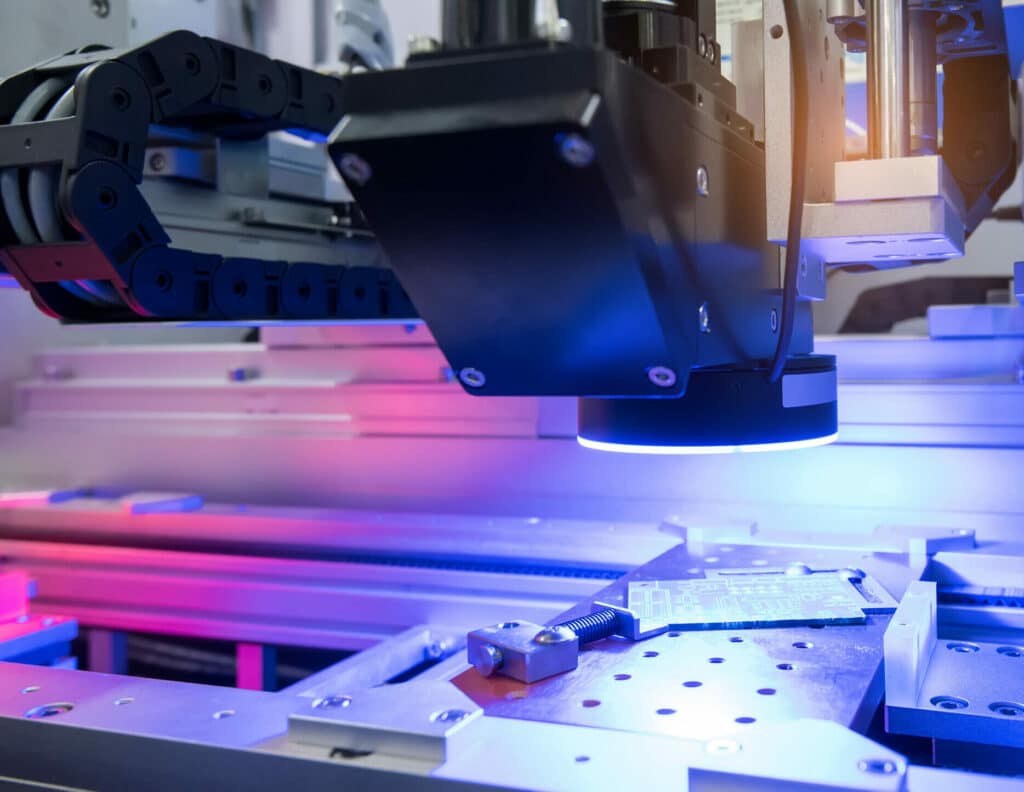
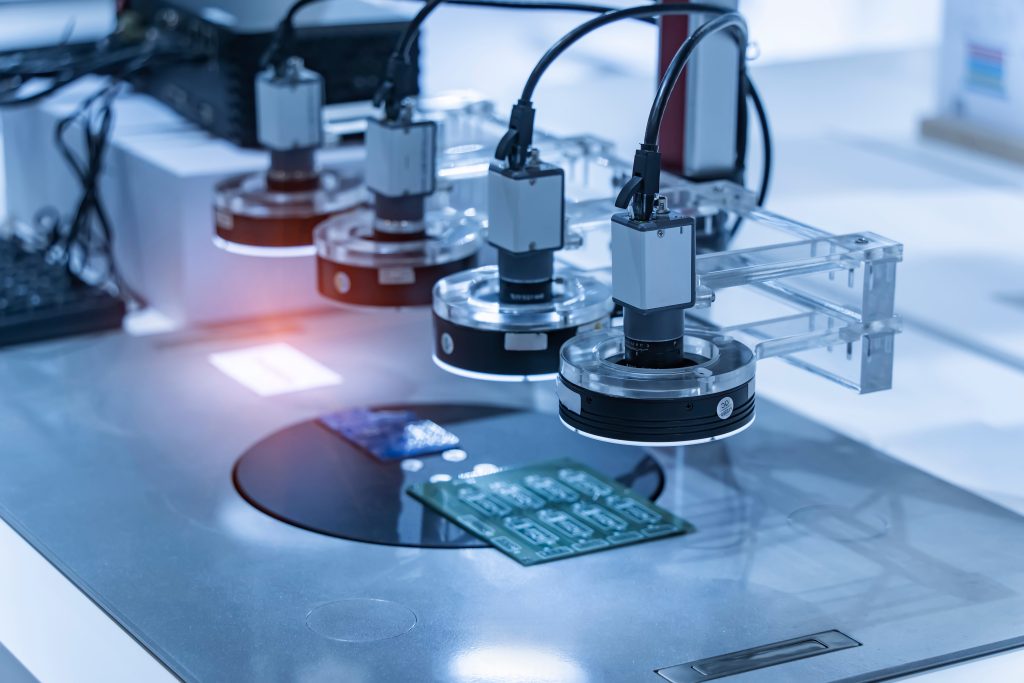
The strength of 3D Vision lies in recognising depth, shape and position. Where 2D cameras only provide a flat image, 3D Vision can also distinguish height and volume.
This opens up countless possibilities:
- Waste sorting – Robots recognise and separate materials at speed and with precision.
- Pick-and-place – Robots that pick random parts from bins or conveyor belts, regardless of their position.
- Quality control – Inspections that measure deviations down to tenths of millimetres
- Metalworking – Complex shapes that until now were checked by the human eye can be automated.
Scholtens: “One customer produces plastic blocks with holes in them. Previously, the depth and diameter were checked manually, but that often proved unreliable. With 3D Vision, we now do this fully automatically, flawlessly and continuously.”
Costs and payback time: faster than expected
According to EKB, the biggest hurdle for entrepreneurs lies in the financial picture. “The question we almost always get is: what does it cost?” says Commandeur. “But the real question should be: what does it deliver?”
The payback time is often surprisingly short. “In many cases, a system pays for itself within 1 to 3 years,” Scholtens states. “Less rejection, lower staff costs, higher quality – these are hard figures that are immediately measurable.”
The pitfalls: the wrong partners and lack of preparation
Still, Scholtens stresses that a well-thought-out implementation is essential. “We actually see great opportunities emerge when companies get to work with the right knowledge and experience. For example, we recently further optimised a project and brought the system to an accuracy of a few tenths of a millimetre – a result our customer immediately benefits from.”
In addition, preparation is crucial. “Companies need to be clear in advance about what they want to inspect and what budget they are prepared to make available. It sounds obvious, but many
entrepreneurs don't have that clear. Then you run the risk that expectations and reality start to diverge.”
Future: AI and robotics merge
Where is this heading? According to Scholtens, the future is already visible. “We now see that AI can help make multiple 2D cameras work together as if they were a 3D system. That makes it cheaper and more accessible.”
The real revolution, he believes, will come in combination with robotics. “3D Vision is often the eyes, robotics the arms and legs. Add AI to that, and you get autonomous systems that carry out processes completely independently. Think of self-driving robots that pick up parts and bring them to the right place.”
2030: from exception to norm
What now still seems progressive will probably be the standard in 2030. “In the metal industry, acceptance is slowly getting under way, but it is going to happen,” Scholtens predicts. “In five to 10 years, no one will bat an eyelid at 3D Vision in production. Then companies will sooner wonder how they ever managed without it.”
EKB's message to entrepreneurs
For companies that are now hesitating, EKB's advice is clear: come and see. “Our Vision Lab in Houten is free to visit,” Scholtens emphasises. “Bring your own products, let us set up a demo and experience for yourself what 3D Vision means for your process. You'll immediately see whether it's a solution for your factory.”
Conclusion: the manufacturing industry stands at a turning point
3D Vision was once a niche application, but is now rapidly growing into an indispensable production technology. Labour shortages, stricter quality requirements and the rise of AI are accelerating that trend. “Those who get on board now will have a head start within a few years. Those who wait will fall behind,” says EKB.