In an era where digitalisation and data-driven production set the pace, connectivity is the invisible network that ties everything together. But how do you establish this connection in existing systems where various control units and traditional wiring solutions are still standard? Ruben Palsgraaf of Bihl+Wiedemann, a specialist in industrial networks, advocates a pragmatic approach: “Start small. And let the system prove its own added value.”
The nervous system of automation
“In essence, we deliver the nervous system of a factory,” says Palsgraaf plainly. “Our systems ensure that sensors, actuators and control units can communicate with each other effectively and safely, without a jungle of cabling.” The technology is all about simplicity: fewer cables, fewer connection points, but more connectivity. And with that, also: more control over data.
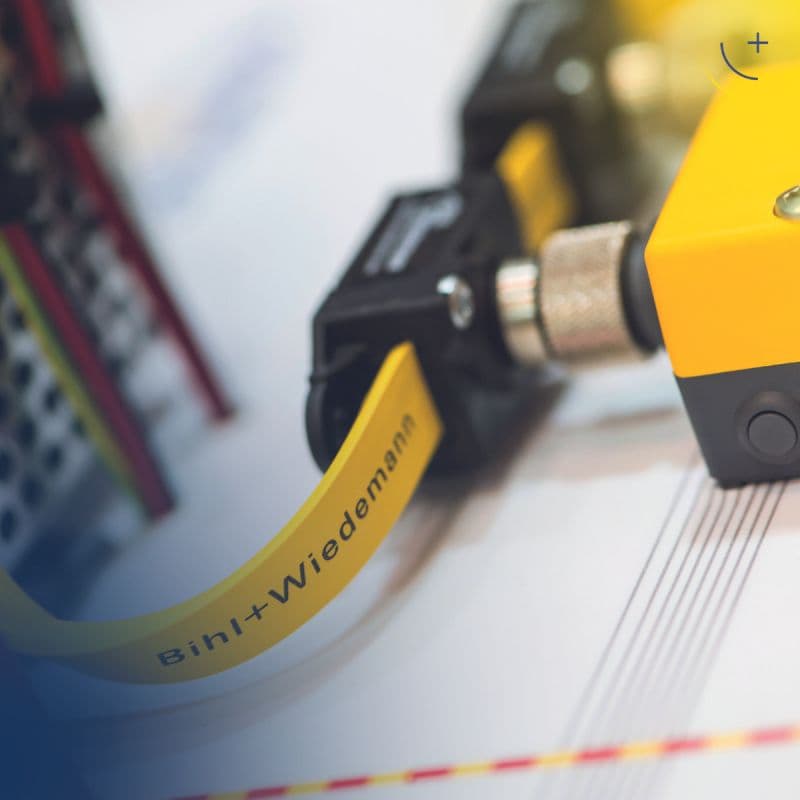
Where traditional systems require a dedicated cable for each sensor or actuator, that is a thing of the past with ASi and ASi-5 – the technologies in which Bihl+Wiedemann specialises. With a single flat cable for both data and power, you save considerably on installation costs and time.
The silent revolution in the factory
Many production companies struggle with outdated infrastructure. “The biggest challenge is the diversity of systems that have been installed over the years,” Palsgraaf explains. “From Profibus to Ethernet and everything in between – it results in a patchwork.” Replacing them is often costly and risky. Machines cannot simply be shut down.
Yet, according to Palsgraaf, it is precisely that hesitancy that ultimately proves expensive for companies. “The companies that dare to invest in modernisation now will reap the benefits later. Flexibility, scalability and predictability then become no longer a luxury, but the standard.”
Not a hype, but proven technology
Real-time data? Interesting, but by no means always necessary, Palsgraaf believes. “In industry, it’s mainly about stability, reliability and error-free communication. You don’t want nonsense data, but data that is correct and that you can build on.”
That is also exactly the strength of the ASi ecosystem: reliable data exchange with minimal risk of cyberattacks. “Because our system requires just one IP address
and works with a less common protocol, the chance of hacks is far smaller than with Ethernet-like networks that have hundreds of access points.”
From maintenance to predictability
The connectivity solutions from Bihl+Wiedemann also enable a new approach to maintenance. Instead of replacing components at fixed intervals – often too early or too late – companies can use concrete diagnostic data to predict when something really needs replacing. “That saves costs, prevents downtime and avoids wasting raw materials.”
Faster to adapt, even to market changes
In a world full of uncertainties, agility is crucial. Palsgraaf: “Our customers can modernise their existing production line step by step, without overhauling everything. You can easily add an ASi line to part of your machine without disrupting the rest.” The technology is suited not only to large lines, but especially to modular and configurable systems, allowing manufacturers to compete on customisation and price.
A call to factory owners
His advice to companies that want to get started with connectivity? “Start small. Choose one machine or one production line and see what it delivers. Don’t just look at the technology, but above all at the impact on your entire process – from engineering to procurement and maintenance.”
And be critical in your choices, Palsgraaf warns. “Opt for an open system that is widely supported. Don’t let yourself be locked into a single brand or supplier. Your data must remain yours – not your supplier’s.”
Want to be the first to know about the latest innovations in industrial connectivity? Then subscribe to the newsletter of deindustrie.online and receive the latest news, case studies and interviews directly in your inbox every month.