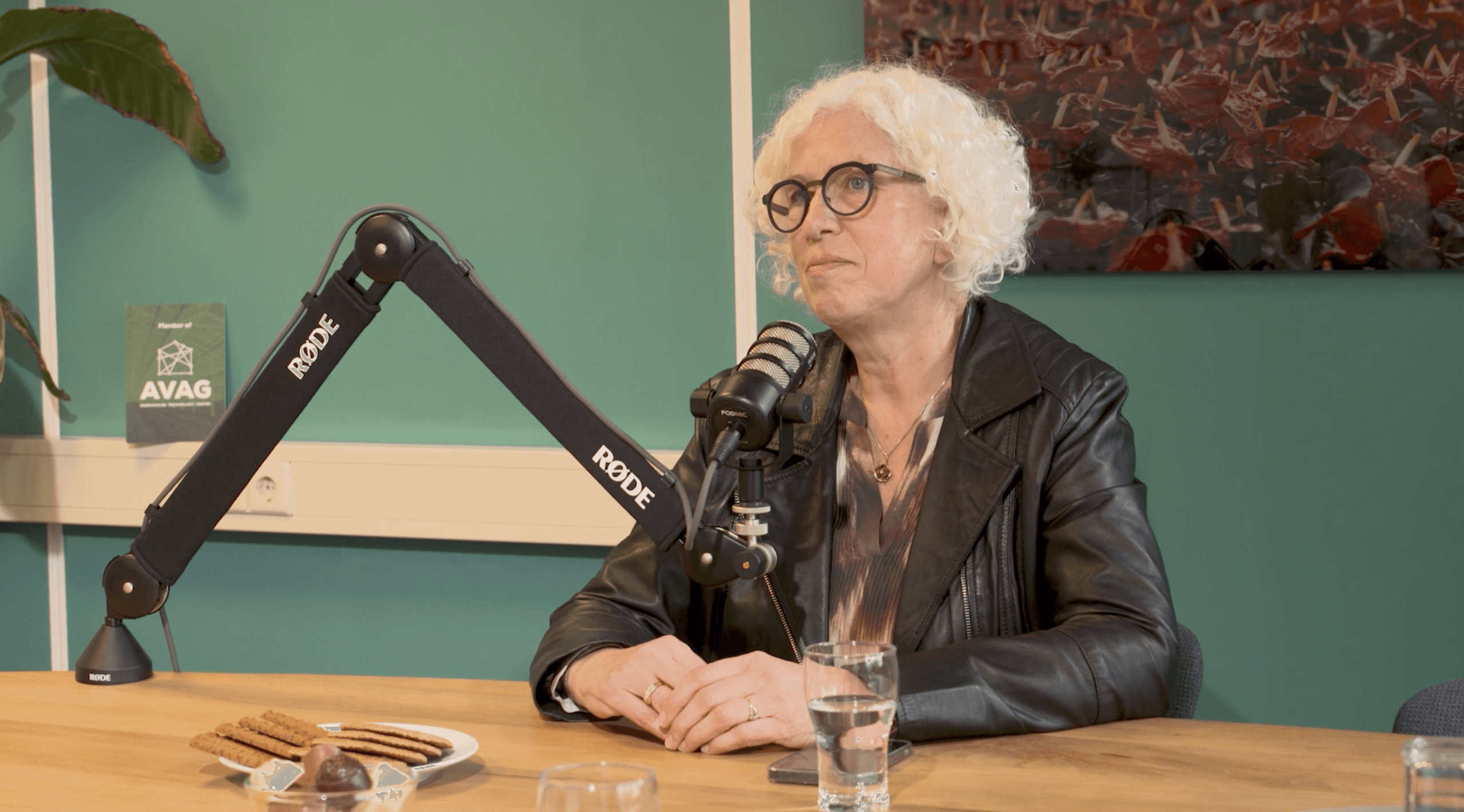
Dutch greenhouse horticulture is renowned worldwide for its leading position. Yet the sector is under pressure from climate change, labour costs and international competition. In this second episode, Annie van der Riet, chair of AVAG, and Bart Stengs of Achmea discuss how collaboration and innovation are making the sector future-proof.
From challenges to opportunities
According to Van der Riet, innovation is the key to maintaining the global leading position. “We can be proud, but we also have to keep innovating. Climate change, scaling up and digitalisation force us to act,” she says.
Stengs sees international trends as opportunities: demand for fresh vegetables is growing, and protected cultivation is becoming increasingly important worldwide. Satellite research shows that the surface area of protected cultivation is growing by 7 to 11% annually. “That offers enormous possibilities for Dutch knowledge and technology,” he adds.
Small steps, big impact
The sector is changing rapidly. Where everything used to be done manually, the focus is now on digitalisation and data-driven working. Van der Riet: “Companies are developing their own apps and systems. By making agreements on data sharing, we can do it together far more efficiently.”
A practical example is the Horty-Light protocol, which makes climate computers and LED lighting compatible. “It was a lot of work, but now every supplier can collaborate without errors. That delivers reliable and investable solutions,” says Stengs.
Innovation as collaboration
Innovation is not just technology, but above all collaboration. Pre-competitive research helps the sector develop standards and pool knowledge. Initiatives such as Dutch Hortipower coordinate research agendas and ensure that government and investors take the sector seriously.
“By setting standards together, individual companies save time and energy. That leaves room for unique products,” says Van der Riet.
Trends that are here to stay
Digitalisation, data-driven working, sustainability and chain collaboration are lasting trends. Climate change and consumer demands are driving the need for more sustainable production. At the same time, the way companies are organised is changing: management teams are increasingly taking on more tasks, and specialisation in cultivation, technology and strategy is essential.
Lessons for the sector
The sector’s success depends on collaboration and innovation. Small steps are important, but the larger goal is to maintain an international leading position together. Pre-competitive research, clear standards and digital collaboration make that possible.
The message for other horticultural businesses: dare to collaborate, make use of data, and lay the foundation for future-proof, efficient and sustainable production.