The factory of the future isn't built with technology alone
The future of manufacturing is often discussed as if it revolves mainly around robots, AI, ERP systems, cobots, sensors, data and smart machines. Anyone who knows the industry up close knows that this is only part of the story. Technology matters, but technology on its own changes nothing. A robot without a strategy remains an expensive machine. An ERP system without buy-in becomes a digital archive. AI without reliable data is mostly an experiment. And a new production line without engaged operators can even generate more resistance than progress.
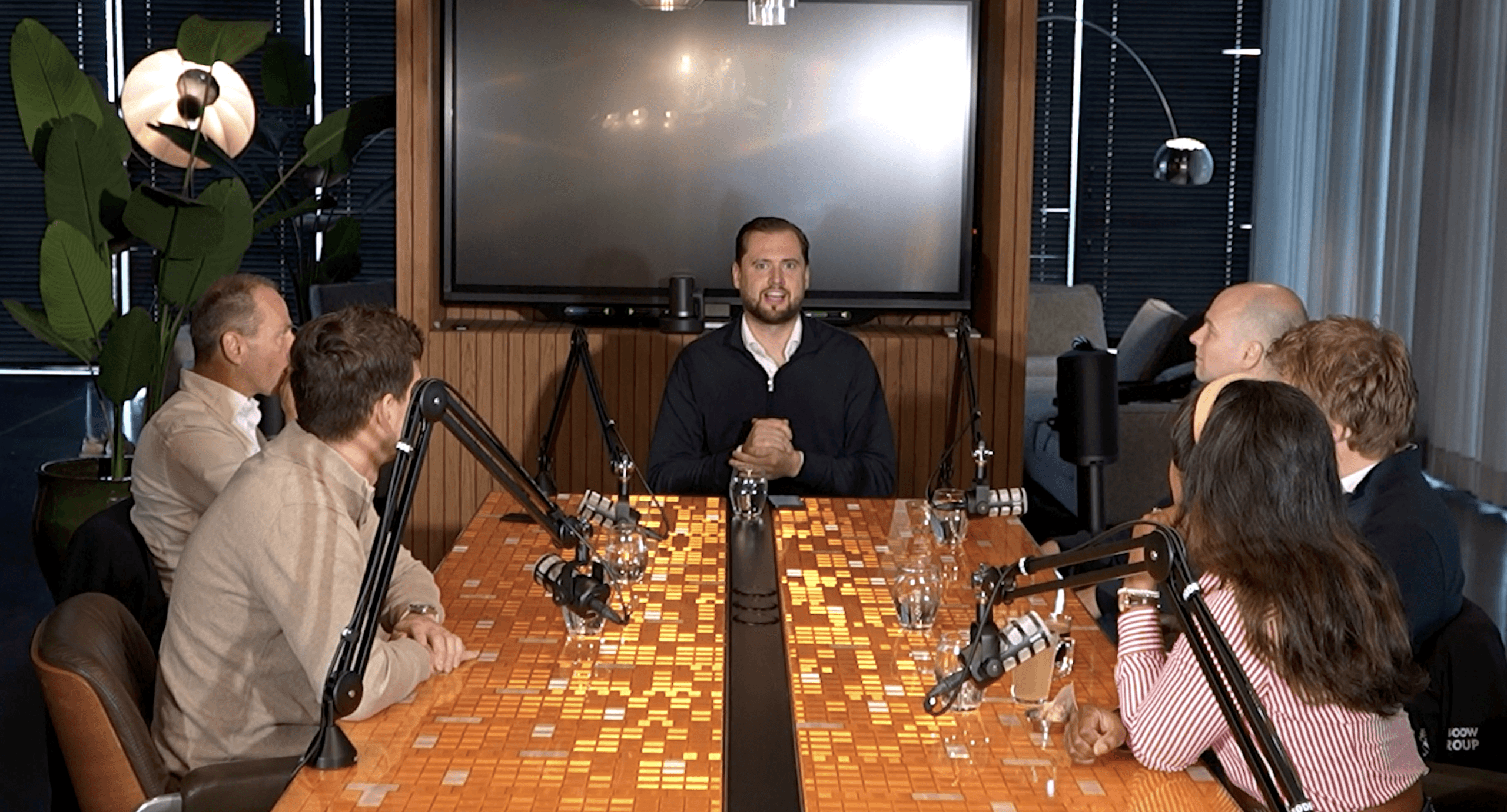
During a round table session on the future of manufacturing, that exact tension came to the surface. At the table were Serge from Spire Solutions, Ricardo from MP Solutions, Indra from Isah Business Software, Erik from Faes Packaging and Mike from de Machinedokters. Five participants, each with their own perspective on the industry: software, ERP, automation, industrial packaging, machine optimisation and process improvement. It was precisely that combination that made the conversation valuable. Because the future of manufacturing cannot be captured in a single solution. Not in AI alone. Not in robotics alone. Not in ERP alone. Not in supply chain optimisation alone. The real gains lie in cohesion.
The central conclusion of the conversation is clear: the factory of the future is not just about technology, but about how well systems, processes and people are aligned with one another. That sounds simple, but in practice it may well be the biggest challenge manufacturers face today. Many companies grew large through craftsmanship, entrepreneurship and years of hard work. They started in a workshop, a shed or a small production hall and grew step by step. A machine was added. Then an employee. Then another machine. Then an extra department. Then a bigger customer. And before they knew it, there stood a serious production organisation.
But growth that goes well for years can also make companies vulnerable. As long as the orders keep coming in, there's little need to think strategically. As long as the biggest customer keeps ordering, dependence doesn't seem like a problem. As long as production keeps running, inefficiencies are less noticeable. And as long as people get the work done through improvisation, automation doesn't seem urgent. Until the market changes. Until a major OEM hits the brakes. Until a supplier can no longer deliver. Until staff become scarce. Until energy costs rise. Until regulations grow more complex. Until competitors do automate and your own organisation falls behind.
That is when it becomes clear that manufacturing faces not only a technological challenge, but above all a strategic one. The question is not: which robot should we buy? The question is: who do we want to be as an organisation, which processes will determine our future, and how do we ensure that people, systems and technology reinforce one another?
Strategy as the missing link in many manufacturers
A striking theme in the round table session was strategy. Not as an abstract management buzzword, but as a very practical precondition for future-proof growth. Many manufacturers originated from engineering. From making. From tinkering. From delivering. That is their strength, but sometimes also their pitfall. Because those who have spent years mainly processing orders, keeping machines running and serving customers have not always thought structurally about the question: where do we want to be in five or ten years?
In many production companies, strategy is still a neglected child. Investment happens when the pressure is high. A machine is bought when capacity falls short. An employee is hired when someone is overloaded. A new software package is considered when Excel is truly no longer sustainable. But that is something quite different from an integrated strategy for the factory of the future.
The participants agreed that automation must begin with vision. Not with a stand-alone machine, not with a hype around AI, and not with the question of which tool happens to be popular. A manufacturer must first determine the direction it wants to take. Does it want to deliver faster? To be less dependent on manual work? To produce more predictably? To be less vulnerable to staff shortages? To gain more control over engineering-to-order processes? To manage the supply chain better? To raise quality? To reduce dependence on one large customer? Only when those strategic questions are clear can you determine which technology logically fits.
That requires a different way of looking at things. A new CNC machine may be needed, but it doesn't automatically solve a process problem. A cobot can take work off people's hands, but only if the process around it is right. An ERP system can provide overview, but only if the organisation knows which information is crucial. AI can help with planning, purchasing, documentation and knowledge retention, but only if data is reliable, available and usable.
The factory of the future therefore does not emerge by randomly adding technology. It emerges by determining, from a strategic standpoint, which processes need to become smarter, faster, more flexible and more reliable. Only then comes the choice of software, machines, robots, sensors, dashboards or AI agents.
People remain the critical success factor
A second thread running through the conversation was the role of people. In many discussions about the future of manufacturing, technology is almost pitted against people. As if automation mainly means that people disappear. At the table, it became clear that successful automation begins with people. Not because technology is unimportant, but because technology only works when people understand, accept and use it.
Serge from Spire Solutions noted that people are often the bottleneck, not because they don't want to change, but because they aren't sufficiently brought along in the change. Software can work well, but if the organisation doesn't learn to work with it, little happens. AI can be impressive, but if employees don't understand why it is being deployed, resistance arises. A new system can be technically perfect, but if the operator, planner, purchaser or engineer wasn't involved, it remains a top-down project.
This was made concrete with the example of an automation project where the technology was built, but the people who had to work with it were not involved from the start. The result: the system was in place, but it wasn't really used. The lesson is clear. Automation is not an IT project. ERP is not an IT project. AI is not an IT project. They are change initiatives. And change initiatives only succeed when people understand the why.
That is why it's important not only to bring management, IT or directors to the table, but especially the people from the process. Operators often know exactly where machines get stuck. Work planners know where information is missing. Purchasers know which suppliers keep causing problems. Engineers know which specifications are unnecessarily complex. Technicians know which machines have actually had a structural weakness for years. Production staff see every day where time is lost.
In many manufacturers, an enormous amount of knowledge sits on the shop floor. People sometimes work there for twenty years or more. They know the machines, customers, materials, exceptions, risks and informal working methods. It is precisely that knowledge that must be brought along in the move towards automation. Anyone who wants to improve processes without listening to the shop floor misses the reality of production.
From silos to chain thinking
A common problem in manufacturers is silo thinking. Departments optimise their own part of the process, but pay insufficient attention to what happens before and after. Engineering works from engineering. Work preparation from work preparation. Purchasing from purchasing. Production from production. Logistics from logistics. Finance from finance. Everyone does their best, but the overall chain is not always well connected.
This leads to friction. Information is entered twice. Excel files spring up alongside ERP systems. Departments use their own lists. Status updates are shared by email. Documents are stored as proof that something has happened. Planning, purchasing, production and delivery don't always dovetail seamlessly. As a result, there is busyness, but not always value.
Indra from Isah Business Software emphasised the importance of end-to-end thinking. In engineered-to-order and configured-to-order processes, integration is crucial. Engineering software, configurators, ERP, supplier information, customer communication and production planning should not be separate worlds. They must together support one process. Especially in manufacturing, where products are often complex and have many dependencies, fragmentation is fatal.
The future of manufacturing therefore calls for chain thinking. Not only within your own factory, but also towards suppliers and customers. Because delivery reliability, quality and flexibility do not arise in one department. They arise across the entire value chain. From raw material to finished product. From engineering to packaging. From planning to assembly. From maintenance to service. From customer demand to invoice.
Anyone who wants to build the factory of the future must therefore first make the process visible. Where does the customer demand begin? What information is needed? Which steps add value? Where do waiting times arise? Where is data re-entered? Where do people depend on informal knowledge? Where are the critical components? Where does risk arise if one supplier fails to deliver? Which decisions are made on gut feeling rather than on data?
Only when that insight exists can automation be deployed in a targeted way.
Delivery reliability becomes more important than ever
A large part of the conversation dealt with delivery reliability and the supply chain. That makes sense. Recent years have shown how vulnerable chains can be. Shortages, geopolitical uncertainty, rising costs, changing customer expectations and dependence on a handful of suppliers make delivery reliability a strategic theme.
Erik from Faes Packaging brought in an important perspective: delivery reliability doesn't necessarily mean delivering as fast as possible. It means delivering when the customer needs it. Sometimes that's tomorrow. Sometimes in six weeks. Sometimes in sixteen weeks. The point is that an organisation arranges its processes so that it can reliably serve different customer needs.
That requires insight into the entire chain. Which materials are needed? Which suppliers are critical? When must raw materials be purchased? Which orders take priority? Which products require engineering? Which packaging is needed? Which parts are hard to obtain? What happens if one component is missing? And what alternatives are there when a supplier can't deliver?
The round table session showed that many companies have long steered on price. That's understandable. Especially in a company's early phase, price plays a major role. But as companies grow, delivery reliability often becomes more important. A cheap supplier isn't cheap if it doesn't deliver. Cheaper packaging isn't cheaper if a high-tech module arrives damaged. An efficient just-in-time chain isn't efficient if one missing part brings all production to a halt.
Manufacturing must therefore learn to look at value anew. Price is just one lever. Quality and lead time are at least as important. Companies cannot be the cheapest, fastest and most reliable all at once. Choices have to be made. Those who want to deliver premium quality must have a supply chain to match. Those who promise delivery reliability must map out risks. Those who depend on critical materials must organise alternatives.
Packaging as a strategic part of the chain
An interesting insight from the round table session was the role of industrial packaging. In many companies, packaging is still too often seen as an afterthought. A product is developed, produced and almost ready for delivery. Only at the end does the question arise: how are we actually going to ship this?
According to Erik from Faes Packaging, that is a fundamental error in thinking. Especially in high-tech, semiconductors, defence, medical applications and complex industrial modules, packaging can have a direct impact on delivery reliability, quality and costs. If a module can't be properly packaged, it can't be safely transported. If a product arrives damaged, delays follow. If a critical tool or module can't be deployed on site, costs can escalate rapidly.
That is why the packaging supplier must be involved much earlier in the process. Not only once the product is finished, but already during engineering. How heavy is the product? How fragile is it? Can it withstand vibrations? Is it transported by plane, truck, ship or train? Is it going to Taiwan, Germany, the United States or a cleanroom environment? Are there specific requirements around moisture, dust, shocks, handling or traceability?
When packaging is factored in from the start, it can be tested, refined and validated. Then a solution emerges that fits both the product and the logistics route. This prevents damage, delays and improvised fixes. Moreover, it makes the chain more predictable.
This point touches on a larger theme: suppliers must come to the table earlier in the process. Not only packaging specialists, but also software partners, machine builders, automation specialists, materials experts and logistics partners. In complex chains, no single link is optional. A mistake at the end of the chain may have its origin in a choice made at the beginning.
Automation: not more capacity, but less waste
Another proposition from the session was that the greatest gain in manufacturing lies not in extra capacity, but in deploying automation and robotics more intelligently. That proposition struck a sensitive nerve. Many companies still respond to busyness by adding extra people, machines or space. But that doesn't always solve the real problem.
If a process is inefficient, adding extra capacity also scales up the inefficiency. If work preparation depends on loose Excel files, that doesn't improve by hiring an extra work planner. If operators manually top up coolant, that continues to cost time as long as the process isn't automated. If an employee stores documents to keep track of a status, the problem isn't workload, but a lack of process automation. If a machine doesn't function properly and an employee is put behind it to monitor, that's not a structural solution.
Serge from Spire Solutions gave the example of companies where Excel still functions as the backbone of the process. That is recognisable in many manufacturers. Excel is flexible, fast and accessible, but becomes dangerous when it becomes the central process carrier. Then you get loose files, different versions, unclear responsibilities and manual checks. The process, as was said during the conversation, then hangs together with sticky tape and spit.
Automation must therefore begin at the bottlenecks. Where is time lost? Where is information entered twice? Where do errors arise? Which actions add no value? Which administrative tasks exist only because the system isn't set up well enough? Which activities can be standardised, automated or eliminated?
The art is not to want to tackle everything at once. You build the factory of the future step by step. Start with the process where the greatest gain lies. Solve one bottleneck. Learn from it. Then move on to the next. This creates progress without overwhelming the entire organisation.
Robotics doesn't start with the robot
Ricardo from MP Solutions brought in the perspective of concrete production automation. Think of solutions for coolant management, mist extraction, filtration and automation around CNC machines. These may not always be the most spectacular topics, but they hold a lot of practical gains. Many production companies still spend time on tasks that are perfectly suited to automation. Topping up coolant. Extracting air. Monitoring filtration. Recovering energy. Making machines run cleaner and more efficiently.
This shows that automation doesn't always have to begin with a large robot cell or a multi-million investment. Sometimes it begins with a recurring task that takes place thousands of times a year. An employee walking past machines to top up fluids. A production line where air quality is poor. A process where heat is lost. A machine that structurally needs manual monitoring. If you automate such tasks, you improve not only efficiency, but also safety, health, quality and job satisfaction.
Robotics and automation should therefore not be seen as prestige projects. They are practical means to reduce waste. That can concern time, energy, material, errors, downtime or physical strain. The question is not: where can we place a robot? The question is: where are people doing work that could be done more intelligently, more safely or more consistently?
That again calls for process insight. You can only automate what you understand. And you can only improve what you make visible.
Making existing machines smarter
Mike from de Machinedokters brought in another important perspective: not every improvement requires a new machine. Many production machines from the 1990s or early 2000s are still of high mechanical quality. They simply lack modern controls, sensors, connections or automation capabilities. Instead of investing directly in new machines, it can sometimes be far smarter to modernise existing machines.
That is an important insight for manufacturers that want to innovate but don't have unlimited capital available. The factory of the future doesn't always have to be entirely new. It can also emerge by making better use of existing assets. By connecting machines to one another. By extracting data from existing lines. By adding modern features. By placing robots or cobots around existing processes. By replacing old controls. By making maintenance more predictable.
This also fits the broader challenge of manufacturing: dealing more intelligently with what already exists. Adding new capacity is expensive. Making better use of existing capacity is often faster and more profitable. Many production lines contain hidden potential. Machines stand still due to small malfunctions. Operators lose time on changeovers. Quality control is done manually. Data isn't recorded. Maintenance is reactive rather than predictive. Machines work, but not optimally together.
Anyone who makes existing production machines smarter extends the lifespan of investments while at the same time increasing productivity. That is exactly the kind of pragmatic innovation that manufacturing needs.
ERP as the backbone, but not as an end in itself
ERP emerged emphatically in the session as an essential component of the factory of the future. At the same time, it became clear that ERP is not an end in itself. An ERP system must support processes, not dictate them. It must provide insight, not merely record administration. It must connect departments, not create new digital silos.
Indra from Isah Business Software noted that ERP becomes especially valuable when it supports end-to-end processes. In manufacturing, it often involves complex orders, customer-specific configurations, engineering changes, dependencies between semi-finished products, planning, purchasing, production, service and maintenance. If that information doesn't come together properly, noise arises.
A well-configured ERP system helps to get a grip on questions such as: what is the status of an order? Which materials are available? Which production orders sit under a finished product? Which components were used? What is the as-built configuration of a machine? When must maintenance take place? Which supplier delivered which part? Which changes have been implemented? Which customer agreement belongs to which planning?
That is important not only for production, but also for traceability, service and compliance. Especially when machines or modules need maintenance after delivery, insight into the actual configuration is crucial. You need to know what was built, which parts are in it and which operations were carried out. Without that information, service becomes dependent on searching, phoning and experience.
ERP should therefore not be seen as an administrative system, but as a process foundation. However, the same applies: an ERP implementation only succeeds if the process is right and people are brought along. Otherwise the system becomes a digital copy of a messy reality.
AI as a catalyst for manufacturing
In the round table session, AI was not discussed as future music, but as a practical catalyst. Precisely in manufacturing, the potential is great, because there is a lot of complexity, data, dependencies and repetitive knowledge processes. Think of planning, purchasing, CRM, documentation, HRM, projects, status updates, quality control, maintenance and knowledge retention.
Serge from Spire Solutions sketched a picture in which AI helps to bring data together and make it accessible in plain human language. No longer searching through separate systems, documents and Excel files, but asking questions of an AI knowledge base: what is the status of this project? Which tasks are open? Which supplier performs best? Where are the delays? Which customer orders are at risk? Which documents belong to this order?
That can be a big step for manufacturers. A lot of knowledge is now scattered across minds, mailboxes, folders, systems, notes and spreadsheets. AI can help to make that information usable. But again, the same applies: AI only works if the underlying data is correct. Messy data leads to messy answers. An AI layer on top of fragmented processes doesn't automatically solve the fragmentation.
Still, the potential is great. AI can reduce administrative tasks. It can help with documentation. It can support supplier choices. It can capture the knowledge of senior employees. It can make maintenance information accessible. It can help employees find information faster. It can make processes more predictable.
But AI should not be introduced because it's trendy. It must be deployed where it adds value.
From paper administration to automatic administration
A nice formulation from the conversation was the development from paper administration to digital administration and then to automatic administration. Many companies have taken the first step: paper has been replaced by digital systems. But digital doesn't automatically mean smart. Emailing a PDF is digital, but still manual. Filling in an Excel is digital, but not integrated. Storing a document is digital, but not necessarily valuable.
The next step is automatic administration. That means that information is recorded, linked, interpreted and made available as automatically as possible. Not because people are lazy, but because people can better spend their time on valuable work. No one is made happy by filling in unnecessary forms. No one is made better by manually storing documents as a status signal. No one wants to enter information five times.
AI can play an important role here. Think of voice-controlled documentation, automatic summaries, smart status updates, connections between systems, automatic interpretation of purchase confirmations or support with quality reports. Especially for older skilled workers, this can be valuable. They often have enormous knowledge, but not always the desire to record everything extensively in digital systems. If technology makes knowledge registration more accessible, knowledge retention becomes much more realistic.
That is important, because manufacturing faces a major outflow of experienced people. Many seniors will retire in the coming years. Their knowledge must not disappear. AI can help to capture that knowledge, but only if companies deliberately make a start on it.
Knowledge retention: the quiet urgency in manufacturing
Besides automation and the supply chain, knowledge transfer also came emphatically to the fore. Manufacturing is ageing. Many experienced skilled workers carry knowledge in their heads: how a machine sounds when something is wrong, which customer always has specific requirements, which material is sensitive, which setting needs to be just slightly different, which supplier to call when it's really urgent.
That knowledge is often not fully documented. It sits in experience, routines, stories and habits. That is valuable, but also vulnerable. If senior employees leave without transferring their knowledge, part of the company's memory disappears.
The solution is not to simply force seniors to fill in forms. That rarely works. Knowledge retention must become part of the daily process. Have young and experienced employees work together. Have seniors explain why things happen the way they do. Use technology to capture that. Think of video, audio, AI summaries, digital work instructions, smart knowledge bases and practical training modules.
Erik from Faes Packaging noted that cooperation between young and old can work very well precisely. The older generation brings craftsmanship, experience and context. The younger generation brings fresh questions, digital skills and open-mindedness. Sometimes a young employee asks the simple question: why do we actually use seven different rivets when one type would do? That kind of question can improve processes.
The challenge is to create a culture in which those questions are welcome.
Continuous improvement requires leadership
An important topic that kept resurfacing beneath the surface was leadership. Not leadership as hierarchy, but as the ability to make improvement possible. In many companies, employees see daily where things could be better. But if nothing is ever done with their ideas, they stop contributing their thinking. Then apathy sets in. People accept inefficiency because earlier improvement attempts yielded nothing.
That is dangerous. The best ideas often sit on the shop floor. Operators, technicians, planners and warehouse staff see problems before management sees them in reports. But then they must be heard.
The example of Toyota came up: a culture in which employees can flag improvements directly and in which ideas are taken seriously. That may be a well-known lean principle, but it remains relevant. Continuous improvement is not a poster on the wall. It is a way of working in which small improvements are structurally picked up.
For manufacturers, this means that improvement should not come only from consultants, software vendors or directors. Of course an outside view can help. Sometimes an outsider sees more quickly where unnecessary actions take place. But sustainable improvement only arises when the organisation itself learns to look at bottlenecks, waste and risks.
Leadership then means: making room for improvement ideas, involving people, setting priorities and actually taking action.
The battle for technical staff also becomes a battle for image
The future of manufacturing is determined not only by technology and processes, but also by the people who want to work in the sector. And that is where a major challenge lies. Technical staff are scarce. Training programmes aren't full everywhere. Young people don't always have a realistic picture of working in manufacturing. The sector still struggles with an image of dirty halls, heavy work, noise, dust and limited advancement opportunities.
During the round table session, that picture was nuanced. Yes, there are still production environments where you wouldn't want to work. Poor lighting, dirty air, oil, dust, cold or heat have not disappeared everywhere. But there are also modern factories with white floors, clean air, high-quality machines and products that have a global impact. Manufacturing is far more innovative, cleaner and more technological than many people think.
The problem is that this is insufficiently visible. Many manufacturers make wonderful things, but hardly show it. They are proud of their craft, but communicate little about it. They develop complex components, high-tech modules, industrial packaging, machines and automation solutions, but remain behind the scenes.
That must change. If manufacturing wants to attract young people, it must show what happens. Not only at trade fairs, but structurally. Via video, social media, open days, cooperation with schools, internships, tours and personal stories. Show how products are made. Show which technology is used. Show which people work there. Show what impact the work has.
Visibility is not a luxury. It is a strategic necessity.
Marketing as a strategic instrument for manufacturing
A striking point from the session was the role of marketing. In many manufacturers, marketing is still seen as a supporting department. Someone who orders business cards, occasionally posts something on LinkedIn, makes a brochure or arranges a trade fair stand. But if manufacturing wants to change its image, attract customers, recruit staff and strengthen its knowledge position, marketing must be deployed more strategically.
Marketing is then not about nice talk, but about making visible what a company can truly do. About explaining why a solution is important. About showing how processes work. About sharing knowledge with customers, suppliers, students and potential employees. About positioning. About trust. About thought leadership.
Especially in a sector where many companies are technically strong but communicatively modest, there is an enormous opportunity here. Those who open their doors, share knowledge and show how value is created build up a lead. Not only in sales, but also in employer branding. Young people are more likely to choose a company they know, understand and find attractive. Customers are more likely to choose a partner that makes its expertise visible.
Manufacturing has stories enough. About innovation, craftsmanship, automation, sustainability, precision, international chains, high-tech production, family businesses, young talents and experienced specialists. The question is not whether there is something to tell. The question is why so many companies still don't do it.
Clean, safe and attractive production environments
Ricardo from MP Solutions brought the theme of the working environment concretely to the fore. In production halls with CNC machines, mist, burnt oil and fine dust can arise. This concerns not only efficiency, but also health, safety, energy consumption and attractiveness as an employer. A young generation doesn't want to work in an environment that feels dirty, unhealthy or unappealing.
Investing in clean air, good extraction, filtration and energy efficiency is therefore not only technically sensible, but also strategic. It contributes to good employership. It makes production environments more attractive. It can save energy. And it shows that a company wants to move forward.
The factory of the future is not only smarter, but also cleaner. Not only automated, but also more people-friendly. Not only efficient, but also a place where people are proud to work.
That is important for the image of the whole sector. Every modern, clean and well-organised factory helps to break through the old picture of manufacturing.
Data and data security: stay level-headed, but not naive
AI and digitalisation also raise questions about data and security. That too came up. Many companies find it daunting to entrust data to AI systems. That concern is understandable, especially in a sector where intellectual property, customer data, technical drawings and process information can be sensitive.
At the same time, the session also called for level-headedness. A lot of company data is already in cloud environments, for example with large software vendors. That doesn't mean risks may be ignored, but it does mean the conversation often needs to be conducted more nuancedly. The question is not simply: AI or no AI? The question is: which data do we use, in which environment, with which security, for what purpose and under which conditions?
Manufacturers must take cybersecurity, access rights, data quality, supplier selection and compliance seriously. But fear must not become an excuse to stand still. Those who do nothing also run risks. Not only of data leaks, but also of falling behind, inefficiency and loss of competitiveness.
The right attitude is therefore: level-headed, critical and practical. Start with applications where risks are manageable and value is clear. Build up experience. Ensure that IT, operations and management work together. And make deliberate choices about which data is and isn't used.
The future calls for scenario thinking
Another important insight from the conversation was the vulnerability of dependencies. Many manufacturers are strongly connected to a few large customers, suppliers or sectors. That can go well for years, but makes a company vulnerable when the market changes. If a major OEM orders less, a large part of the capacity can fall idle. If a supplier fails to deliver, production can be delayed. If a geopolitical route is disrupted, a chain can come under pressure.
That is why manufacturers must do more scenario thinking. What happens if our largest customer temporarily scales down? What if a critical supplier drops out? What if energy prices rise? What if regulations change? What if technical staff become even scarcer? What if competitors automate faster? What if customers demand shorter lead times? What if digital product passports or other regulations require extra traceability?
Scenario thinking is not pessimism. It is professional forward-looking. Precisely in good times, companies must think about vulnerabilities. Because when the crisis is already here, the room to improve calmly is often limited.
Manufacturing needs staying power. Investments in automation, ERP, AI, robotics and process improvement do not always pay off within one quarter. But those who keep waiting until the need is really high are running behind the facts.
Investing in automation is also investing in quality
An interesting point in the conversation was that investments should not be judged solely on classic ROI. Of course an investment must make financial sense. But some investments yield more than directly measurable savings. Think of quality, predictability, delivery reliability, safety, knowledge retention, job satisfaction and attractiveness as an employer.
If an automation solution ensures fewer errors are made, that is valuable. If better extraction ensures a healthier working environment, that is valuable. If ERP ensures better traceability, that is valuable. If AI helps to capture knowledge before seniors leave, that is valuable. If robotics reduces physically heavy work, that is valuable. If better packaging prevents a costly module from being damaged, that is valuable.
Manufacturing must therefore learn to calculate more broadly. Not only: what does it cost? But also: what does it prevent? What does it make possible? Which risks does it reduce? Which capacity does it free up? Which quality does it secure? Which customers can we serve better as a result? Which employees do we retain as a result?
That calls for mature decision-making. And again: for strategy.
The factory of the future is built step by step
An important practical insight is that manufacturers don't have to transform fully all at once. The factory of the future doesn't have to be finished tomorrow. In fact: those who want to change everything at once increase the chance of failure. The better approach is step by step.
Start with insight. Map out processes. Involve people. Look for bottlenecks. Set priorities. Choose a first improvement area. Measure the effect. Learn from it. Then scale up further.
For one company, that begins with ERP. For another, with coolant management. For a third, with machine optimisation. For a fourth, with supply chain insight. For a fifth, with knowledge retention. For a sixth, with industrial packaging. For a seventh, with marketing and visibility. There is no universal route. There is a universal principle, though: don't start with the tool, start with the problem.
That also makes automation more accessible. It doesn't have to be an investment of tens of millions right away. A smart connection, an automated task, better planning, a modified machine, an AI knowledge base or an improved packaging process can already have a major impact.
The most important step is to begin.
What manufacturing must do today
If one message from the round table session sticks, it is this: don't wait until change is forced upon you. Manufacturing faces major challenges: staff shortages, geopolitical uncertainty, rising costs, digitalisation, AI, stricter requirements, delivery reliability, traceability and international competition. But the sector also has enormous strength. There is craftsmanship. There is technical knowledge. There are innovative companies. Products are made that are important worldwide.
The question is whether companies are able to organise, automate and make that strength sufficiently visible.
Manufacturers that want to remain future-proof must start today with five things.
First: develop a clear strategy. Determine who you want to be, which customers you want to serve and which processes are crucial for that.
Second: involve people from the start. Operators, planners, engineers, purchasers, technicians and other employees know the practice. Without them, automation remains a paper plan.
Third: map out processes and chains. Look for bottlenecks, dependencies, risks and unnecessary actions. Only then automate.
Fourth: invest step by step in technology that adds value. ERP, AI, robotics, machine optimisation and process automation must not be separate projects, but part of one direction.
Fifth: come out of the shadows. Show what you make, how you work and why manufacturing is attractive, innovative and important.
Conclusion: the future of manufacturing is integrated, human and smart
The future of manufacturing does not revolve around a single technology. Not around AI alone. Not around ERP alone. Not around robots alone. Not around supply chain dashboards alone. The future revolves around cohesion.
Systems must support processes. Processes must align with the strategy. People must understand why change is necessary. Suppliers must be involved earlier. Data must be reliable. Knowledge must be retained. Machines must be used more intelligently. Working environments must become more attractive. Marketing must make the industry more visible. And leadership must ensure that improvement doesn't remain a project, but becomes a culture.
The round table session with Serge from Spire Solutions, Ricardo from MP Solutions, Indra from Isah Business Software, Erik from Faes Packaging and Mike from de Machinedokters shows that manufacturing stands at a turning point. The sector has everything it needs to become stronger, smarter and more future-proof. But that requires choices.
Continuing to work the way it always has is not a strategy. Adding a machine is not a transformation. Trying an AI tool is not digitalisation. Buying an ERP system is not process improvement. The real change begins when companies dare to look at their entire organisation: from customer demand to delivery, from shop floor to management, from supplier to end customer.
The factory of the future is not built by laying technology over old processes. It is built by understanding processes anew, taking people seriously and deploying technology in a targeted way.
Those who do this build not only a more efficient factory. They build a manufacturer that is ready for the next ten years.
Frequently asked questions about the future of manufacturing
What is the biggest challenge for manufacturing?
The biggest challenge is not technology alone, but the cohesion between people, processes and systems. Many manufacturers need automation, AI and digitalisation, but still lack a clear strategy and process insight. Without buy-in on the shop floor and without well-arranged processes, technology remains limited in value.
Why is automation important for manufacturers?
Automation helps manufacturers to produce more efficiently, more reliably and more scalably. It reduces manual work, lowers the chance of errors, improves delivery reliability and makes companies less dependent on scarce staff. Automation must, however, be deployed in a targeted way at the real bottlenecks in the process.
What role does AI play in manufacturing?
AI can help manufacturers with planning, purchasing, documentation, knowledge retention, status updates, data analysis and process optimisation. The most value arises when AI is linked to reliable company data and concrete processes. AI is especially promising as support for employees, not as a stand-alone experiment.
Why is ERP important in the factory of the future?
ERP systems form the digital backbone of many manufacturers. They help with order processing, planning, purchasing, production, traceability, service and maintenance. Especially in engineered-to-order and configured-to-order processes, a well-integrated ERP system is important for keeping a grip on complexity.
How can manufacturers improve their delivery reliability?
Delivery reliability improves through better insight into critical components, suppliers, planning, packaging and risks. Manufacturers must work less in silos and think more in terms of the chain. Suppliers should also be involved earlier in the process, so that problems don't only become visible at the end of the chain.
Why must manufacturing become more visible?
Manufacturing struggles with an image problem and a shortage of technical staff. Many companies make innovative products, but show this insufficiently. By being more visible via video, social media, open days and cooperation with schools, manufacturers can better attract customers, employees and young talent.
Should manufacturers invest heavily in robotics right away?
No. The best approach is often step by step. Start with process insight, determine where the biggest bottleneck lies and automate there first. That could be a robot, but also an ERP connection, a machine upgrade, an AI application, automatic fluid supply or better documentation. The right investment depends on the problem to be solved.
How do manufacturers retain the knowledge of experienced employees?
Knowledge retention calls for cooperation between experienced and young employees, but also for smart tools. Think of digital work instructions, video, voice-controlled documentation and AI knowledge bases. It's important that capturing knowledge becomes part of the daily process and doesn't feel like extra administration.