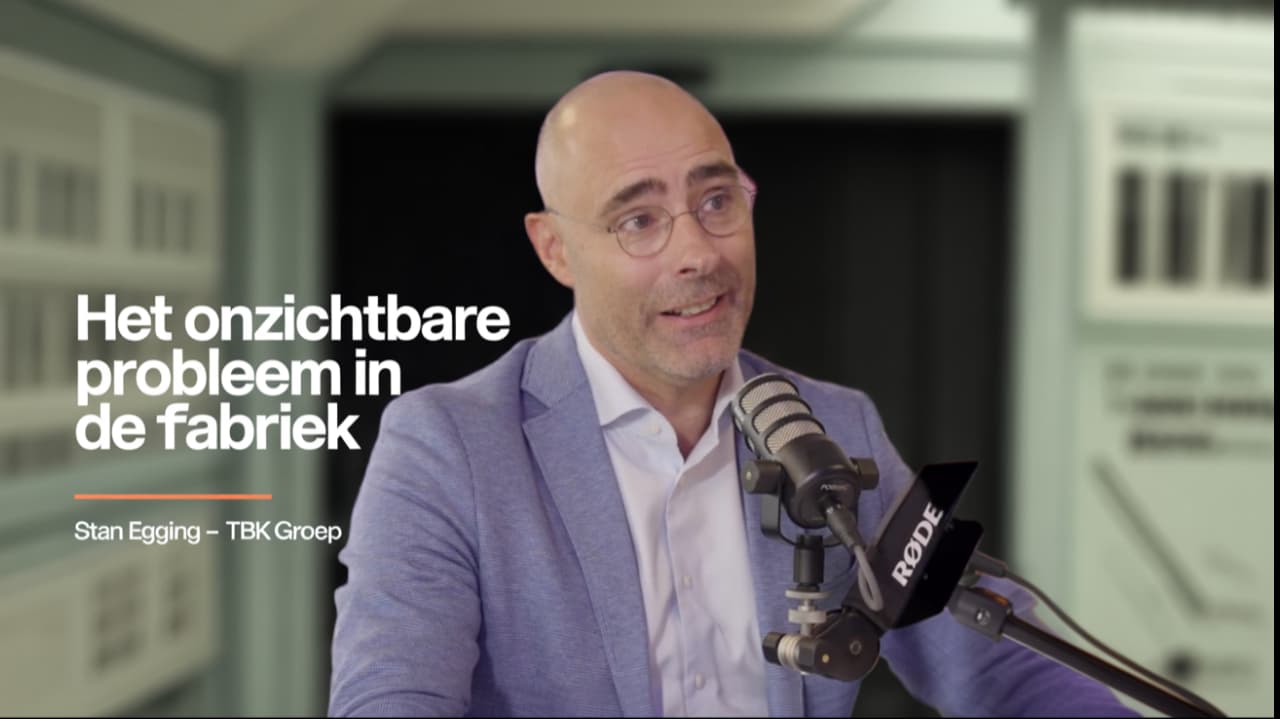
The invisible enemy on the factory floor
In the world of steel, bulk and production, everything revolves around efficiency. Machines have to keep running, orders have to be met, margins have to be protected. But according to Stan Egging, director of the TBK Groep, there is a creeping danger that causes millions of euros in damage every year — one that many companies still ignore: dust.
"Dust isn't a sexy topic," says Egging. "But it is the reason people get sick, machines wear out faster, and companies lose money without realising it."
From assembly company to full-service partner for clean production
TBK Groep has been around for almost 70 years, growing from an assembly company in heavy industry into a full-service partner for dust control and process optimisation. Their mission is clear: making bulk handling clean and green.
Egging: "We prevent contamination and dust in bulk processing operations. Clean stands for a cleaner working environment, green for sustainability and health. Ultimately, it's about improving people, machines and the environment alike."
Why dust reduction is so often forgotten
According to Egging, the problem is structural. "Dust reduction isn't part of the primary process. It doesn't generate immediate revenue, so people don't see a high ROI. But meanwhile, dust damages machines, increases sick leave and can lead to claims or revoked environmental permits."
The consequences are greater than many companies realise. "In sectors like steel or recycling, we've seen situations where employees literally became ill from contamination. And if you don't protect your staff, you don't just lose people — you lose your business continuity."
Health and sustainability: from cost item to strategic advantage
Social pressure around sustainability and health is rapidly increasing. Egging sees it too: "Where companies used to think, 'we don't have the budget for that,' they now realise that human capital is priceless. A clean working environment isn't just a legal requirement — it's a tool for retaining staff in a tight labour market."
TBK responds to this by helping companies make their production processes smarter and cleaner. "Our solutions can, for example, cut cleaning costs by 60%. And we measure that — in black and white. That suddenly makes it very concrete."
From steel to food: dust is the same problem everywhere
TBK's strength lies in its broad expertise. Whether it's the steel industry, recycling or food production, the challenges are surprisingly similar. "Wherever bulk goods are processed, dust is created. And dust causes contamination, wear and inefficiency," says Egging.
That's why TBK Groep offers an integrated approach: extraction systems, seals, scrapers, vibration and screening technology, and filtration solutions that together make for a cleaner and safer process.
Innovation from real-world practice
Although conveyor belts and bulk technology have existed for decades, TBK keeps innovating. "Our innovation doesn't come from a laboratory, but from the shop floor," Egging explains. "Our engineers are among the machines every day. We use their feedback directly to improve products. That's practice-driven innovation."
One example is their approach in the recycling sector. "We build test setups to demonstrate what our solution actually does. Companies see the measurable results in advance — less dust, less cleaning time, less wear. That makes the choice easy."
The hidden costs of dust
According to Egging, the hidden costs are enormous. "Sick leave, machine downtime, cleaning costs — it all adds up. And at a time when good staff are scarce, a dirty working environment can literally drive people away."
Reputation also plays a role. "More and more companies are positioning themselves as sustainable employers. A dust-free working environment is then no longer a luxury, but a badge of honour."
A long-term partnership
TBK doesn't deal in quick fixes, Egging emphasises. "We believe in long-term relationships. We start with the low-hanging fruit — the points that can be improved quickly — and build from there. Sometimes a project takes years, but the result is structurally cleaner, safer and more sustainable production."
He laughs: "I hate the term solution provider, but that's exactly what we are. We don't think in terms of individual products, but in terms of evolution — together with the customer."
A call to industry: take dust seriously
Egging closes with a clear message to the manufacturing industry:
"Dust is not a side issue. It's a silent killer of profitability, health and sustainability. Whoever starts reducing dust today saves money tomorrow — and saves their people the day after."
Companies that want to know where their improvement potential lies can, according to him, simply start with a no-obligation conversation. "The clock doesn't start ticking straight away," he says with a wink. "First we look together at where the dust really comes from."
About TBK Groep
For almost 70 years, TBK Groep has been active in making industrial processes smarter, cleaner and more sustainable. With specialisations in dust extraction, filtration, conveyor belt technology, and screening and vibration technology, TBK helps companies across a wide range of sectors — from steel and recycling to food — make their production processes safer and more efficient.
Want more information or advice? Visit www.tbkgroup.nl or get in touch with Stan Egging via LinkedIn.