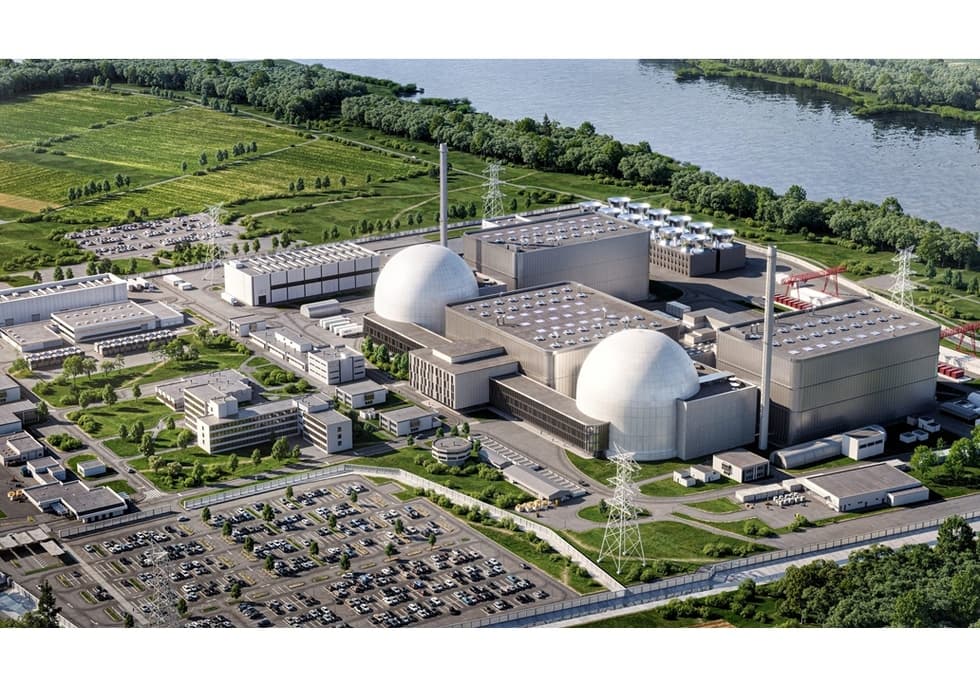
Germany's Federal Ministry of Research, Technology and Space has selected Biblis to host a national centre for laser fusion. The decision forms part of the Fusion 2040 programme and fits within the country's broader High-Tech Agenda.
Confidence in fusion technology
The move places the company Focused Energy and the town of Biblis at the heart of Germany's effort to commercialise fusion energy. The government views the approach as a credible path towards a new, low-carbon energy source, signalling clear confidence in the parties involved.
Laser fusion works by using powerful laser pulses to compress and heat a fuel target until atomic nuclei fuse together, releasing large amounts of energy. Unlike nuclear fission, the process does not generate long-lived, highly radioactive waste, which makes the technology attractive as a future energy option.
Relevance for manufacturing
A national fusion centre depends on advanced supply chains, including precision optics, vacuum technology, high-power electronics, specialised materials and accurate assembly. This creates opportunities for German and European suppliers and machine builders capable of developing and producing such components.
- Development of laser systems and optical parts
- Precision machining and materials engineering for fuel targets
- Measurement, control and automation technology
For Biblis, previously known for its nuclear power plant, the selection marks a new role in the energy transition. The site already offers energy infrastructure and technical expertise, which could speed up the build-up of a fusion centre.
Whether laser fusion can eventually operate on a commercial basis remains to be seen in the coming years. The investment nonetheless underlines that Germany regards fusion as a strategic element of its industrial and energy future.