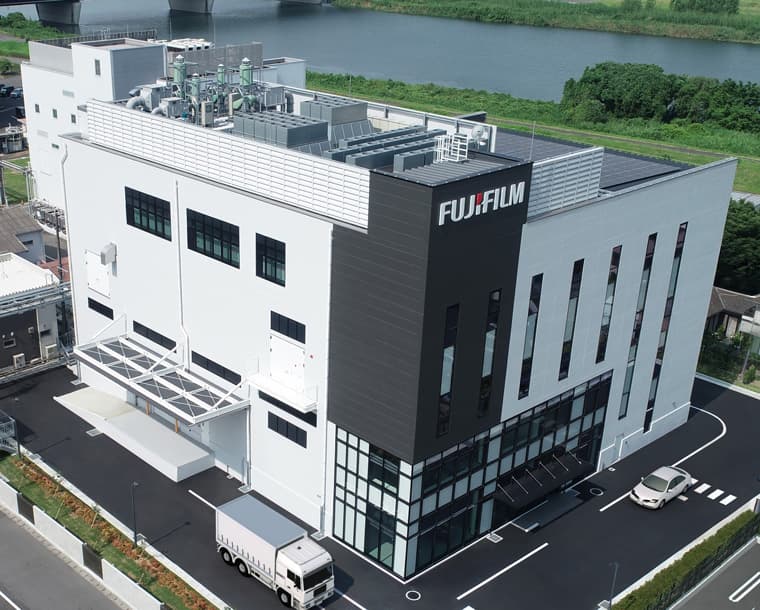
The global race for AI computing power is putting pressure not only on chipmakers but also on the often invisible suppliers of semiconductor materials. Fujifilm is responding with a new production facility in Oita, Japan, where it is tripling its capacity for so-called post-CMP cleaners. This specialised cleaning chemistry is indispensable in manufacturing advanced chips for AI data centres and other high-performance applications. The expansion shows how deeply the AI wave now reaches into the material supply chain behind the semiconductor industry.
What post-CMP cleaners do in chip production
Integrated circuits are built up layer by layer on a wafer. Between those steps, the surface is levelled through chemical-mechanical planarisation (CMP), a process that removes microscopic irregularities so subsequent layers align precisely. After polishing, however, particles, metal traces and chemical residues remain. Post-CMP cleaners remove these contaminants without damaging the delicate structures.
As transistors shrink and chips grow more complex, the demands on this cleaning step become ever more extreme. At the most advanced process nodes, just a few residual nanoparticles can cause defective chips. The cleaning chemistry therefore has to become increasingly selective and pure. Fujifilm builds on its broad expertise in fine chemistry and coating technology, a branch of industrial chemistry that most end users never see but that helps define the performance limits of the entire electronics industry.
Why AI chip demand is driving the material supply chain
The rise of generative AI and large-scale data centres calls for unprecedented volumes of high-performance processors and memory chips. Every wafer passes through dozens of CMP and cleaning cycles, so consumption of specialty chemistry rises accordingly. The Oita investment is not an isolated move but part of a broader trend in which suppliers of materials, gases and chemistry are sharply expanding capacity to keep pace with chipmakers.
- Volume and quality: not just more output, but stricter purity requirements for the newest process nodes.
- Supply security: chipmakers want to reduce reliance on a single source and spread their purchasing.
- Geographic spread: production closer to key markets reduces supply chain risk.
What this means for European manufacturers
The Netherlands plays a key role in the global semiconductor industry, particularly in lithography machine building and the wider supplier network. Investments such as the one in Oita affect that chain indirectly but substantially. More capacity for critical materials means, over time, a more stable supply for the fabs that use the equipment made by Dutch and European suppliers.
For companies in electronics and printed circuit boards and for those supplying components to the high-tech sector, this is highly relevant: growing material capacity supports long-term demand for precision parts, ultra-clean modules and measurement systems. The advance of machine vision and industrial AI reinforces the same dynamic, because those AI applications drive demand for powerful chips, closing the loop.
Strategic lessons: critical materials as a competitive factor
This case highlights a wider insight for manufacturing: competitiveness is determined not only by end products but increasingly by the availability and quality of specialised raw materials. Companies that depend on scarce, high-purity materials are wise to analyse their supply chain, identify second sources and consider long-term agreements.
- Chain transparency: know where critical materials come from and where single-source dependencies lie.
- Qualification takes time: qualifying new material sources can take months to years, so planning ahead pays off.
- Sustainability matters: cleaning chemistry and water use in chip fabrication face growing environmental scrutiny, spurring innovation in more efficient processes.
For the manufacturing industry the message is clear: the AI revolution is not just a software story but rests on a physical foundation of materials, chemistry and precision production. Investments like the one in Oita keep that foundation intact. Businesses that understand their own position in this chain early on—as buyer, supplier or technology partner—will be better prepared for the next growth surge in semiconductors and the industries that depend on them.