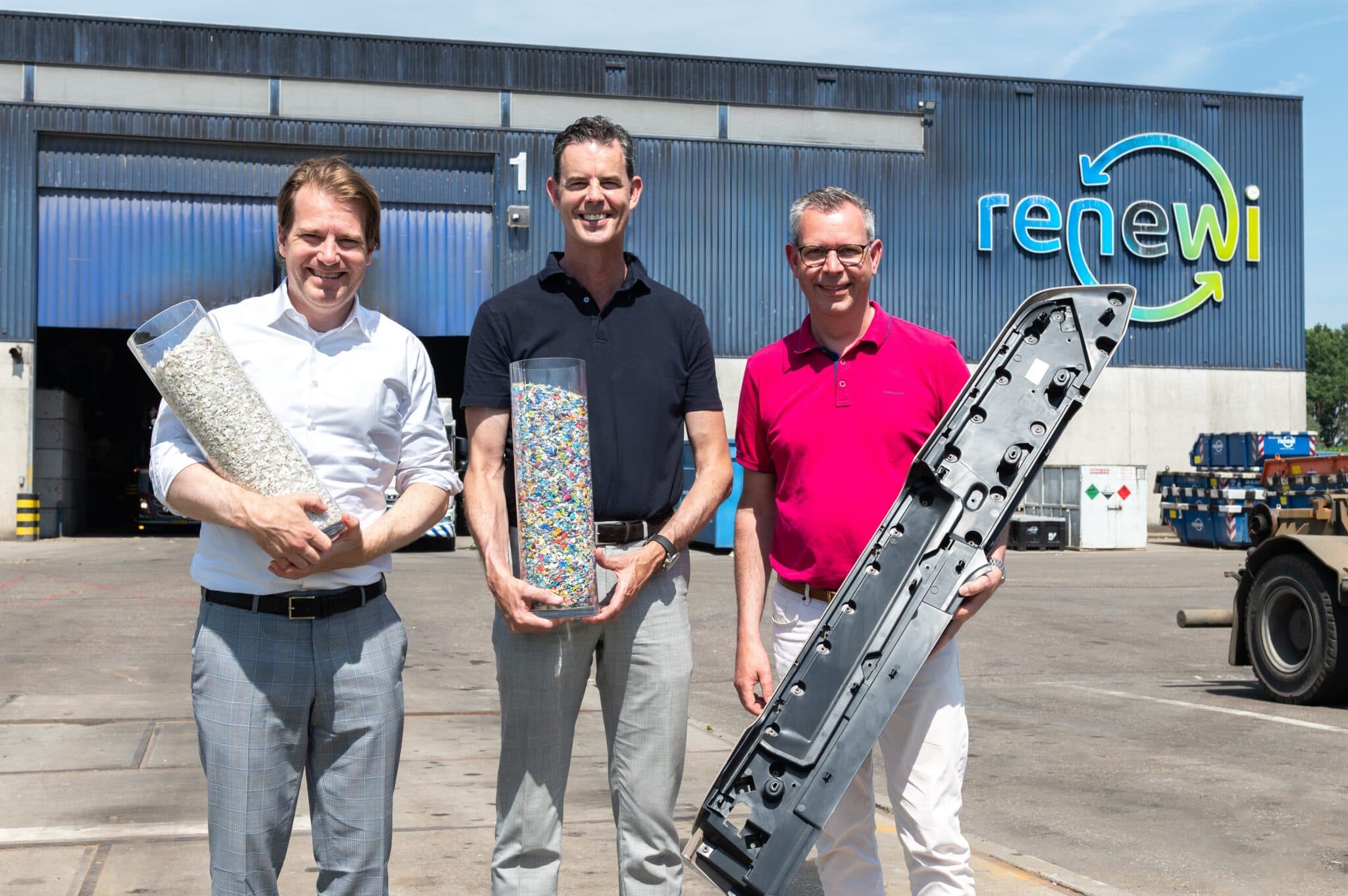
Discarded hard plastics returning as feedstock for technically demanding truck components sounds like the final piece of the circular economy — yet it requires precise coordination across every link in the value chain. A collaboration between a waste processor, a compounder and a supplier of vehicle parts shows that recycled plastic is genuinely suitable for demanding applications, provided that material, process and product expertise come together. In doing so, a waste stream that used to be processed at low value is upgraded into a full-fledged raw material.
From waste stream to high-grade recyclate
The challenge in recycling hard plastics does not lie in collection alone. Waste streams are inherently heterogeneous: different polymers, contaminants, additives and colours are mixed together. To turn them into a reliable plastic granulate or compound that performs consistently, a careful sorting, washing and compounding process is needed. The compounder then uses targeted formulations — for instance fibre reinforcement or stabilisers — to define the mechanical and thermal properties of the final material.
Crucially, the recyclate must deliver predictable quality. After all, a vehicle component must meet strict specifications: strength, impact resistance, dimensional stability and behaviour under temperature fluctuations. Anyone wanting to use recyclate in plastic injection moulding must therefore characterise the material thoroughly and tune the process parameters accordingly. This is precisely where the combined knowledge of the chain partners makes the difference.
Why chain collaboration is decisive
Circular raw materials rarely succeed when one party tries alone. The waste processor knows the origin and composition of the streams, the compounder masters the material chemistry, and the parts manufacturer understands what the end application demands. Bringing these competencies together early in the development process creates a closed loop in which:
- material specifications are aligned with what the recycling stream can realistically deliver;
- product design accounts for the properties of recyclate instead of blindly prescribing virgin material;
- process knowledge from moulding flows back to the compounder for further optimisation.
This approach calls for a different way of working than the classic linear chain from supplier to buyer. It marks a shift from transactional purchasing to joint value creation — a trend that is becoming increasingly visible across the wider manufacturing industry.
EU regulation drives recycled content
The timing is no coincidence. Europe is working on stricter requirements for the share of recycled plastic in vehicles, including through the revision of rules on end-of-life vehicles and circular design. The direction is clear: manufacturers will have to demonstrate that a growing share of the plastic they use consists of recyclate, and that products are more recyclable at the end of their life.
For Dutch and European manufacturers this means circular raw materials are shifting from a "nice to have" to a hard prerequisite. Companies that build experience with recyclate in demanding applications today gain an advantage once the requirements become binding. Those that wait risk having to switch at short notice without the necessary material and process expertise in-house.
Opportunities and risks for manufacturers
The main opportunity lies in supply security and cost control. Recyclate from domestic or European streams makes companies less dependent on volatile markets for virgin polymers and on imports from outside Europe. At the same time, there are real points of attention:
- Quality assurance: recyclate requires stricter incoming inspection and material validation than virgin material.
- Design freedom: not every application tolerates recyclate; critical, heavily loaded parts require careful consideration.
- Chain volume: a stable, sufficiently large supply of suitable residual streams is a precondition for series production.
The case demonstrates that these hurdles are surmountable when parties invest in joint knowledge building and early alignment between design, material and process. It is not a matter of simply replacing virgin with recyclate, but of rethinking the entire route from raw material to component.
For the manufacturing industry the message is clear: circularity is becoming a competitive factor. Companies that learn to work with recycled plastics now — and that seek collaboration with specialised suppliers in the chain — position themselves for a market in which sustainability and regulation reinforce one another. Manufacturers looking to make their production more sustainable would do well not to postpone these conversations and to request a quote in good time from partners who can process recyclate reliably.