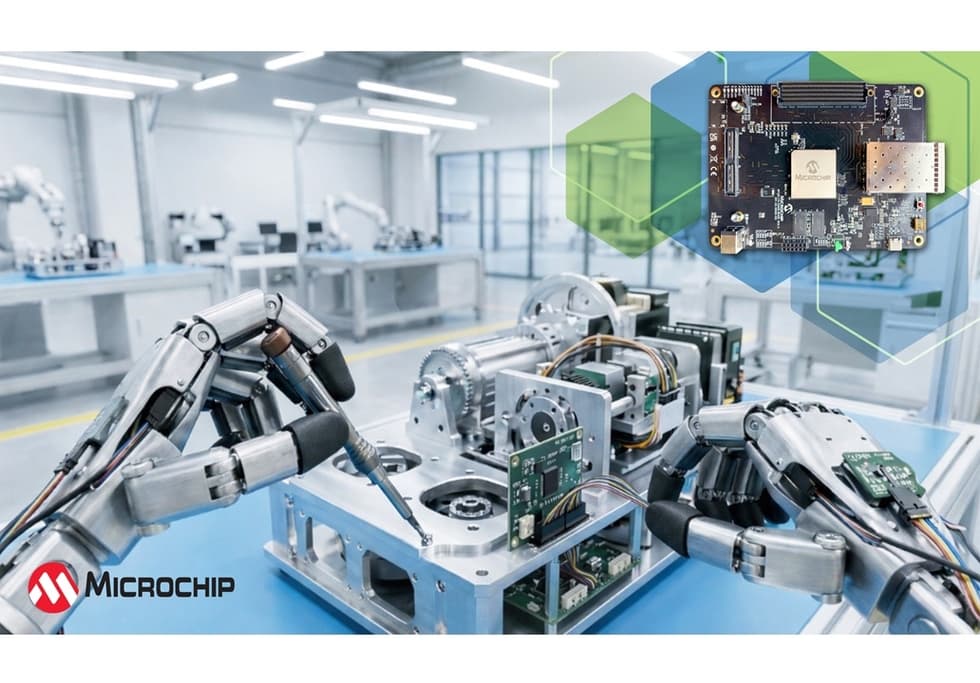
The move toward compact, high-performance edge AI systems is reshaping how sensors connect to processing platforms. Developers face pressure to deliver architectures that are power- and space-efficient while staying secure and scalable. A new, significantly smaller and production-ready version of an FPGA-based Ethernet sensor bridge targets exactly this challenge, standardizing how sensors feed AI applications at the network edge. For the manufacturing sector, this touches a sensitive point: the gap between raw sensor data and usable, real-time decisions on the shop floor.
Why edge AI sensor connectivity matters now
More production environments are moving intelligence from the cloud to the machine itself. The reasons are clear: lower latency, less dependence on network links, better data security and lower transport costs for large data streams such as imaging and vibration measurement. Applications built around cameras, lidar and high-frequency sensors and actuators generate data volumes that simply cannot be shipped efficiently to a central server.
The bottleneck often lies not in the AI chip's compute power, but in the connectivity between components. Different sensors speak different interfaces and protocols. A standardized bridge that consolidates these sources and presents them over Ethernet to an AI accelerator shortens development time and reduces the risk of custom work that becomes hard to maintain later.
What an FPGA sensor bridge solves technically
An FPGA (field-programmable gate array) is ideally suited as the junction between sensors and AI processing. Where a fixed chip performs a single function, an FPGA can be reconfigured to handle varied interfaces, timing and data formats. That makes the bridge flexible for changing sensor types without a completely new design. The key benefits for engineering teams include:
- Deterministic timing: essential for synchronized image and measurement data in real-time control loops.
- Low power consumption: critical in compact, passively cooled enclosures close to the machine.
- Built-in security: hardware authentication and encryption protect the data chain against tampering.
- Scalability: one platform supports multiple sensors and projects, lowering the maintenance burden.
The smaller, production-ready form factor shortens the step from prototype to series. This is precisely where many industrial projects stall: a demonstration works, but the path to a robust, certifiable product proves long and costly.
What this means for European manufacturers
For European makers in machine building, high-tech and process industries, this development aligns with a broader trend: industrial AI running close to the process. Think of inline quality inspection, predictive maintenance and autonomous robot control. Companies investing in machine vision and industrial AI face the same question: how do I get sensor data to my compute module reliably, quickly and securely?
A standardized bridge lowers that barrier on several fronts:
- Faster development of smart machines, because the sensor-to-AI link no longer has to be reinvented each time.
- Better scalability from pilots to production, shortening the payback period of robotics and automation.
- More control over cybersecurity, a growing concern as regulation around network and machine safety tightens.
At the same time, realism is warranted. New hardware does not solve a data problem if the underlying measurement strategy is flawed. Model quality depends on representative data, and integration with existing Industrial IoT and connectivity demands a well-considered architecture. Companies are better off treating connectivity, data collection and AI strategy as a connected whole rather than separate purchases.
Positioning in the industrial electronics market
The release fits a clear market movement: suppliers of semiconductors and electronics and printed circuit boards are developing building blocks that remove edge AI complexity from the end user. Instead of each manufacturer designing its own sensor interface, ready-made, certified modules emerge. That shifts competition: value moves from hardware integration toward the application and the algorithm.
For manufacturing, the core message is that barriers to deploying AI at the edge are falling step by step. Companies experimenting now with smart sensors and real-time image processing can scale faster once connectivity is standardized. Those who track this development and learn early to work with such platforms build an advantage in quality, lead time and production flexibility — exactly the areas where European manufacturers need to make the difference.