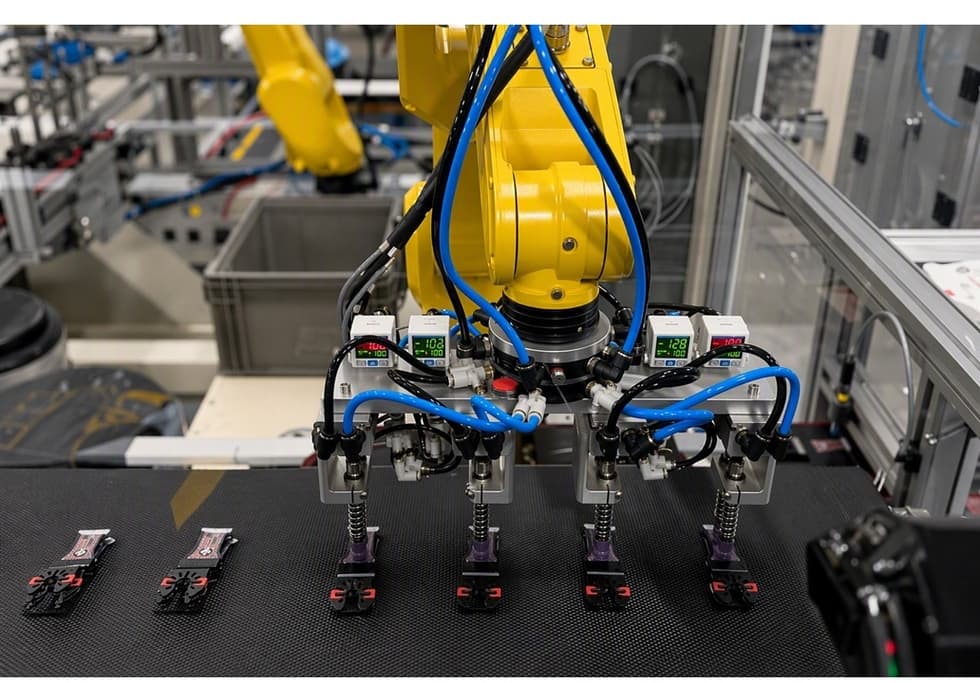
Demand for automated direct-to-object (DTO) printing is rising noticeably, driven by persistent labor shortages, a widening skills gap and the need for tightly integrated production lines. Where decorating and marking objects was long a manual, labor-intensive step, it is now shifting toward robot-driven inkjet and digital printing systems that slot seamlessly into the line. For manufacturers across Europe, this is more than a technical upgrade: it is a response to a structural workforce problem.
Why DTO printing is breaking through now
Direct-to-object printing marks three-dimensional products directly, without intermediate steps such as labels, pad printing or screen printing with lengthy changeovers. Digital printheads apply text, logos, variable data and decoration straight onto surfaces of plastic, glass, metal or composite. The appeal rests on three trends unfolding at once:
- Labor shortage: skilled operators for traditional decoration processes are scarce, and the inflow of young technical staff lags behind those retiring.
- Shorter runs, more variety: mass customization and small batches make fast changeovers without tooling costs essential.
- Data-driven production: serialization, track-and-trace and variable printing align with broader factory digitalization.
From standalone machine to integrated line
Integration is at the heart of the shift. A DTO printer is increasingly less a standalone machine and more a module in an automated line, with robotic handling, positioning systems and inline inspection. That calls for collaboration with providers of robotics and automation and engineering capacity for system integration and OEM outsourcing. The gain is not only less handling, but also repeatable quality: a robot places each product identically under the printhead, cutting rejects and rework.
For companies making this move, the operator's role shifts from executing to supervising. That eases pressure on hard-to-fill production positions, but raises demand for people who can program, maintain and optimize the installation — precisely the profiles that are also scarce. Automation therefore does not fully solve the staffing question; it moves it toward higher-skilled roles.
Materials, inks and surface quality
The performance of DTO printing stands or falls with ink adhesion to the substrate. Different materials require tailored pre-treatment, ink chemistry and curing (often UV-LED). Here printing technology meets the world of industrial chemistry, adhesives and coatings, where formulations determine how well a print resists wear, chemicals and UV. Companies combining decoration with protective layers also look at processes such as wet painting and spraying to unite function and appearance.
Key considerations for implementation:
- pre-treatment (plasma, corona or primer) matched to the substrate;
- color management and inline control to catch deviations early;
- ergonomics and safety around robotic cells;
- data management for variable printing and traceability.
What this means for European manufacturing
For European manufacturing, this trend fits a bigger picture: reshoring of production, the pressure to deliver more output with fewer people, and demand for flexible, short lead times. Automated DTO printing makes it possible to keep decoration and marking close to final assembly rather than outsourcing it to low-wage countries, improving supply security and flexibility. At the same time, digital printing reduces waste because tooling and stocks of pre-printed parts disappear.
The message for production managers and technical directors is clear: automating printing is no longer a niche choice for high volumes, but a strategic tool against labor scarcity and for greater agility. Those who invest now in integrated, digital printing solutions — with attention to materials expertise, integration and the required competencies — build production that is less vulnerable to a tight labor market and better prepared for smaller, faster-changing orders.